

Tattooing is not an artistic discipline taught at the School of the Art Institute of Chicago. Yet this art form is still present within SAIC culture through students’ artistic practices, identities, and connections to each other.
As students who express their identities through art, SAIC artists often have tattoos. Tattoo culture at SAIC is strong, not just from a common love for tattoos, but through its student tattoo artists, too. While booking appointments at local tattoo shops is always an option, many SAIC students simply go to each other for new ink.
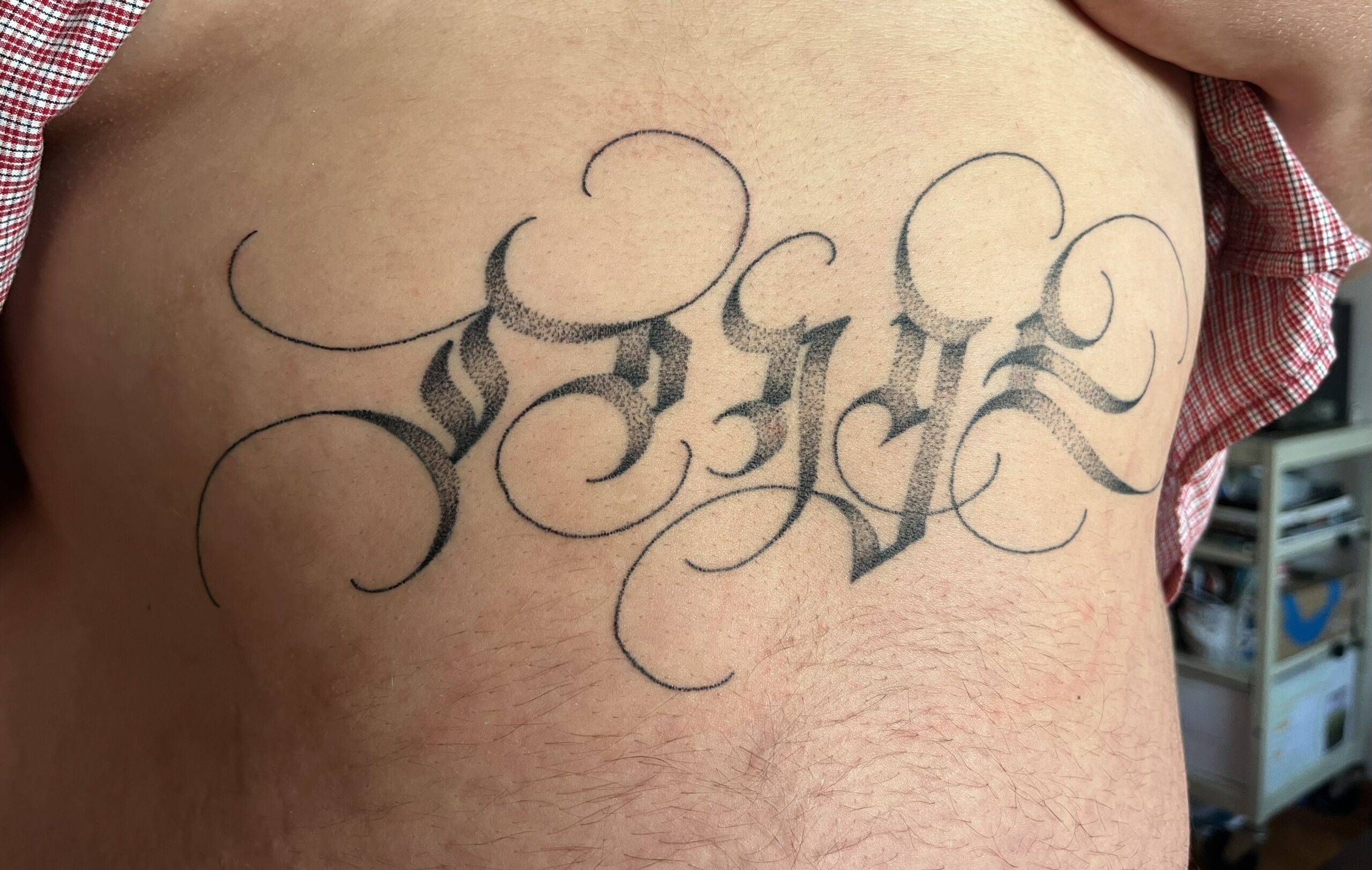
Unlike the artists employed at tattoo shops, who are licensed professionals, some SAIC tattoo artists are licensed and others aren’t. It is common for artists with alternative, DIY, and hand-poked tattoo practices to be unlicensed. Many DIY tattooers reject shop culture and the limitations around tattooing.
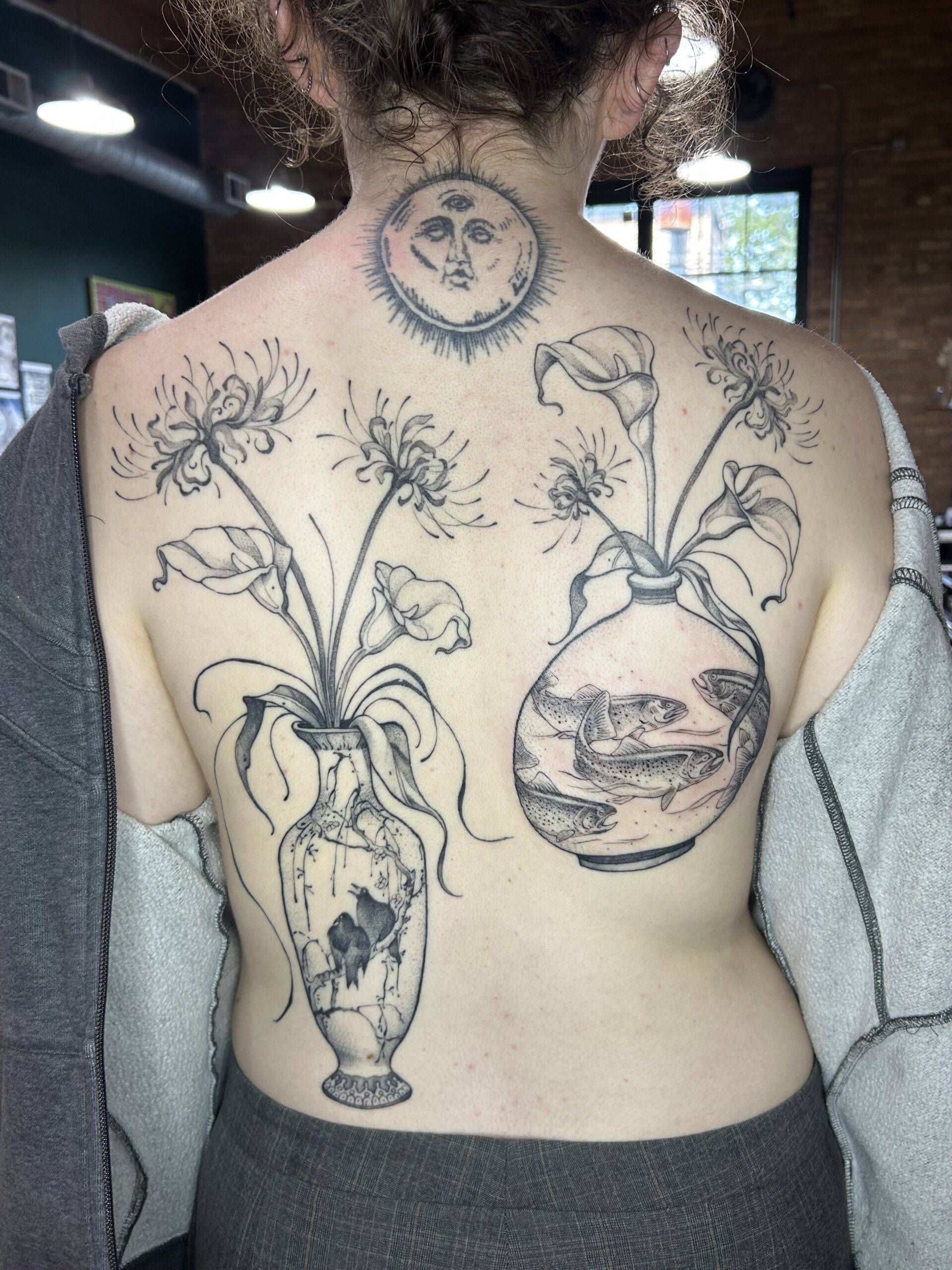
Hailey Mackenzie (BFA 2025, @kakkujak.ttt on Instagram) found her passion for tattooing in high school and has since begun tattooing SAIC students and their friends. Through tattooing, Mackenzie has met dozens of students she wouldn’t have had the chance to otherwise.
“It’s a wonderful way to feel a part of a community. I feel it’s always such an easy way to make a connection with someone through their tattoos,” Mackenzie said.
Artists and clients have abundant time to learn about each other while spending time on consulting, setting up, tattooing, photographing, and going over aftercare.
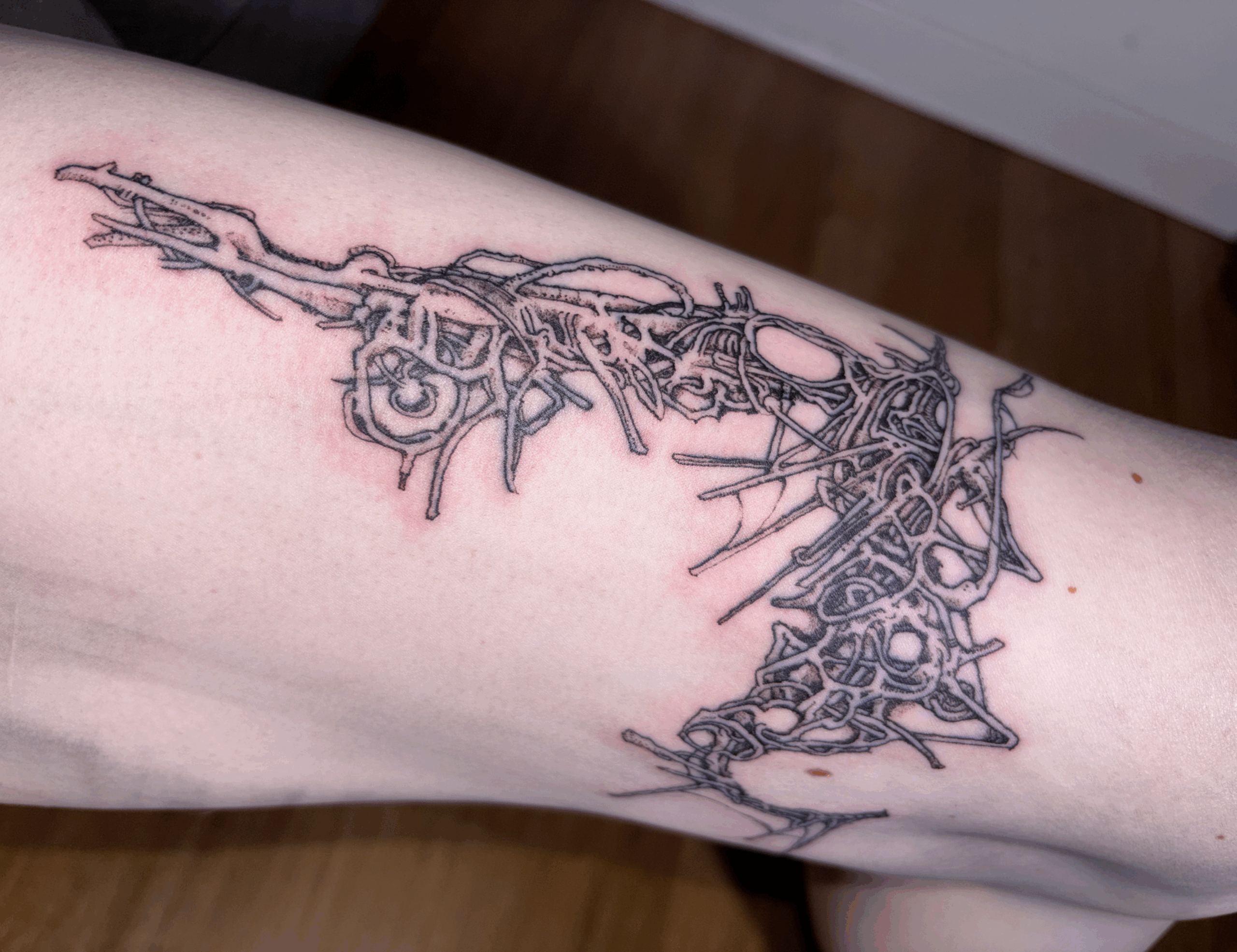
Winter Papagan (BFA 2027, @winter___482 on Instagram), a tattoo artist who works in the department of Painting and Drawing, has also found connection with other students in the prep and work time it takes to tattoo.
“The students I’ve [tattooed] have mostly been my close friends, and it’s always a cool experience because of how personal a tattoo is by nature. You can really get to know someone for a few hours you may otherwise wouldn’t have and then go separate ways,” Papagan said.
Celia Loeffelholz (BFA 2025) has had two tattoos done by SAIC students. She sees tattoos as an “extension of both self-expression and a way to build community.” Loeffelholz feels grateful for SAIC’s tattoo community: “I’m very lucky to have experienced [the tattoo scene at SAIC] even for a minute.”
For Mio Sow (BFAW 2027), “being able to share a space with a good tattoo artist is so meaningful. It’s a very inherently vulnerable thing.”
Some students trade art in the transaction as well.
“I have been lucky enough to tattoo multiple of my SAIC peers. It’s always special to do art trades for tattoos, so I receive incredible art and they receive a tattoo,” Suds, (BFA 2027) said. (Suds asked to use their artist name to protect their practice.)
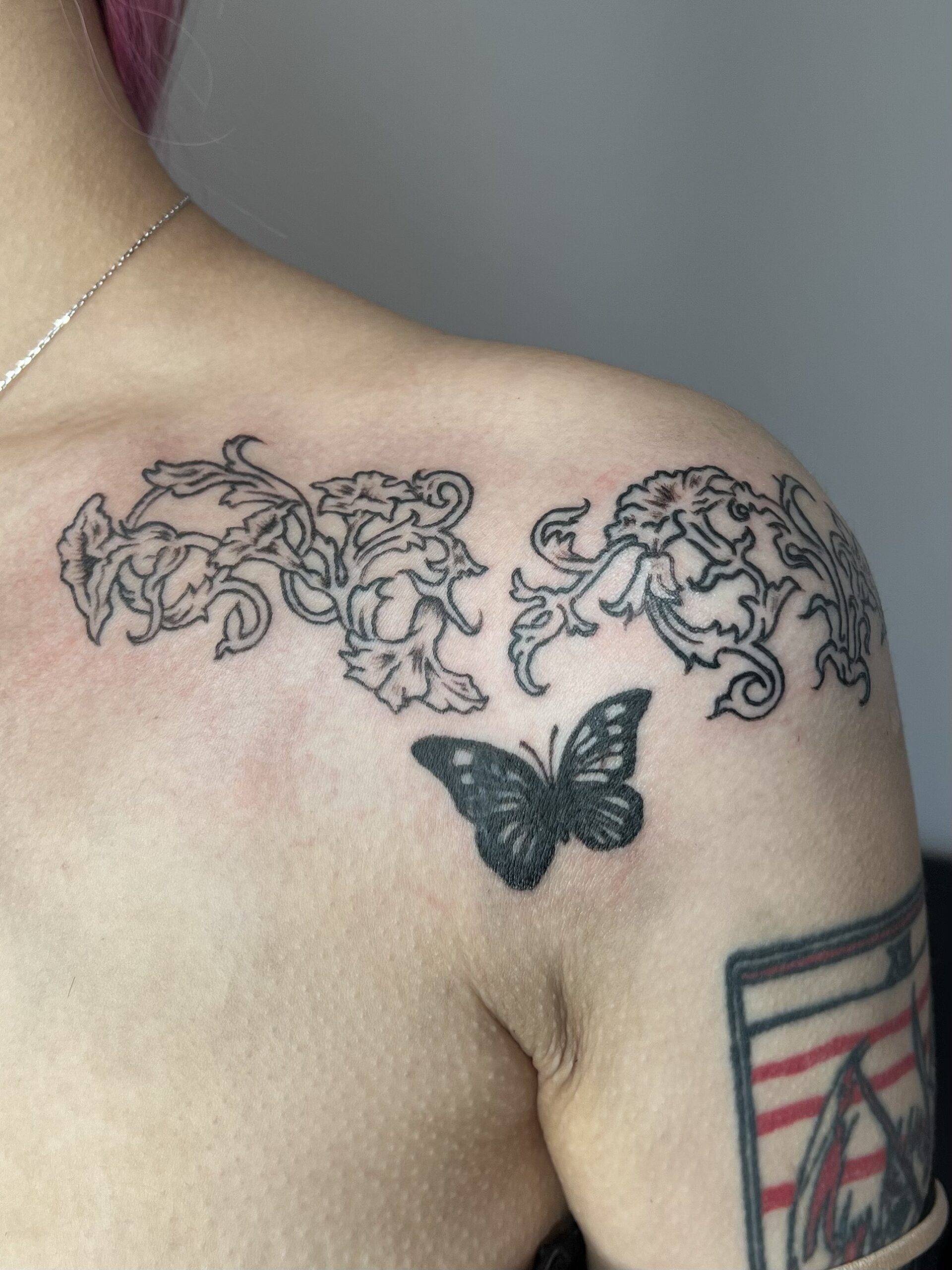
Gabriel Mason Howell (MFA 2027, @snowglobeenthusiast on Instagram), a tattoo artist in the Comics MFA program, started with commission drawings for tattoo designs before moving into tattooing as a stable source of income. “I feel like my flash sheets almost read like comics sometimes. There’s a lot of intersections between my practices aesthetically and in tone,” Howell said.
Papagan feels that their SAIC work and tattooing are intrinsically connected and spends time trying new things that could work their way into their tattooing imagery and style. “My drawing practice is a space to let things evolve, which I can use as assets for new designs,” Papagan said.
Suds, who is in the Visual and Critical Studies department, is writing their thesis on tattooing. “While almost everyone is tattooed, there are no classes centered around tattoo, and most classes barely even mention tattooing as an artistic practice,” said Suds. For Suds, the VCS department is the place to research and inform their practice to center tattooing seriously.
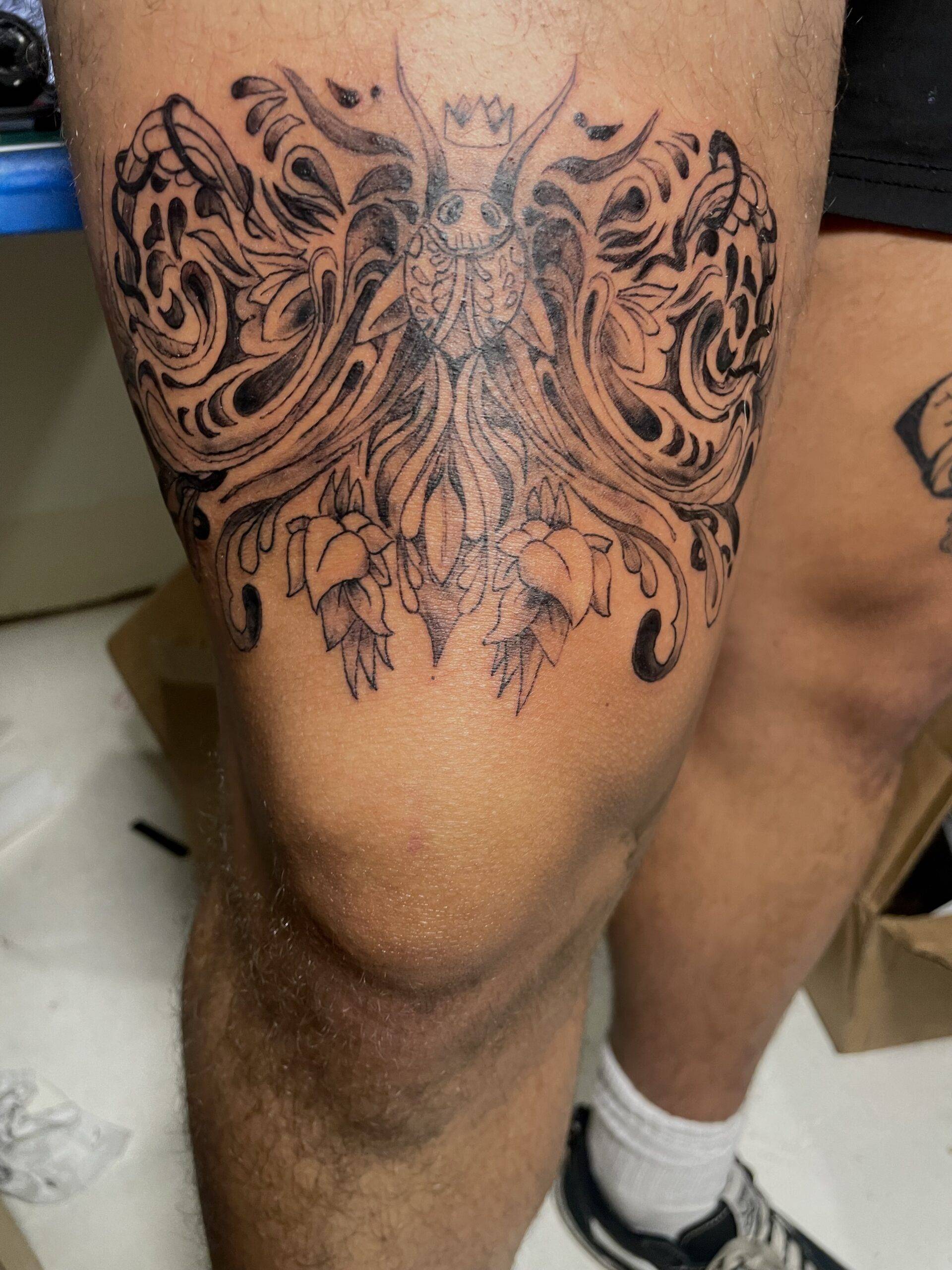
In the department of Painting and Drawing, Cade Young (BFA 2027, @cade_owen_young on Instagram), recently made a body of work inspired by tattooing. Young made oil paintings that focused on, as he put it, “aspects of the act of tattooing, such as the way ink, skin, and needle all interact to outwardly express deeper forms and patterns and relations.”
Mackenzie said she noticed that many aspects of the art world feel inaccessible, but tattooing is attractive as a way to build community. Joseph Murphy (BFA 2027), a tattoo artist who works under the name Joink (or @joiiinkk on Instagram), practices in the Ceramics and Fibers and Material Studies departments, and said they found that Gen Z has been “more open to tattoos and other body modifications than other generations,” as opposed to older generations that “see tattoos as bad and taboo” or against the status quo.

Young also spoke to the generational divide. He sees tattooing as a shift in generational identity, as Gen Z and Millennials have embraced tattooing as a form of expression. This has led to changes throughout the industry.
“The gates have been opened up for all new styles and subject matter; gone are the days of creepy old guys doing American traditional tattoos out of a shop,” Young said.
Tattoos have long been tied to queer and trans communities, where unapologetic identity is expressed through confident, visible self-presentation.
Growing up trans, Michael Rubinos (MAAH 2027), felt a sense of alienation and disgust towards his body. He associates getting his first tattoo with when he started to feel more comfortable in his skin. “It was an exercise of autonomy, certainly, but it was also a realization that this body was my body. And nobody could tell me what I can’t do with it. For me, that was revolutionary,“ Rubinos said.
Murphy felt a strength in the intersection between the tattoo and queer communities. “A lot of the tattoo artists I know are in the queer community, and I feel like that plays a big part in the tattoo scene. It makes it a safe space when getting tattooed and makes it feel more welcoming,” Murphy said.
As a method of expression in their outward presentation, tattoos are important to students’ identities and have meanings and intentionalities behind them.
“I always put a lot of consideration into my tattoos before I get them since they’re something I’ll carry with me for the rest of my life, or until they fade,” Chelsea Pipino (BFA 2027) said.
Sow said he values having art by other people tattooed on him. “I want my body to be a museum of so many people’s love and care and creativity,” he said. He specifically gets tattoos of animals that guide him, as well as media references important to them. He said, “I get things I love about life imprinted on my skin forever. If I die looking like a field guide to wildlife, I will die happy.”
Siya Kothari (BFA 2027) feels that their tattoos serve as permanent jewelry for their body and memories. “It’s definitely an expression of how I move through life,” Kothari said.
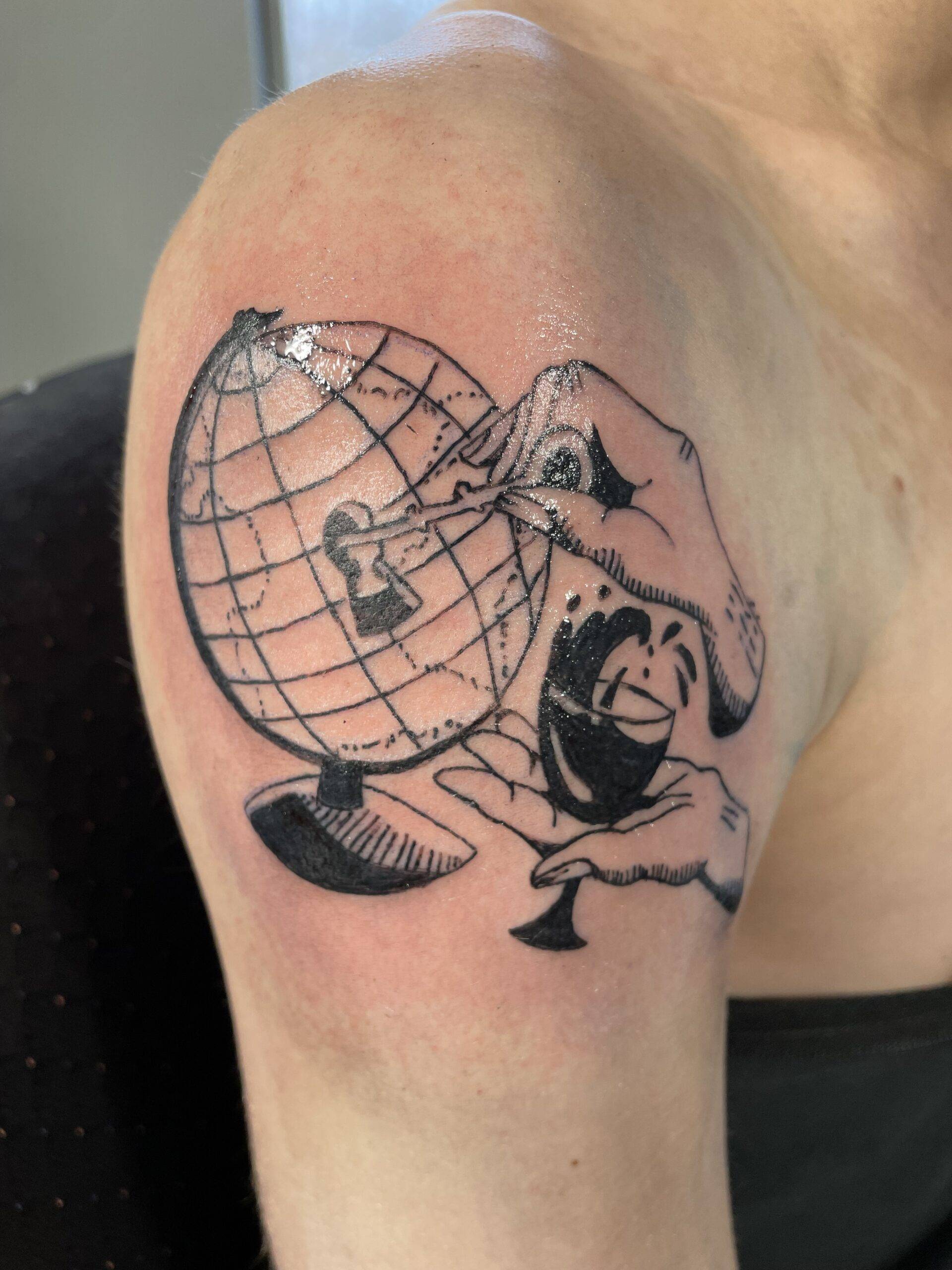
Stigma comes not just from older generations, but also exists within tattoo communities through the shaming of alternative ways of tattooing or becoming a tattoo artist. Some SAIC tattoo artists consider themselves “scratchers,” a term used in the tattoo industry to refer to someone who is untrained, inexperienced, or “scratches” skin by tattooing unsafely, damaging the skin. Often, the term is applied to criticize nontraditional methods of learning tattooing, like pursuing mentorship outside a formal studio apprenticeship. But many tattoo artists with nontraditional backgrounds have reclaimed it.
Being self-taught and using a DIY scene ethos does not mean that artists come up short on creating designs with a wide range of styles, textures, imagery, compositions, and inspirations. In studios, homes, and alternative settings, SAIC’s tattoo artists push the boundaries of formal mediums and tattoo industry expectations. At a school where self-expression feeds students’ artistic practices, tattooing is more than art – it is a live archive of creativity, resistance, and connection.