

What makes a zombie movie a good zombie movie? In such a bloated genre, all you really need are some cool effects, a half-decent story, and if you’re looking to go the extra mile, a creative take on how the zombies in your world work. Now, what makes a “Resident Evil” movie a good movie, let alone a good “Resident Evil” movie? That is a much, much harder question.
“Resident Evil,” also known as “Biohazard,” is a beloved Japanese video game franchise. Since 1996, Capcom has been releasing new “Resident Evil” survival horror games that focus on bioengineered weapons, corrupt corporations, and badass protagonists armed with a shotgun and a quippy retort. With 11 mainline games and half a dozen remakes, they’re some of the biggest names in video game horror.
Adapting “Resident Evil” for the big screen has been attempted many times, with mixed results. Zach Cregger’s 2026 “Resident Evil” film is the first to be both a good movie and a good adaptation. Cregger, of “Barbarian” and “Weapons” fame, is a fan of the games, and that comes through in every scene.
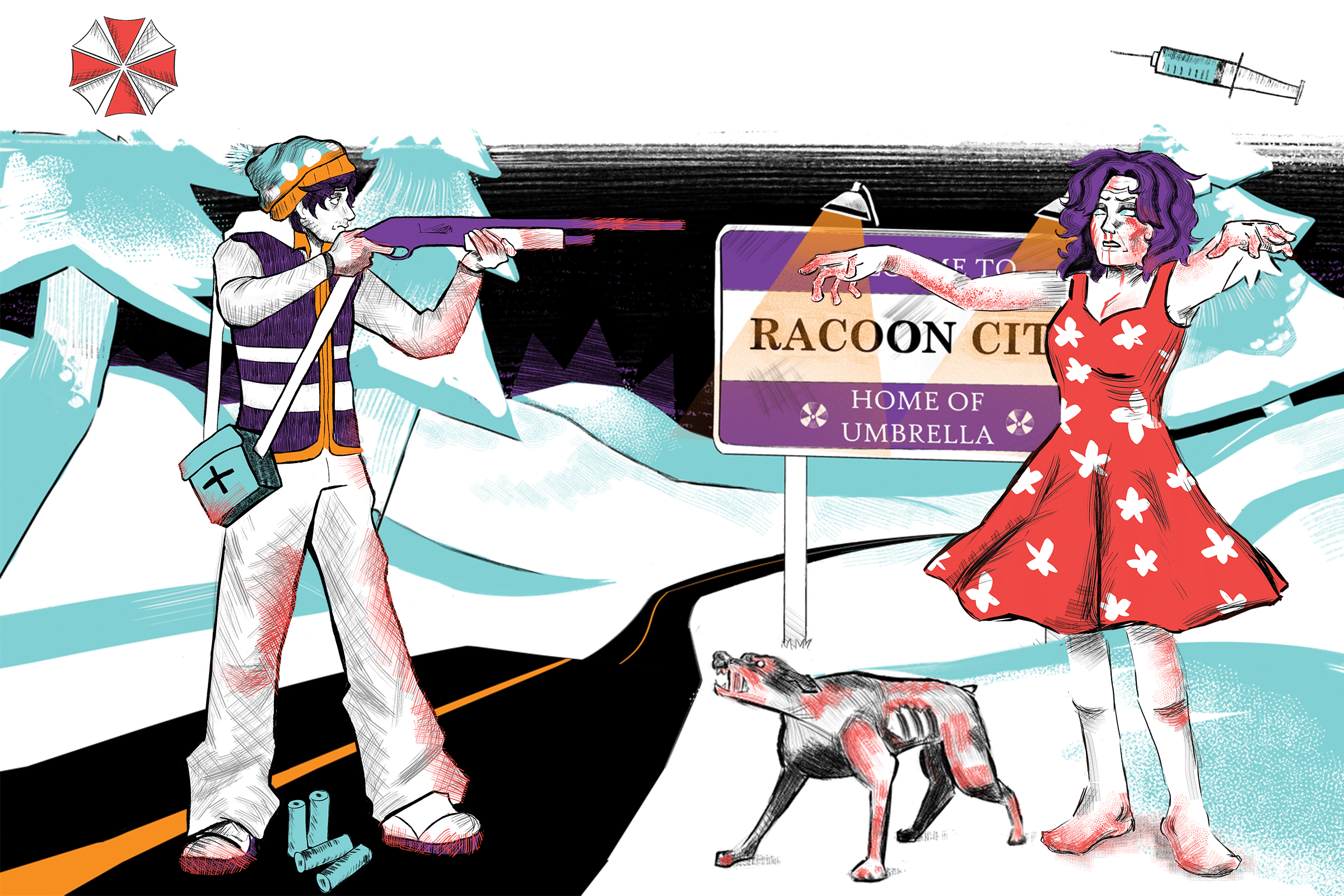
Cregger’s film ditches the characters from the games. The movie’s protagonist, Bryan, wonderfully embodied by Austin Abrams, is not some army-trained action hero. He’s essentially the player — a little stupid and just trying to survive. He reacts to the horrifying creatures and destroyed city the way a person really would. He is terrible at shooting guns. He is frustrated with the sheer amount of locked doors he has to deal with. Bryan feels the way we all feel trying to play any “Resident Evil” game for the first time.
The gorgeous cinematography and set design help to make the film experience feel like playing the games too. It’s visually stunning to see Bryan run through a city street while bodies fall from the building above and explode into huge splashes of blood around him. Even the most disgusting monsters are compelling to look at.
The framing of items from the games, like the shotgun and the typewriter, are not just Easter eggs for fans, but help underscore Bryan’s relief to find a safe spot or good weapon. (Shout out to him opening all those useless drawers. Nothing is a truer “Resident Evil” experience than desperately searching for and not finding ammo.)
The film constantly toes the line between comedy and horror. I screamed as much as I laughed. There’s a few moments where the comedy undercuts the emotional beats a little too much, but the truly scary moments, like the maternity ward scene, help to balance it out. Besides, zombies and undead creatures are kind of silly, and “Resident Evil” as a franchise rarely takes itself too seriously.
The ending falls short, which is almost to be expected. It’s abrupt; the Umbrella Corporation, the main villains, become bumbling buffoons. The movie easily could’ve used another 20 minutes to wrap up the story. But Cregger’s films always end too abruptly, and as many have pointed out online, most of the games have pretty poorly written endings.
Overall, Cregger’s “Resident Evil” is thrilling, and well worth your time. Even the AMC employees at my showing of it were coming into the theater and standing in the doorway to watch.
The biggest problem with Cregger’s “Resident Evil” is not anything in the film. It’s the fanbase. So many people online were angry over the story not directly adapting one of the games. Cregger has spoken about how he never plans to do a sequel, in large part because of the fans. Now that the movie is out, many have come around to sing its praises. Others are insistent it’s a good movie but not a good adaptation. But what does that really mean? This is just moving the goalposts for no reason.
This is the fourth time “Resident Evil” has had a film adaptation. (I’ll spare you from discussing the Japanese stage musical.) If George A. Romero’s unrealized adaptation had ever come to fruition, maybe we’d be having a different conversation; however, no other attempt has come close to the quality of Cregger’s film.
Capcom’s five animated films, set in between the events of the games, are incomprehensible for anyone who isn’t obsessed with the characters and lore.
The 2010s films, directed by Paul W. S. Anderson and starring Mila Jovovich, are pretty controversial among the fanbase. By and large, the fans hate the movies. They have no interest in really being “Resident Evil” movies and are far more focused on being increasingly ridiculous action horror apocalypse movies. The original 2002 “Resident Evil” still holds up in my opinion, despite the dated computer graphics.
2021’s “Resident Evil: Welcome to Raccoon City” is a complete and total bastardization of everything good about “Resident Evil.” It’s cheap, poorly made, and not worth anyone’s time. Similarly, Netflix’s “Resident Evil” television adaptation was poorly reviewed and canceled after one season.
Cregger did the impossible. He made a good “Resident Evil” movie. But just as Umbrella Corp. will never stop engineering dangerous mutated creatures, the fandom will never be truly satisfied unless a shot-for-shot film adaptation of “Resident Evil 2” is made and perfectly executed.