

One must imagine Sisyphus happy. One must imagine him ready to climb the mountain. One must imagine the boulder missing him in his absence. At the same time, one must know oneself to have the dedication of Sisyphus. One must not pity him, for it is only through embodying his determination that we may hold the resolve to create change.
These were not the thoughts that I imagined having upon viewing “Coyote vs. Acme,” but behind this well-crafted comedy is an important message about the injustice of the corporate machine. A message that was, ironically, almost covered up in real life the same way it was nearly covered up by the antagonists within the film.
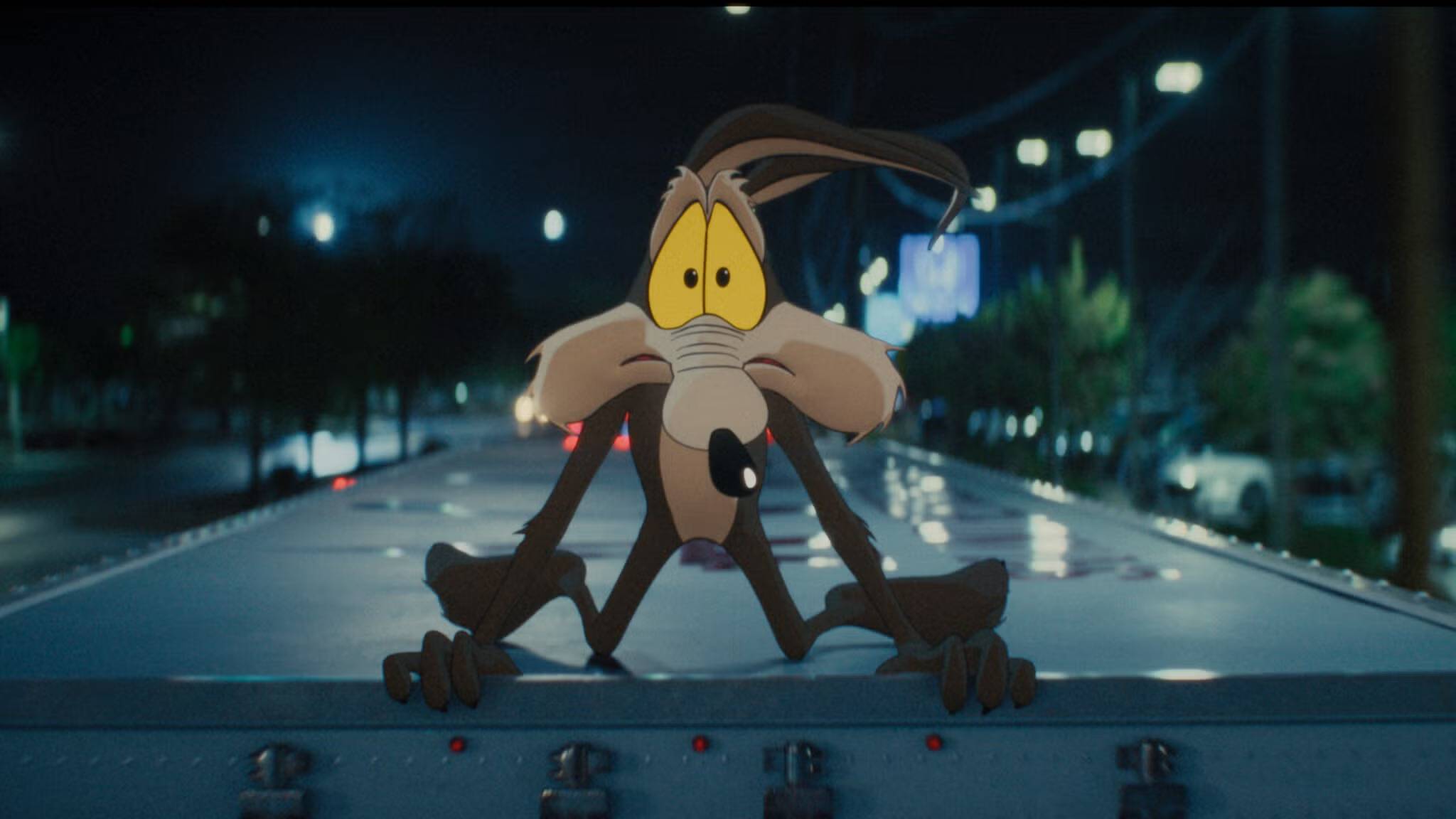
“Coyote vs. Acme,” written by Samy Burch and directed by Dave Green, is an American comedy following the legal battle between Wile E. Coyote and the Acme corporation for its faulty products that caused Wile E. Coyote’s schemes to catch Roadrunner to fail. Wile E. Coyote recruits the help of a human lawyer named Kevin Avery and his student assistant Paige, and they fall deeper into the throes of a conspiracy the ACME CEO tries to keep under wraps.
The movie plays off of the audience’s expectations of Coyote and Roadrunner’s established characters. It resists the urge to try and upturn the personalities of the Looney Tunes cast, and instead chooses to expand on their characterization rather than detracting. It doesn’t break the formula we’ve come to know. The coyote chases the roadrunner, the bird is too fast, the coyote’s ACME products backfire, and the coyote never wins. The film makes the smart choice to keep the majority of these elements intact and unquestioned, only examining the sole external factor. By making this choice, the screenwriters were able to segue the story into a larger social commentary.
ACME, as a villain, is broken into two parts: that of the body of the corporation, and that of the figurehead. The body of the corporation includes typical figures you might expect from an evil business: human conspirators, government workers, and the head legal counsel, Buddy Crane (portrayed by John Cena). The figurehead of ACME is cast as Foghorn Leghorn, a long-time Looney Tunes character, and, in contrast to the rest of the villain cast, a cartoon. This is notable, as it is repeatedly shown that ACME is an abusive and oppressive force to cartoons, which are already looked down upon in the world of the film. Foghorn profits from a business which has modeled itself on the suffering of other cartoons in order to better appeal to human customers. This long-standing experiment is under the name “Project Sisyphus,” in which Wile E. Coyote had been an unwilling participant.
Foghorn Leghorn is not written to be an ignorant antagonist. In his first active appearance, he reacts negatively to his head lawyer using the offensive term “kill two birds with one stone,” and holds himself to a proud and serious standard — a stark contrast to his later court appearance. Despite Foghorn’s wealth and acclaim, it doesn’t raise him above playing into stereotypes to justify his own cruelty. His jolly repetition of the same phrase that he’d shown a distaste for to put up a performance that allows him to cover up his crimes.
This tune may ring familiar, as the Warner Brothers similarly attempted to shelve this movie for the purpose of profits. “Coyote vs. ACME” was produced in November of 2023. Despite the dedication of the artists who poured their time and resources into this project, the company executives were more than content to hide this production from the public for the purposes of a tax write-off, dismissing the very labor that first gave their company leverage. They almost succeeded in the erasure, and the movie was only released after it was adopted by Ketchup Entertainment in 2026 following years of fans fighting for the release.
In the climax of the court case, the movie asks both the characters and the audience, “Is there anyone in the whole world who cares what happens to the coyote?”
And the answer is emphatically “yes.”
Wile E. Coyote’s advocacy comes from his unexpected friendship with Roadrunner, just as this movie’s support came from an outpouring of fans and art enjoyers who refused to let this world be silenced. This film has now surpassed the money it would have made in the initial tax write-off, and it has gained greater critical praise across Letterboxd and Rotten Tomatoes than any of Warner Brothers’ other motion pictures this year.
Although the cycle repeats, and the coyote never wins, he never stops trying. Things get better because he tries.
Even if we don’t succeed today, we can’t stop believing we might. Even if not today, maybe tomorrow.