


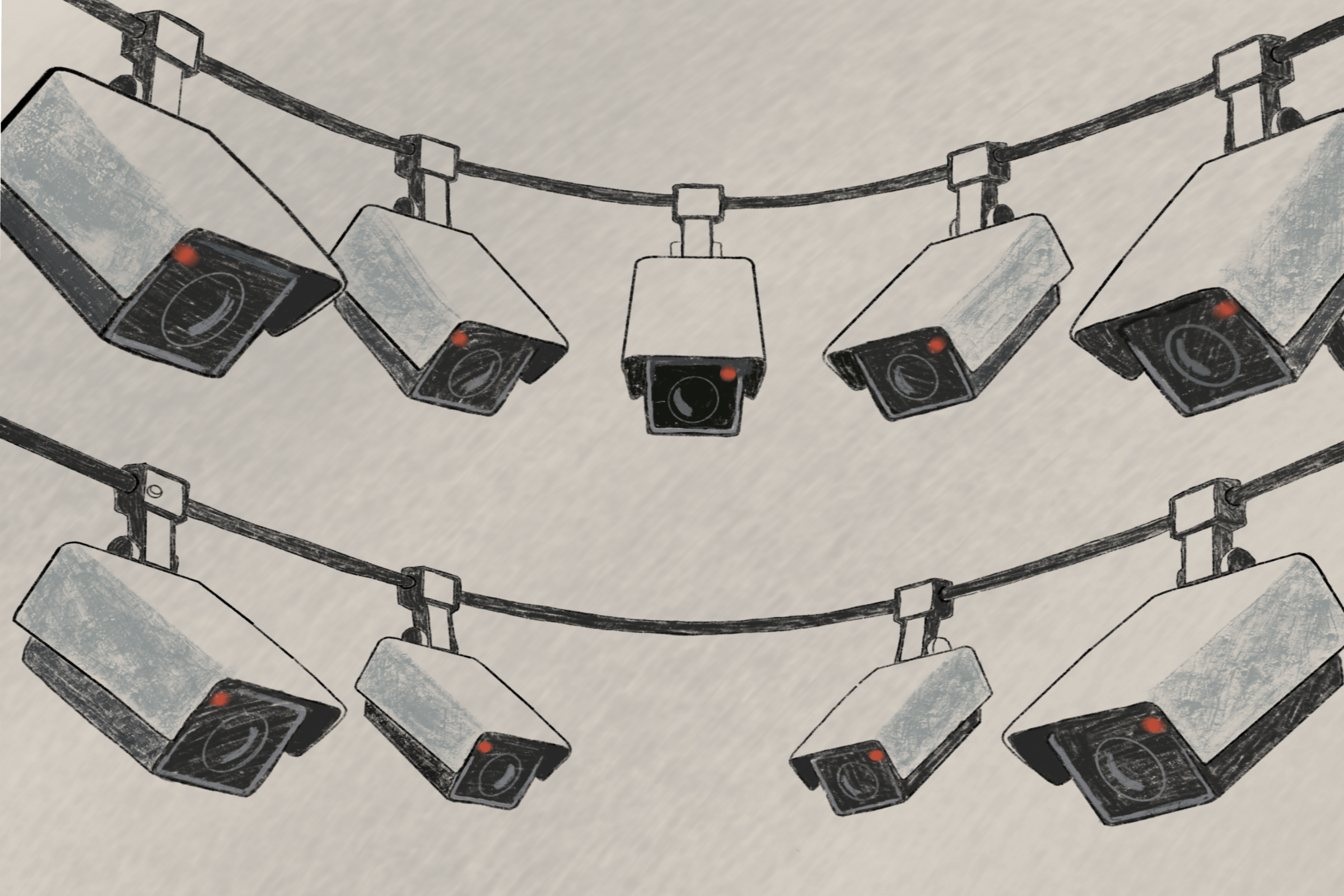
Police officers across the country are abusing their access to Flock Safety cameras to track their ex-partners, even in different states. With the public growing wary of how this security data is being used, organizations are beginning to end contracts.
More than 120,000 cameras are part of Flock Safety’s nation-wide network, according to a pricing report released June 25. The surveillance agency uses various technological products to collect data it deems “relevant information.” This data, Flock claimed, is collected for communities and law enforcement to “respond faster and make better informed decisions.” Using this data, the company built a “public safety platform” for clients. These clients are able to determine authorized users and can make this data transparent if they choose. Flock Safety has not released the official number of cameras set up around the United States.
Three police officers have been convicted of using Flock Safety cameras to track their ex-partners. They used the license-plate reader (LPR) technology by Flock to track the cars owned by their ex-partners. Flock Safety’s new AI auditing system is what caught the actions of these officers.
In Prairie Grove, a suburb of Chicago, former Holiday Hills Police Chief William Copp used the LPR Flock system to track his ex-partners and anyone they had a relationship with, according to Police Chief Michael Goins. Court records show the former police officer was charged with 12 counts of official misconduct for 250 unauthorized searches using Flock. He resigned from his part-time policing position.
A police officer in Texas used multiple law enforcement databases to track his ex-partner, her family, and her various partners. He gathered their addresses, identities, license plate numbers, and registrations. He conducted 25,000 searches across these systems, although the Angelina County District Attorney reduced the indictment to 100 counts. Zachary Klein was sentenced to five years in prison.
Asad Zahir, a police officer from Shively, Kentucky, was arrested on Aug. 25 for five counts of official misconduct and unlawful access. He conducted more than 2,000 searches within five months to track his ex-partner between states. The new auditing system informed the Shively Police Department that Monday, and after review, officers arrested him.
In North Carolina, Elizabeth Snowman was arrested for using her police department’s Flock system 31 times to track her boyfriend’s ex-wife. Officers are required to log a reason for access — she searched “motor vehicle infractions” for most of these. Snowman was released from jail on Aug. 5th with a $5,000 secured bond.
Amidst concerns from the public, cities and agencies have backed out of their contracts with Flock Safety or have let their contracts expire. The LAPD decided to not renew its contract in July due to cars being falsely flagged as stolen and privacy concerns around data collection. The LAPD chief of information reported to other news outlets that they will only work with Flock Safety again if these concerns are addressed contractually.
After the backlash, Flock Safety released a statement of changes to their programs. Instead of the previous 30-day retention of videos and images from their cameras, the cameras are now automatically set to a seven-day retention period. Companies are able to request an increase of this period, although it must be approved based on valid reasoning. Flock Safety also now allows cities to choose what data they are willing to share with other cities. Instead of access to all data, Flock’s clients are able to specify a crime and give access to evidence related to those crimes.
In the same article, Flock Safety announced that they will require every company to adopt Audit Assistance, which has a “proactive lockout” feature. If the program detects unusual behavior, it will automatically lock the user out until an administrator reviews the activity. Flock continued to deny that their technology has software that recognizes and follows people.
Flock’s FreeForm program can track clothing and attributes based on simple language. This AI-powered search engine is meant to increase the efficiency of finding missing persons without using facial recognition. The system is able to access each camera and gather “relevant” visual evidence based on the search. This extends to humans and vehicles.
In Troy, New York, a man cut down license plate readers on the roads in protest of Flock Safety. In Oakland, California, LPRs have been “paint bombed,” and in Idaho, Allyn James Carter drove his truck into two Flock LPR cameras and was charged with a felony. receiving a felony charge.
Chicago’s Office of Public Safety Administration and Office of Emergency Management & Communications signed an agreement on the city’s behalf. The city paid for a Memorandum of Understanding with Flock Safety that allows the Chicago Police Department to view camera information from the safety portal. Since Flock cameras are privately owned in Chicago, CPD only has access to camera data that private companies share.
After allegations that Flock Safety allowed ICE to access cameras in Chicago, Elgin Community College requested that its surveillance cameras be taken down. The college revealed this information in a statement released on Oct. 10, 2025. The cameras were installed by the college to “enhance the safety and security of students.” After a student was detained in the campus parking lot, other students were afraid, and enrollment rates dropped. ECC conducted an audit of campus security cameras and did not find evidence that they were accessed by ICE, but listened to “community concerns”. Flock Safety also denied that any data was shared with ICE.
Flock rejected the school’s request to uninstall cameras since there was no breach of contract. College staff responded, saying they would pay for the rest of the contracted months, but wanted the cameras taken down. Flock did not respond to the school’s request, and the college covered the six cameras with trash bags and zip ties. Unconfirmed Flock workers in unmarked vehicles removed the coverings. Flock Safety and the school exchanged emails until the contract expired in April of this year, when Flock uninstalled the cameras.