

The University of Chicago is one of the most prestigious universities in the world, and it is home to one of Chicago’s premier fine art museums, the Smart Museum of Art. Hosting roughly six exhibitions a year — three in the fall and three in the spring — each cycle becomes a spectacle. This spring, three exhibitions occupy the halls of this modernist building on the edge of the UChicago campus: one surveying contemporary Chinese art across the last three decades; another serving as a collaboration between students of the UChicago class “Power, Identity, Resistance,” and the museum; and the last showcasing Alma Thomas’s abstract works, organized by the Smithsonian American Art Museum.
“Beyond Boundaries” continues the long-standing focus on research and on showcasing the contemporary art of China started by Wu Hung, Harrie A. Vanderstappen Distinguished Service Professor of Chinese Art History at the University of Chicago. Surveying the last three decades of contemporary Chinese art, the exhibition’s curatorial text claims to “explore how artists navigate and challenge physical limitations across cultural, environmental, and political terrains.” Composed of works by artists such as Ai Weiwei, Lu Yang, and Wang Wei, the exhibition takes up only one gallery. This came as a surprise to me, as I thought a survey of the last three decades would take up more space considering how much contemporary Chinese artists have contributed to the art world, and how drastically Chinese contemporary art has changed over 30 years.
I was also surprised by the lack of diversity of mediums featured in the exhibit. Knowing how much art in China has changed since the 1990s, seeing only two sculptures and one video/game piece as the outliers in the room came as a disappointment. Photographs fill the remainder of the space. A few artist books hidden in the corner seemed like a good way to show diversity in mediums and topics; however, they are presented in glass vitrine with only the covers showing, and not one of them is open for the viewers to see the contents. Additionally, the show itself is quite small, featuring roughly 10 works. Despite being confined to a single gallery, the space feels too large for the amount of works present. The exhibit doesn’t feel like much of a comprehensive survey, since the majority of the art in the show comes from the 1990s, with comparatively few works from the past couple decades. “Beyond Boundaries” fails to be a representation of the last three decades of Chinese art. It appears to be a mere highlight of some objects in the Smart Museum’s collection, curated in what manages to be only somewhat reminiscent of a cohesive narrative. In my opinion, this show did not present anything new, eye-opening, or groundbreaking; rather, it struck me as merely an exercise in curating a show with what is available.
“Wise to the Power” struggles with similar problems. It’s the second part in an exhibition series created by students and professors of the UChicago social sciences core class “Power, Identity, Resistance,” which focuses on the questions of “why, and how, do people form political communities? How does political society organize our economic lives — and vice versa? And how, as individuals, do we navigate society?” The exhibition operates as a supplement to the course and explores how power operates in artists’ practices. On paper, it sounds like an interesting concept, but in reality, it becomes a poorly motivated “group” exhibition of artists who have nothing in common, with art that also often has almost nothing to do with power, politics, or anything stated in the curatorial text.
Most objects in “Wise to the Power” are accompanied by wall text, the first part of which is a quote from the book in the course reading list, and the second part of which is written by the undergraduate students of the course. The only positive I can mention in this regard is that, at least, the text does not seem to be AI-generated. Otherwise, the labels are full of poorly supported speculation on artists’ intents and motives, written without any real understanding of art history or art-historical writing. Overall, the problem seems to be that the curators at the Smart try to create exhibitions working with what is at hand, but their collection, despite exceeding 17,000 objects, seems to be too small to create a cohesive show with a clear thesis and a precise outcome. Both “Beyond Boundaries” and “Wise to the Power” end up being interesting on paper and in theory, but in reality, inside the galleries, they fail to live up to their set goals and expectations.
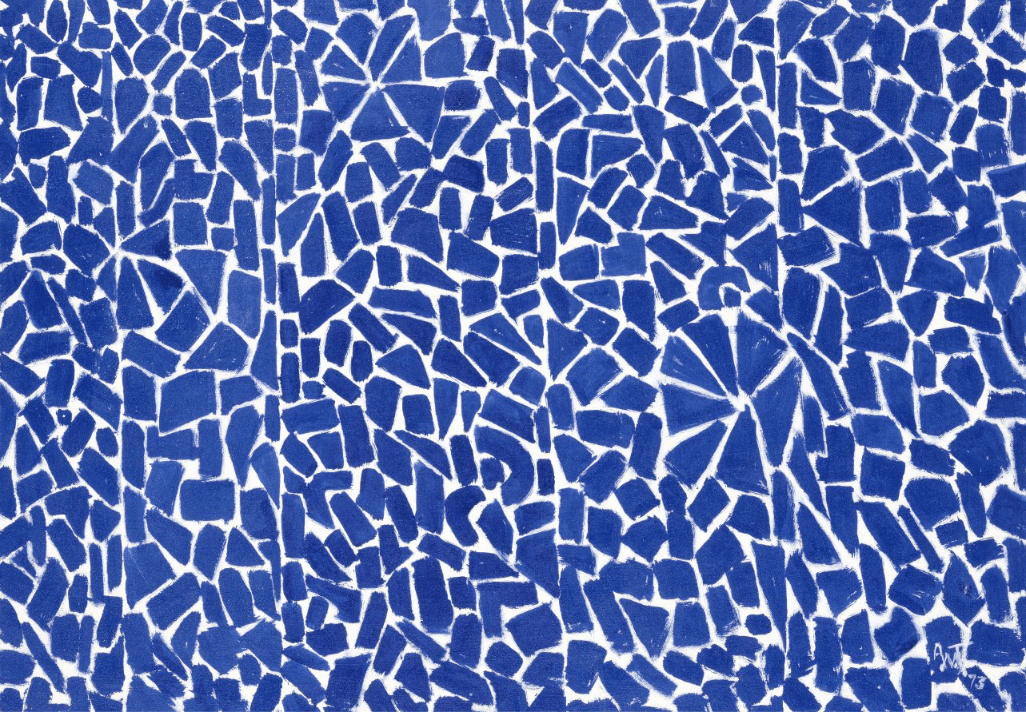
The only show on display at the Smart that ends up being worth the trip to the UChicago campus is “Composing Color: Paintings by Alma Thomas from the Smithsonian American Art Museum.” Perfectly timed for April’s Artemis II mission, the show highlights three distinct topics in Thomas’s abstract works: space, earth, and music. Her vivid pieces, perfectly balanced against navy blue walls, are truly stunning and mesmerizing. Her technique, perfect in its imperfection, supported by deep colors, hypnotizes and inspires, as much as the Apollo missions inspired Thomas herself. The division of the show into three parts by theme works magnificently, creating a strong and linear narrative and showing the subtle change in her technique and approach over the years. Especially impressive is the “music” section. Reading about music being a part of Thomas’s process, with her paintings often created while listening to a variety of albums and mixtapes, reminded me of Wassily Kandinsky. Kandinsky had a condition called synesthesia, which caused his senses to overlap, allowing him to involuntarily see vivid colors and shapes when he heard music, and “hear” harmonious sounds when painting. A tiny supplemental show in the corner of the same gallery, showcasing UChicago’s involvement in the Apollo missions’ preparation, does not distract from the main spectacle and, in my opinion, adds a nice contrast to Thomas’s abstractions.
Ultimately, the Smart Museum remains one of Chicago’s most interesting and promising museums, even when they produce questionable shows. It is still one of the few museums in Chicago with a connection to a major academic institution, and it tries to make the most of that relationship. This often results in compelling exhibition concepts, even if the final execution is less than ideal. What seemed to be lacking this time was the absence of cross-institutional partnerships, which would have allowed curators to work with a wider variety of art, which would’ve helped them deliver their points more precisely. A less ambitious exhibition thesis also could have helped. Nonetheless, this spring cycle will be remembered for the “Composing Color” exhibit produced by the Smithsonian, rather than Smart’s own exhibitions. Open until July 5th, Smart is free to the public every day from 10 am to 4:30 pm, except Mondays.