

Okay, I admit it. I never beat “Lego Star Wars: The Complete Saga” for the Wii.
Growing up, I actually had access to a lot of video games. I had a Nintendo DSi, a Wii, and eventually I even got an iPhone with all the free games (with ads) a kid could dream of.
Even though I had access to all these games, I preferred watching other people play games more than playing them myself.
It’s the paradox of choice that exists with having access to so many games through the internet. The endless Netflix scroll of deciding what to watch doesn’t hold a candle when compared to the hours-long discussions of group game night over Discord, deciding what game we all want to play.
People love watching other people play games, and video games are no different. Just swap out the Super Bowl with “League of Legends.” The rise of high-speed internet has made this possible, according to a 2017 study. Platforms like YouTube significantly lower the bar of entry to uploading videos, which gives people access to a virtual audience of potential millions. This isn’t even acknowledging how, in most modern livestreams, viewers can actually engage with the streamer while it’s live.
It’s true that video games are an interactive medium, so it makes sense why you might question someone for watching someone else play them. But we’ve come a long way with what goes into the writing and design of a modern game. Even when not engaging as a player, games are a multimedia experience of music, performance, cinematography, and even choreography. There is something satisfying about watching someone fight a boss in “Dark Souls” over and over, until they have the battle so perfectly memorized it becomes a well-practiced dance.
Beyond the delight at watching someone display mastery over a game, there is the allure of the streamers’ personalities. The casual intimacy of the relationship of streamers to their viewers is engaging, and unlike in bigger budget productions, streamers act more like themselves as they film from their own homes.
These familiar live streams can be perfect sleep stories to go to bed to. Not only are the livestreams sometimes hours long, but the mental report with a streamer can make the sound of their voice comforting. This is neuroscience: when we sit in silence, our minds try to find stimuli. Without something to ground us, our thoughts can get louder until they become overwhelming. There are many ways to handle this, including putting a video on in the background. A video you’ve seen before creates a predictability that can make you feel safe.
That relationship exists with all kinds of content, but games specifically can offer a unique stress release. There are studies linking mirror neurons to watching people play games, allowing us to perceive ourselves as playing the game in their stead. It’s authentically satisfying to watch someone finally overcome a challenge.
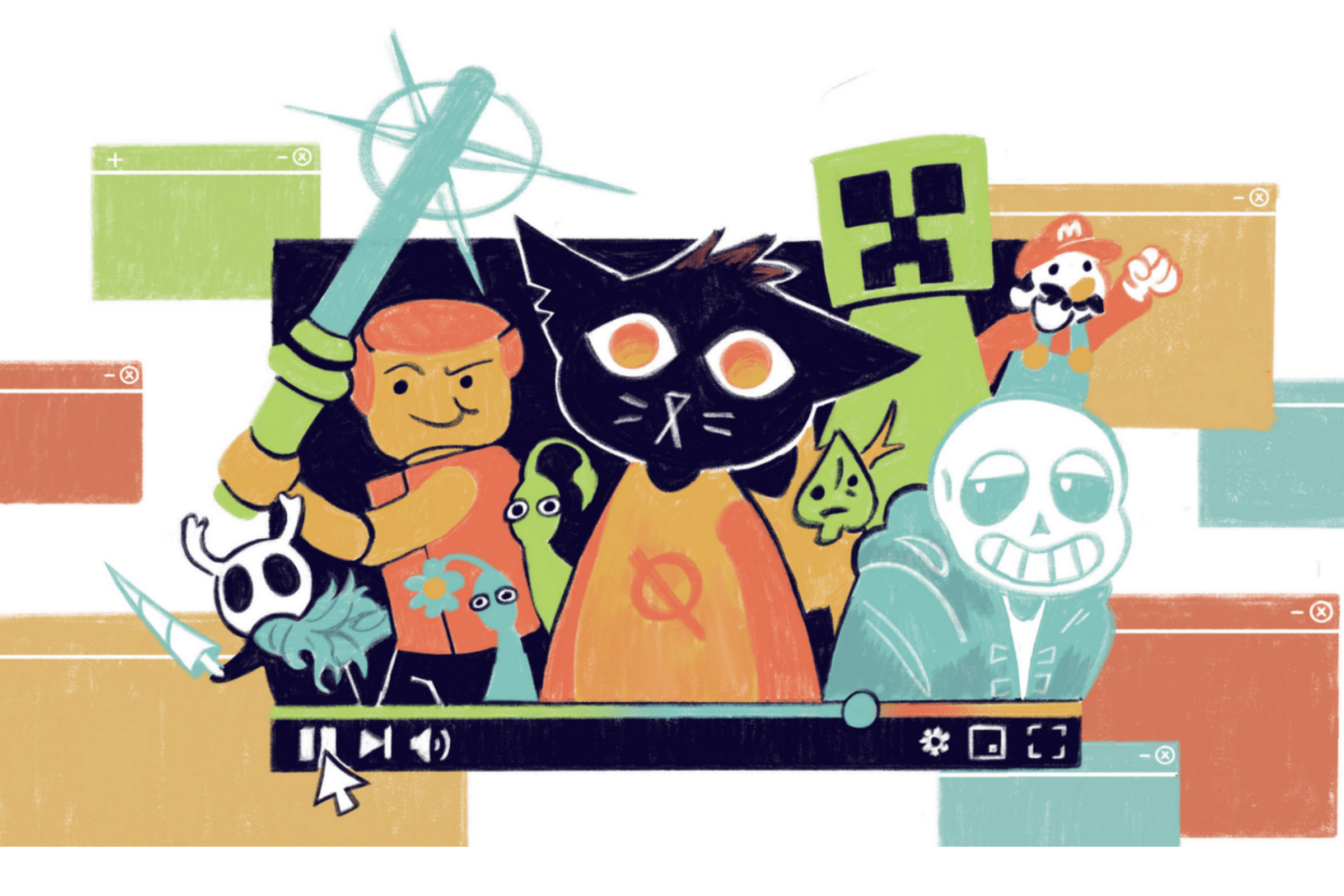
I love the game “Night in the Woods.” I watched Seán “Jack” McLoughlin, otherwise known as Jacksepticeye, play it when I was 12-years-old. The story is about 20-year-old college dropout Mae returning home to Possum Springs and coming to terms with adulthood. McLoughlin has now featured as a voice actor in other works, but his unique voices breathed a vibrant life into the characters’ already witty dialogue during his playthrough.
Now, I’m 21 and still haven’t played “Night in the Woods,” but I resonate with Mae’s story.
Coming home, I feel all the ways I’ve changed. So when I watch an old playthrough, it feels like home again.