

As of Nov. 11, the government has been shut down for 42 days. It is the first shutdown in seven years, and has become the longest shutdown in US history.
Since taking office in Jan. 2025, Trump has taken a hatchet to the government as we know it. Far from being surgical, the cuts have been sweeping and general, with little care to if the government actually still functions.
The implicit bias towards gleeful destruction and Democratic Party blame is clear even on government-maintained websites. The White House website has a dystopian shutdown clock that counts upwards since the shutdown has started. The page states “Americans Don’t Agree with Democrats’ Actions.” The Trump administration has been more than happy to blame the Democrats for the shutdown; Trump has gone so far as to say, “We’re only going to cut Democrat programs.”
It’s almost like they’re trying to instill perpetual fear on purpose.
Government shutdowns are relatively new. Sometimes federal funding legislation isn’t passed in time for a fiscal year, usually due to disagreements about what the money should be spent on. This is called a funding gap. In 1980, the Antideficiency Act passed, which prohibited agencies from spending money when the government is in a funding gap. This inability to spend money is why government shutdowns are problematic.
Usually, funding gaps are caused by demands from Republicans. Republicans are willing to stop the government in its tracks to bicker about spending and policy nuance. However, this shutdown was started by Democrats — they’re demanding more health care program spending and imposing limits on Donald Trump’s spending power.
Historically, shutdowns have been awful. Workers get furloughed, flights are delayed or cancelled, the gross domestic product (GDP) declines, resources and funding run out. If the shutdown continues, officials warn nearly 2 million Illinoisans could lose their food stamp benefits next month. Yet on Oct. 15, the Trump administration found money for a US troops’troops paycheck.
Business, the Government, and Fascists
Donald Trump’s platform as a politician is “Make America Great Again.” He won in 2024 on a platform of “Running the Government like a business.”
Fun fact: the government is not a business. A business seeks profit and constant growth. Businesses often leave the wellbeing of employees behind. They don’t care about their environmental, societal, or political impact. They don’t need to be moral. They have a CEO, not three branches of government with checks and balances to prevent the government from falling into fascism (which, if you weren’t aware, is what is happening right now). But fine, sure, let’s run the government like a business and cut out all the fraud. Get in here Elon Musk!
Despite promising savings of $2 trillion in Oct. 2025, Department of Government Efficiency, led by Musk, repeatedly inflated predicted savings or did not release enough information for the savings to be verified. Musk left in May 2025 after fewer than four months, saying that his privatization agenda should become “a way of life in government.” And the government doesn’t work better or faster now, it works … worse.
Okay, what if we privatize everything? The government is wasteful with its resources and can’t manage everything, so let’s give it to real businesses instead of trying to convert this 249-year-old-monstrosity of systems into an efficient DOGE-run machine.
But health care is already privatized, and, surprise, it’s ruining lives. Privatizing prisons for profit leads to more people in prison. Fire-fighting services were privatized in the 1800s, and it didn’t work, just as it isn’t working now. As for utility systems, remember the 2021 winter blackout Texas had? Without federal oversight, private companies failed to maintain their grid.
In fact, remember when Chicago privatized parking? Parking prices quadrupled. These things are not cheaper as a result of privatization. They are worse, more expensive, and deadlier.
Privatization was practically invented by the Third Reich, with fascist Italy following suit. Adolf Hitler said, “Private enterprise cannot be maintained in a democracy.” It only took him six months to take over Germany. Pretty efficient, no? It appears fascism is good for business.
Should we listen to fascists when they tell us our government is inefficient? Should we listen when they say inefficiency is bad?
We do not upkeep roads because doing so makes money. USPS prices and government fees are based on what they need to keep functioning, not what they need to turn a profit. After all, what are taxes if not a subscription-based system for goods and services?
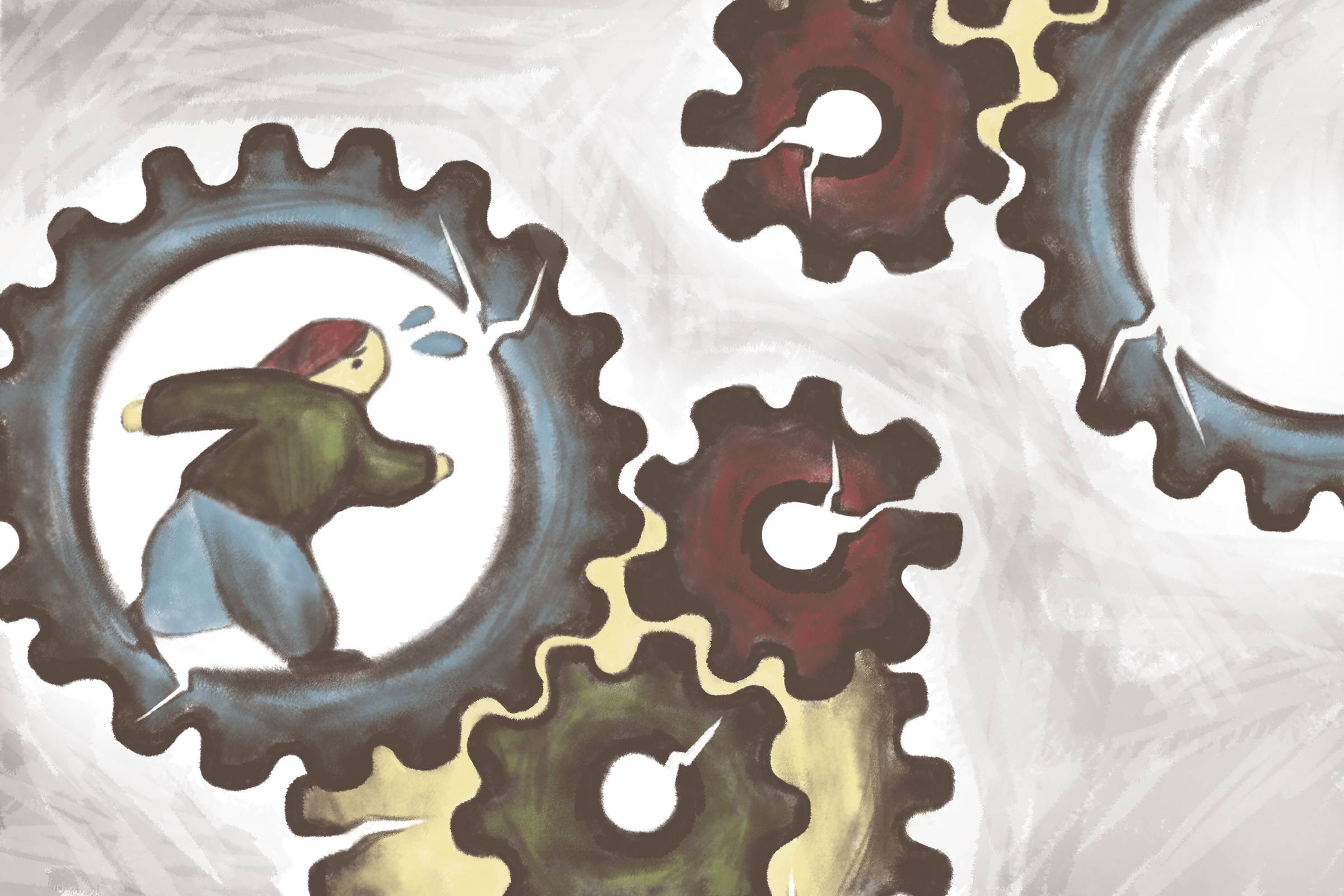
I think we can all agree these changes are dogshit. Efficiency is good for getting things done — not for being human. The government isn’t meant to be efficient. It’s a tool so we can provide the most good to the most people. Businesses increase prices to maximise profits. Businesses cut costs. Businesses fail. The priority of the government should be the common good. Not profit or growth.
Efficiency isn’t Accessible
In the disabled community, there is liberation in moving beyond “efficiency” as a goal. This insistence on “efficiency” is ableist, specifically under capitalism. ”Crip Time,” coined by scholar and professor Ellen Samuels, is an alternative framework.
As professor Alison Kafer said to Samuels in her book, “Feminist, Queer, Crip:” “rather than bend disabled bodies and minds to meet the clock, crip time bends the clock to meet disabled bodies and minds.”
Author Élaina Gauthier-Mamaril says, “One learns to live in crip time or learns crip time.” No one chooses to live in crip time, but we can all choose to deprioritize productivity and efficiency in order to give ourselves time back.
Barry Schwartz, a professor of psychology, speaks of inefficiency as being “like an insurance policy.” We should be inefficient now so we can be efficient later, like taking a nap so you don’t fall asleep when you pull that overnighter. Like US Government Social Security, it’s our job to take care of everyone“we take care of everyone when they can’t take care of themselves.” Someday other people will pay for your benefits.
In this way, crip time can be seen as “crip refusal” — the “measure of constant progress and increased labour efficiency” cannot apply. It becomes disabled liberation, something that is taken because it is needed, without waiting for permission or an offer.
Efficiency in our School
The School of the Art Institute of Chicago is not immune to these ideas of efficiency. Youtuber Joshua Heath Scott credits our culture valuing efficiency to the Industrial Revolution. People being skilled at one thing and prioritizing that thing over being interdisciplinary and multifaceted reduces waste and makes more money.
He also makes the point that art is inherently wasteful. Cuts at SAIC have been more thoughtful than those of the Trump administration, although they are also disastrous. Changes to overnight studio access come to mind. The school has made it clear that we need to save money, we need to be more efficient with resources, and our students need to be more efficient.
As a staff, F Newsmagazine spans nearly every discipline at SAIC: performance, writing, comics, fashion, painting and drawing, art education, and FVNMA — and we feel rushed. SAIC has cut the length of classes, increased classroom student limits, and cut studio hours. We have less and less time on campus. There’s no time for iteration. In order to get the attention of our professors, we must rob someone else of their opportunity. Critiques feel so long, yet there is no time to fix mistakes.
We feel as though in school, in what is supposed to be a controlled environment, we are preemptively being prepared for adverse conditions. Process-based learning gets overlooked out of necessity, and the creative heartbeat stills.
Conclusion
Our nation is split down the middle, with little to no empathy on either side for the other. Without community and collaboration, the world is more violent, less kind, and a worse place to live in. This mad dash to save money — federally, and at SAIC — values efficiency and growth above human beings, despite human beings being the reason they exist.