


The term avant-garde, derived from the French military expression meaning “advance guard,” is used in art and literature to describe practices that challenge established aesthetic, ideological, and institutional norms. Avant-garde artists position themselves ahead of their time, often facing rejection by dominant cultural systems because their work questions power, taste, and tradition.
Historically, avant-garde movements from dada to surrealism to situationism have attempted to dismantle conventional artistic forms and use art as a tool for social and political transformation. While the avant-garde is widely celebrated for its revolutionary intent, it often prioritizes concept over craft. In many cases, aesthetic rigor, technical mastery, and material discipline are deliberately abandoned. Though this rejection is framed as resistance to bourgeois values, it raises a critical question: can art that dismisses skill, labor, and visual responsibility truly serve the people it claims to represent?
The radical legacy of Buddhist art does not remain confined to history. In contemporary India, Buddhist–Ambedkarite visual art continues this revolutionary lineage, operating as a living avant-garde practice grounded in anti-caste struggle, Buddhist ethics, and Ambedkarite rationalism.
This art does not seek validation from Western avant-garde canons, nor does it rely on shock, absurdity, or formal rupture alone. Instead, it advances a deeper tone that intervenes in social structures, historical memory, and ethical perception. Its avant-garde character lies in its refusal to separate aesthetics from lived reality, and form from responsibility.
Contemporary Buddhist Ambedkarite’s visual practices confront caste as a material and ideological system. Through figuration, symbolism, spatial strategies, and material choices, these works expose how power operates on bodies, labor, land, and memory. Rather than aestheticizing suffering, they insist on making visible the structures that produce it. This insistence aligns directly with the Buddhist articulation of dukkha not as an abstract condition, but as a socially produced reality that demands transformation.
Like early Buddhist art, these contemporary practices prioritize mass legibility without sacrificing conceptual rigor. Their visual languages are accessible, direct, and grounded in everyday experience, yet they carry layered philosophical meaning rooted in equality, rationality, and compassion. This balance between accessibility and depth stands in stark contrast to much contemporary avant-garde art, which often remains trapped within elite institutional circuits and opaque theoretical gestures.
Importantly, Buddhist Ambedkarite visual art functions as a counter-archive. It reclaims history from Brahmanical and colonial narratives, re-centering marginalized bodies, symbols, and knowledge systems. In doing so, it does not merely represent the oppressed; it reconstructs visual culture itself, challenging who has the authority to produce meaning and whose lives are considered worthy of depiction.
Formally, these works may appear restrained, even sober, when compared to spectacular avant-garde gestures. Yet this restraint is deliberate. The art refuses excess in favor of clarity, refusing spectacle in favor of sustained critical engagement. Its experimental nature lies not in novelty for novelty’s sake, but in its commitment to reorienting vision training the viewer to see caste, violence, and resistance where dominant aesthetics.
Contemporary Buddhist Ambedkarite visual art fulfills what avant-garde theory has long claimed but rarely achieved. It unites ideological rupture with ethical commitment, mass relevance with artistic rigor, and historical consciousness with formal intelligence.
In continuity with ancient Buddhist art, these practices demonstrate that true avant-garde work is not defined by stylistic rebellion alone, but by its capacity to transform consciousness and social relations. Far from being peripheral to global art discourse, Buddhist Ambedkarite visual art stands as one of the most complete, grounded, and ethically coherent avant-garde practices of our time.
This is not a rejection of avant-garde art entirely. Avant-garde movements deserve recognition for challenging dominant cultural narratives and questioning the commodification of art. Their insistence on political engagement and social critique is significant.
However, the lack of artistic skill in much avant-garde work weakens its revolutionary potential. When art becomes entirely detached from form, labor, and visual intelligence, it risks becoming elitist. What claims to resist power often ends up depending on the same elite validation systems.
Revolutionary art must not only oppose power; it must communicate, endure, and move people. Buddhist art achieved this centuries ago without abandoning craftsmanship.
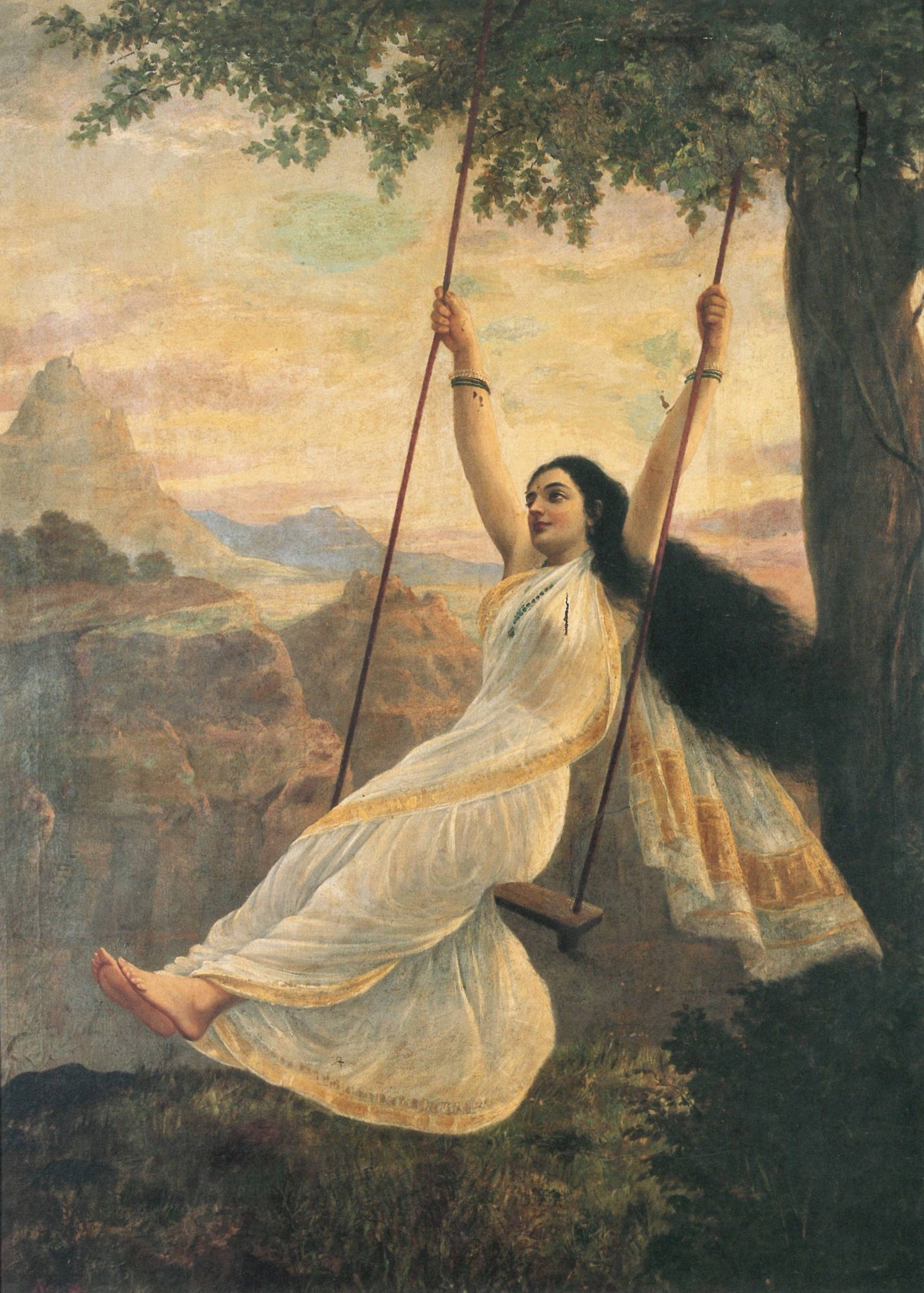
Raja Ravi Varma is often celebrated as a pioneer of modern Indian art. However, a critical examination reveals his work to be deeply problematic both politically and culturally.
Varma’s paintings of Hindu gods and goddesses are not acts of creative innovation but acts of appropriation and aesthetic colonization. His visual language is heavily borrowed from European academic realism, while the iconography he depicts is largely derived from earlier Buddhist and folk visual traditions. This synthesis is frequently mistaken for originality, when in reality it reinforces Brahmanical dominance through colonial aesthetics.
Rather than challenging caste hierarchy, social injustice, or religious authority, Varma’s art aestheticized power. His gods are muscular, fair-skinned, royal, and distant figures of dominance rather than liberation. The mass circulation of his lithographs normalized these images, shaping popular religious imagination in ways that erased subaltern, Buddhist, and anti-caste visual traditions.
In this sense, Ravi Varma’s work lacks both revolutionary intent and social responsibility. It does not question society; it beautifies its inequalities. It does not serve the oppressed; it reassures the powerful.
If avant-garde art is defined by its capacity to challenge dominant structures, then Buddhist art stands as one of the most authentic avant-garde traditions in history rooted in ethics, skill, and mass transformation. While modern avant-garde movements offer important political critiques, their frequent rejection of artistic rigor limits their reach and impact.
At the same time, figures like Raja Ravi Varma must be re-evaluated not as national icons but as contributors to cultural hegemony. True revolutionary art does not merely innovate visually; it liberates thought, dismantles hierarchy, and speaks to the lived realities of the oppressed.