

Toward the end of 2025, 4.9 million people spent an hour with YouTuber Eddy Burback as he set out on a mission to fabricate a parasocial relationship with an AI chatbot. In doing so, he discovered that not only was the AI easy to manipulate, the chatbot would agree to any idea he concocted, no matter how extreme it was.
While most viewers observed Burback’s experiment as an entertaining video, for some, it was a chilling reality. ChatGPT currently has 900 million weekly active users, and despite the quality of responses, users sometimes project their own humanity onto the machine. That means the relationship is one-sided. Parasocial.
Parasocial relationships are nonreciprocal, one-sided relationships that people form with characters, celebrities, or other public figures who do not share the same bond.
In December 2025, the Cambridge Dictionary word of the year was “parasocial.” In an article written by Cambridge University about the words of the year, “parasocial” is described as “one of several AI-related words that were added or updated in the Cambridge Dictionary.”
Parasocial relationships are nothing new and are not specific to AI. People have been forming falsified relationships with fictitious characters since we started telling stories. The term originated in 1956 from sociologists Donald Horton and Richard Wohl at the University of Chicago. Wohl coined the term after he and Horton observed people treating television characters as if they were friends.
Parasocial relationships aren’t always a net negative. They can help younger people in online spaces develop personalities and form identities and autonomy.
In order to understand how parasocial relationships got to the current state of AI girlfriends and downloadable AI celebrity voices, we need to understand the foundations of parasocial relationships and celebrity worship.
Fandom spaces have existed for a debatably long time, but the legend goes that modern day fandom starts in the 1970s, with the fans of “Star Trek: The Original Series.” From Trekkies, fandom evolved into an ever-growing list of fan groups from Tumblr blogs to local comiccons to fandom-specific meetups like Bronycon.
These types of fandoms are dependent on fans forming parasocial relationships with the people or characters involved in their media of choice.
The “Supernatural” fandom has a reputation for being outwardly parasocial. “Supernatural” fans were rabid about the CW show, obsessing over its three main characters, and by extension, its actors.
Misha Collins, an actor who portrayed the angel Castiel on “Supernatural,” was obsessed over by “Supernatural” fans. Collins was often asked personal questions both online and during in-person Q-and-A events at conventions. Fans were so obsessed with Collins that they planned an elaborate April Fools joke they called the “Mishapocalypse” where they nonstop posted, printed, and distributed a terrible photo of Collins until the actor came out and acknowledged their collective prank.
But no TV or film-specific parasocial relationship compares to the extremes of those that can be formed by the fans of YouTubers. One of the most notorious examples is the Dan and Phil fandom, or the Phandom.
Dan Howell and Phil Lester are a YouTube duo who’ve been making videos both separately and together for nearly two decades. Lester has been making videos since 2006, and Howell started in 2009, when they started making videos together. Ironically, the duo only formed because of Howell’s parasocial relationship with Lester through his YouTube videos.
Both Howell and Lester have spent their careers filming personal, vlog-style videos, often in their bedrooms. Because of the personal nature of their videos, the Phandom that evolved alongside their content has been overtly personal since its creation. There’s a long list of personal-to-the-point-of-being-invasive offences made by their fans, which includes: asking their family members via Facebook if Howell and Lester were gay or in a relationship; spreading a private Valentine’s Day video made by Lester for Howell that was accidentally made public; fan speculation about how many beds were on a shared tour bus; fans leaking and showing up to the duo’s address in Manchester; and someone recreating a perfect replica of their entire London apartment in Roblox, including street views outside of their windows that were never publicly shown on camera.
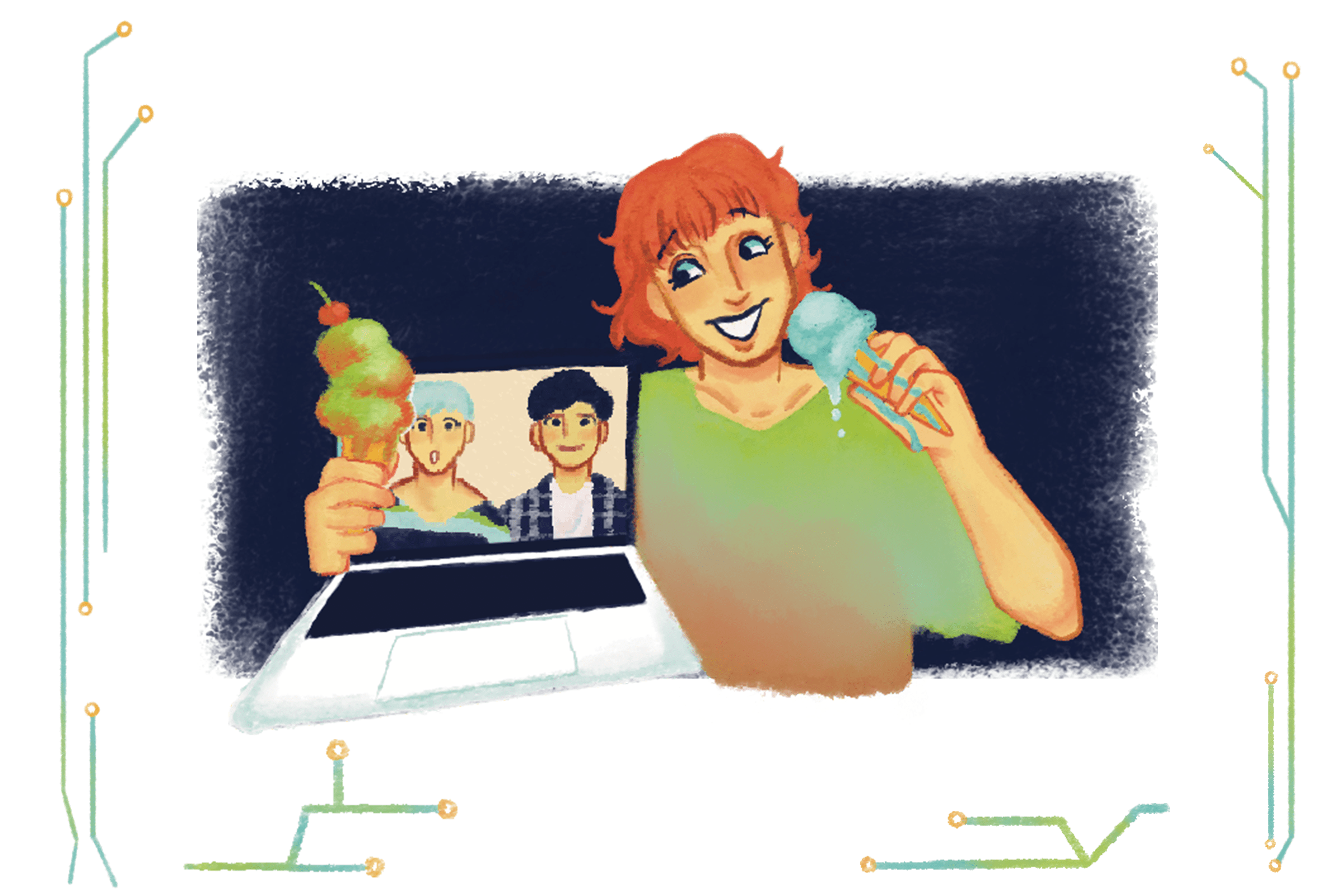
Fans went too far. But now, as parasocial relationships are changing, fans can go even further — rather than being intense, one-sided relationships formed with falsified versions of existing people, people are using the term “parasocial” to reference relationships formed with AI chatbots.
AI chatbots are often made to mimic existing people, whether they be celebrities, real people, fictional characters, or even therapists. Talking to AIs in this way can be dangerous and isolating. The same kinds of impulses that drive fans to stalk their favorite influencers can be encouraged by an AI that has the voice of that influencer.
Unlike real people, AIs don’t argue or push users to grow outside the prompts they write. We have created a society of people extremely adaptable to parasocial relationships, and the development of those relationships with AI will be incredibly damaging.