

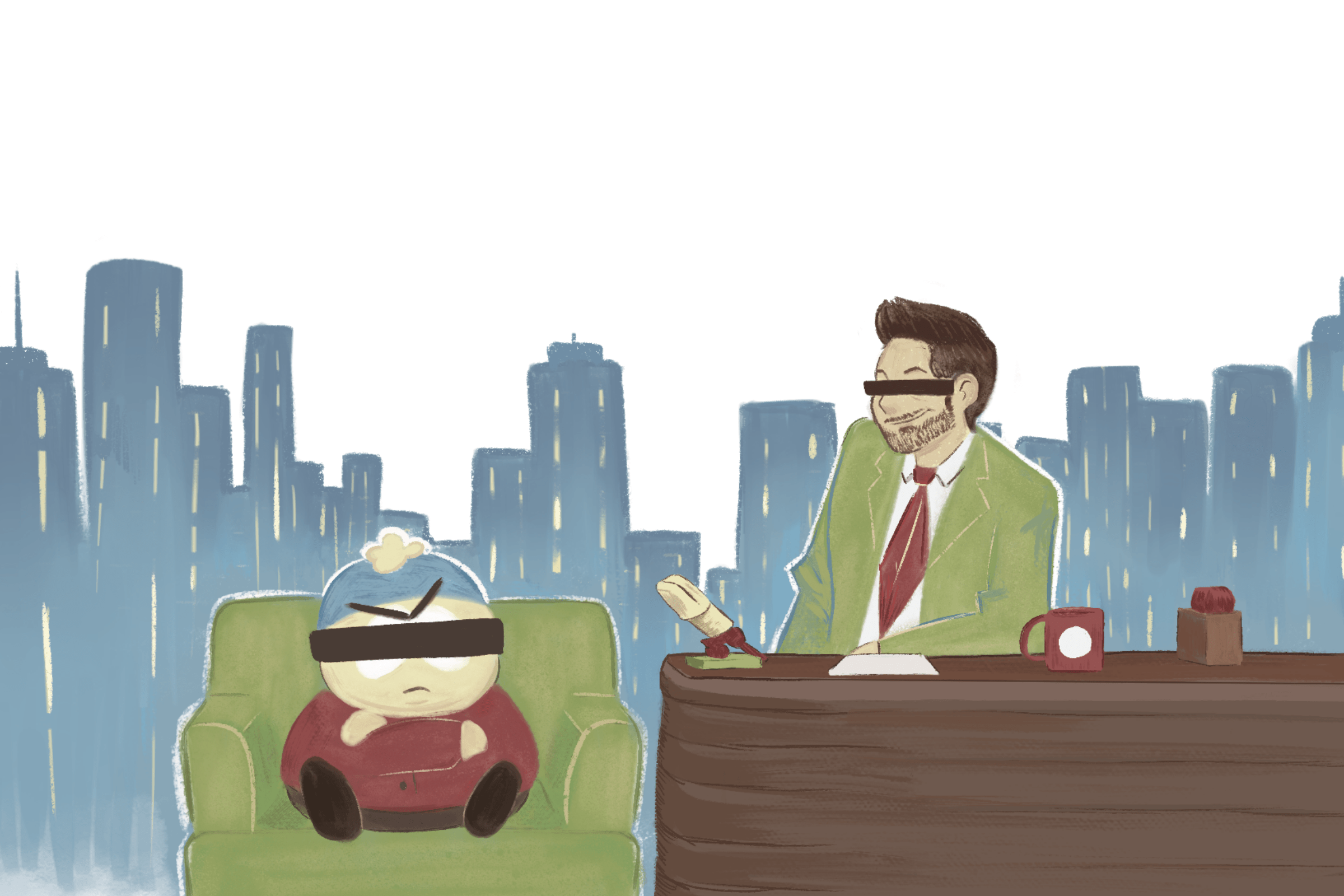
Apparently, there are only two ways of resolving a conflict: the easy way or the hard way. At least, that’s what Brendan Carr, the Trump-appointed chairman of the Federal Communications Commission, insinuated when Jimmy Kimmel was pulled off the air in September.
On Sept. 17, Jimmy Kimmel said that members of “the MAGA gang” were trying their best to dissociate themselves from the man accused of murdering conservative activist Charlie Kirk in order to gain political favor. Kimmel also likened Trump’s reaction to Kirk’s death to a four-year-old mourning a goldfish.
The next day, Nexstar Media Group, a major owner of ABC affiliates, publicly announced that it would refuse to air the “Jimmy Kimmel Live” show. Sinclair, the largest ABC affiliate group in the United States, took this a leap further by stating that during the original time slot for Kimmel’s show that Friday, it would air a special remembrance program dedicated to Kirk. Shortly after, ABC said it would indefinitely suspend Kimmel’s late-night talk show.
If you, too, get your quota of daily news from topical comedy — admittedly not a research practice I’d recommend — you might have noted a recent unraveling in this specific brand of late night comedy. Jimmy Fallon, host of NBC’s “The Tonight Show,” said, “Well, guys, the big story is that Jimmy Kimmel was suspended by ABC after pressure from the FCC, leaving everyone thinking, ‘WTF.’”
Monetary concerns were a factor in not only the suspension of the show but also its reinstatement after six days of incessant backlash. In Dec. 2024, ABC paid a $15 million settlement to President Trump over a defamation lawsuit. It is, therefore, unsurprising that the network would attempt to align with Carr and yield to political pressure.
Nexstar Media Group has a great strategic incentive to pander to the whims of Carr and the current administration — despite insisting that it acted unilaterally. It is in the process of trying to acquire TEGNA Inc., a major competitive broadcaster, for which it requires both approvals and regulatory changes from the FCC. This will expand Nexstar’s reach to a staggering 80% of American households, which would nearly double Nexstar’s current regulatory cap of 39%.
Following a week-long suspension and severe public backlash, Disney, ABC’s parent company, reinstated Jimmy Kimmel’s show. This has sparked speculation that the preceding suspension invoked significant loss of revenue through advertising, subscriptions, and stock market prices for the network.
While some may argue that the statements made by Kimmel were insensitive, the show’s overnight suspension emerges as a prime example of government overreach and censorship. If that week wasn’t dreadful enough, with the horrifying video recording of Kirk’s murder floating around online and being made to wade through everyone’s hot takes on the matter, the suspension of Kimmel’s show added the finishing touch to this real-life episode of “Black Mirror” that we were forced to endure.
Kimmel was probably not suspended entirely because of his supposedly callous remarks about Kirk’s murder. His first public remark about the murder, posted on Instagram, reads, “Can we just for one day agree that it is horrible and monstrous to shoot another human? On behalf of my family, we send love to the Kirks and all the children, parents and innocents who fall victim to senseless gun violence.”
The comment that truly got him into trouble was his comment about the administration weaponizing Kirk’s death for political gain — an observation that has aged pretty well, given everything that followed.
The primary issue with the suspension of this show was not the mob outrage of the far right; rather, it was the fact that the FCC orchestrated it.
The FCC is a U.S. government agency that regulates inter-state and international communications by radio, television, wire, and satellite. The government, not the public, made this call. This has the potential for setting a perilous precedent for the practice of free speech. The coalition of political pressure, financial consequences, and censorship is an institutional hazard not only for comedy but also for access to and dissemination of other forms of media.
This incident calls attention to a larger concern. It shows that tragedies can be weaponized to push agendas. In doing so, the administration is able to vilify liberal groups, trans people, or other media critics of the administration under flimsy pretexts.
During a Sept. 14 Emmy-award acceptance speech, one of the writers of John Oliver’s “Last Week Tonight” said, “We are honored to share [the Emmy Award for Writing] with all writers of late night political comedy, while that’s still a type of show that’s allowed to exist.” Unnervingly presciently, the camera pans to Kimmel. Three days later, Kimmel was pulled off the air.
As Oliver emphasizes in the aforementioned episode, there is a long history of local broadcasters refusing to air national programs — decisions that haven’t aged well. For instance, in 1970, the Mississippi Authority for Educational Television refused to air the show “Sesame Street” for having an interracial cast of children. Except, Kimmel’s suspension was not executed by some independent local station; rather, by two of the biggest television ownership groups in the country, Nexstar and Sinclair. It highlights the extent of sway that the government has over corporations, and, in turn, over the exercise of First Amendment rights.
As Oliver puts it, Kimmel’s suspension is certainly not the first instance of Trump’s crackdown on free speech. “He’s just the latest canary in the coalmine; a mine that, at this point, now seems more dead canary than coal,” said Oliver on his show.
If a comment made by a comedian threatened the government enough to pull him off air, in plain view, consider how much worse this could potentially get.
To be sure, the fact that mass backlash by viewers pushed ABC to reinstate Kimmel’s show may be the beacon of light we need. Comedy shows such as “Last Week Tonight” and “South Park” continue to boast a large viewership and following, amidst this political milieu, and despite it. The punchline might be the last thing we lose before the lights go out.