

As I write this, Israel has already broken the so-called “ceasefire agreement” they signed on Oct. 9. It lasted seven days. The world has witnessed these violations without consequences, the repeated violation of international laws. Gaza has shifted the world’s compass, exposing how these self-serving laws only apply to those who wrote them — and those who look like them. Gaza has paid the heaviest cost. As of this writing, at least 68,229 people have been killed, including 20,000 children.
The word “ceasefire” feels hollow when the land itself has been turned to dust — when people, homes, and histories have been reduced to rubble. This genocide has not only taken lives, as tragic as that alone is; it has also tried to erase memory, belonging, and the very possibility of normalcy. Still, in the midst of unbearable loss, I hope Palestinians are given even a moment to mourn their loved ones — men, women, and children. Yet there can be no “peace” as long as the Israeli occupation remains — not in Gaza alone, but throughout all of Palestine.
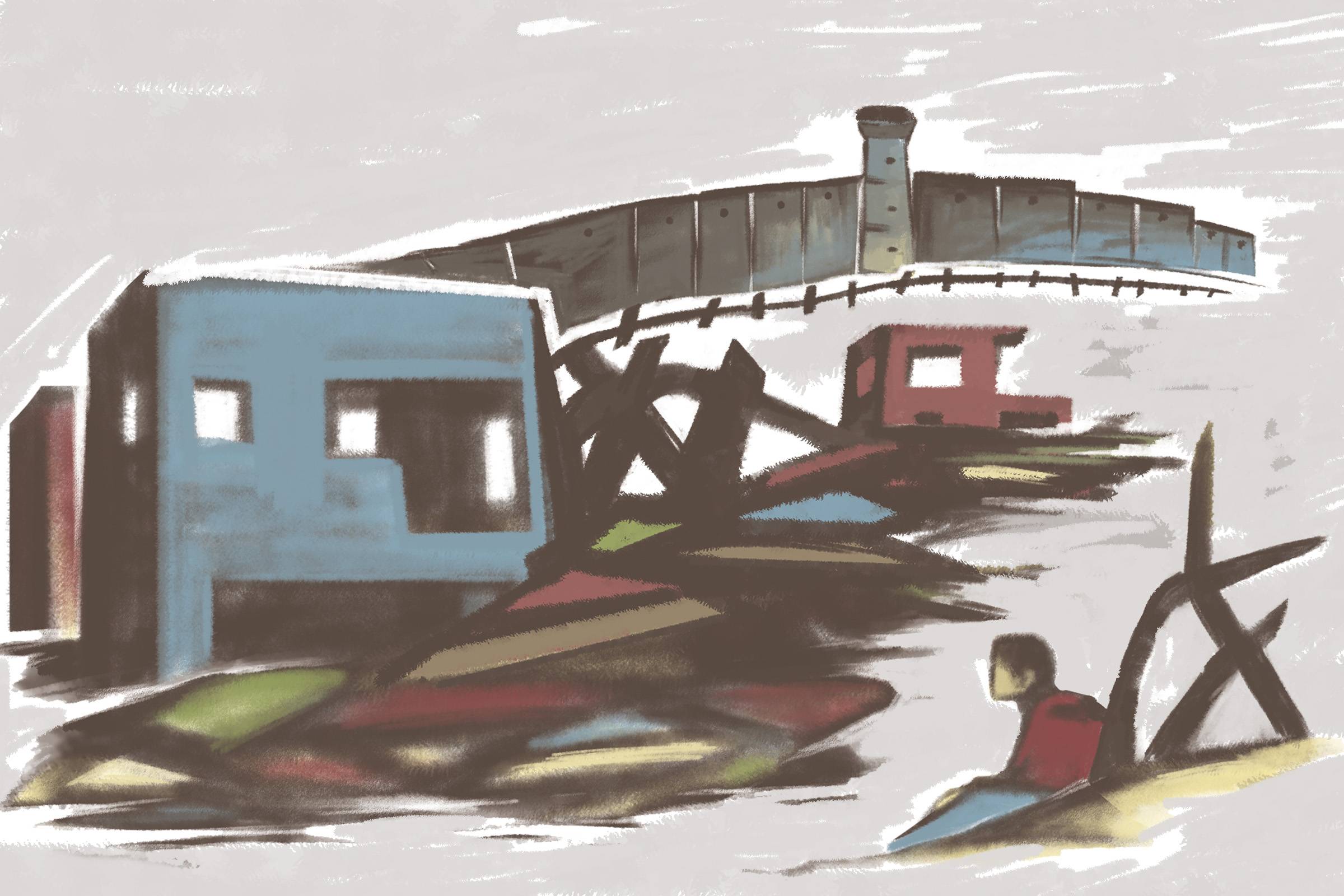
I come from a village called Turmossaya — one of countless villages in the West Bank that face continuous attacks from Israeli settlers and occupation forces. “Settlers” is too soft a word; as writer Mohammed El-Kurd said, they are “homicidal burglars.” We watch our land being stolen before our eyes — a cancer spreading rapidly, poisoning the soil and killing everything in its path. The violence is constant: land theft, raids, harassment, curfews, lockdowns, roadblocks, mass arrests, home demolitions, water restrictions. Illegal settlements, armed settlers, collective punishment, segregated roads, iron barriers, apartheid walls, surveillance towers, kidnappings, daily martyrs, and more.
My village, like every village in the West Bank, has known loss. Among the most recent are Omar Abu Qutein, 27 years old, shot and killed by the Israeli Occupation Forces (IOF) after settlers raided our village. He was among the first to confront them. And Amer Rabee, just 14, who was shot relentlessly alongside two of his friends — left to bleed as the IOF took his body and denied any medical help. These are not isolated stories; they are part of a shared grief that binds every Palestinian village. Each name, each martyr, each resistance fighter carries the weight of both existence and defiance — lives taken for “daring” to exist and to resist.
The killing of Palestinians, the bombings, and the relentless violence on the hands of the Israeli Zionist Regime did not start on Oct. 7 and will not end with a “ceasefire” in Gaza. Israel’s occupation has been ongoing long before 1948 — the year Israel was founded — and continues to this day. As we enter the olive harvest season, Palestinians in the West Bank are being killed daily by Israeli settlers and occupation forces — a constant reminder of the brutality faced even in the simplest act of existence. What should be a time of family, culture, and connection to the land has turned into a field of blood, where even the act of harvest is met with bullets and terror.
I completed my bachelor’s degree at Birzeit University — known as ‘The Martyrs’ University’ — and I carry the weight of its name deeply. Many students have been martyred at the hands of the IOF — students whose lives and futures were stolen, imprisoned, or exiled for speaking out and taking action. Schools and universities are raided regularly, and even education, a tool for liberation, is seen as a threat by the Occupation. They fear educated people, because knowledge resists erasure. Attacking schools and universities is not random; it is part of a larger plan of displacement and ethnic cleansing, to their attempt to try and strip us of the power to imagine and build a liberated future.
At Birzeit, students like Banna Al-Ghul from the journalism department have been exiled simply for speaking the truth. Countless others have paid with their lives. Two brothers, Jawad and Dhafir Al-Rimawi, joined a group of young men confronting Israeli forces during a raid on the village of Kafr Ein. Dhafir was shot in the chest, and Jawad, who ran to save him, was shot in the abdomen. Both were left to bleed out, and no one was allowed to reach them to help. These stories are not isolated — they are repeated throughout Palestinian history, reminders that every act of learning, living, creating, and resisting is a refusal to be erased.
Resistance, in all its forms, is a right — the most human response to injustice. Yet the world tries to dictate how we should react, how we should mourn, how we should resist. Still, I don’t forget the free people of the world, whose voices, actions, and solidarity remind us that humanity still exists. Ghassan Kanafani, the Palestinian writer and journalist whose words were too truthful, was assassinated by Mossad. He wrote, “المقاومة فكرة والفكرة لا تموت” — “Resistance is an idea, and an idea never dies” — and it remains true, no matter how many bodies fall.
Art, for me, is inseparable from this reality. It becomes a vessel for memory, a space to preserve what the occupation seeks to destroy. Throughout history, art has always been a medium of resistance and revolution: it challenges power, sparks change, and amplifies voices that systems have tried to silence. Yet I often ask myself — how far can art go today? How much can creative expression truly disrupt power?
Still, even in this doubt, I believe in the power of art as witness, resistance, and a tool to preserve memory, demand accountability, and inspire action. Even when it feels like what you are doing or want to do won’t make a difference, it matters — because silence and normalization are exactly what they want. As long as we continue to stand for justice, to create, to speak, and to resist, we deny the erasure they hope for.