

When it comes to Latine and Hispanic authors, more or less the same handful of writers get assigned in Anglophone classrooms. Usually you always get Jorges Borges and Gabriel García Márquez; and, sometimes, also Sandra Cisneros, Isabel Allende, and Julia Alvarez. Don’t get me wrong: all of those authors are masters of their craft. I could reread Márquez’s “The Handsomest Drowned Man in the World” a hundred times, and I adore Cisneros’s prose. But there are 21 Spanish-speaking countries and territories, and even in the U.S. alone, 20% of the population is Hispanic. There is so much beautiful literature in the world written by Latine authors. Everyone should know more than just the standard assigned reading.
Sept. 15 to Oct. 15 is Hispanic Heritage Month in the U.S. (Fun fact! Hispanic Heritage Month was first created in 1968 by President Lyndon Johnson as Hispanic Heritage Week.)
To celebrate Hispanic Heritage Month, I’ve compiled a list of six 6 short stories written by contemporary Latine and Hispanic authors. The best part? All of these stories are free and available online. If you find yourself enjoying one of the stories a great deal, I highly encourage you to purchase the author’s book and continue enriching yourself with Hispanic literature beyond this month.
“Diary of Newspaper Reader” by Eduardo Berti
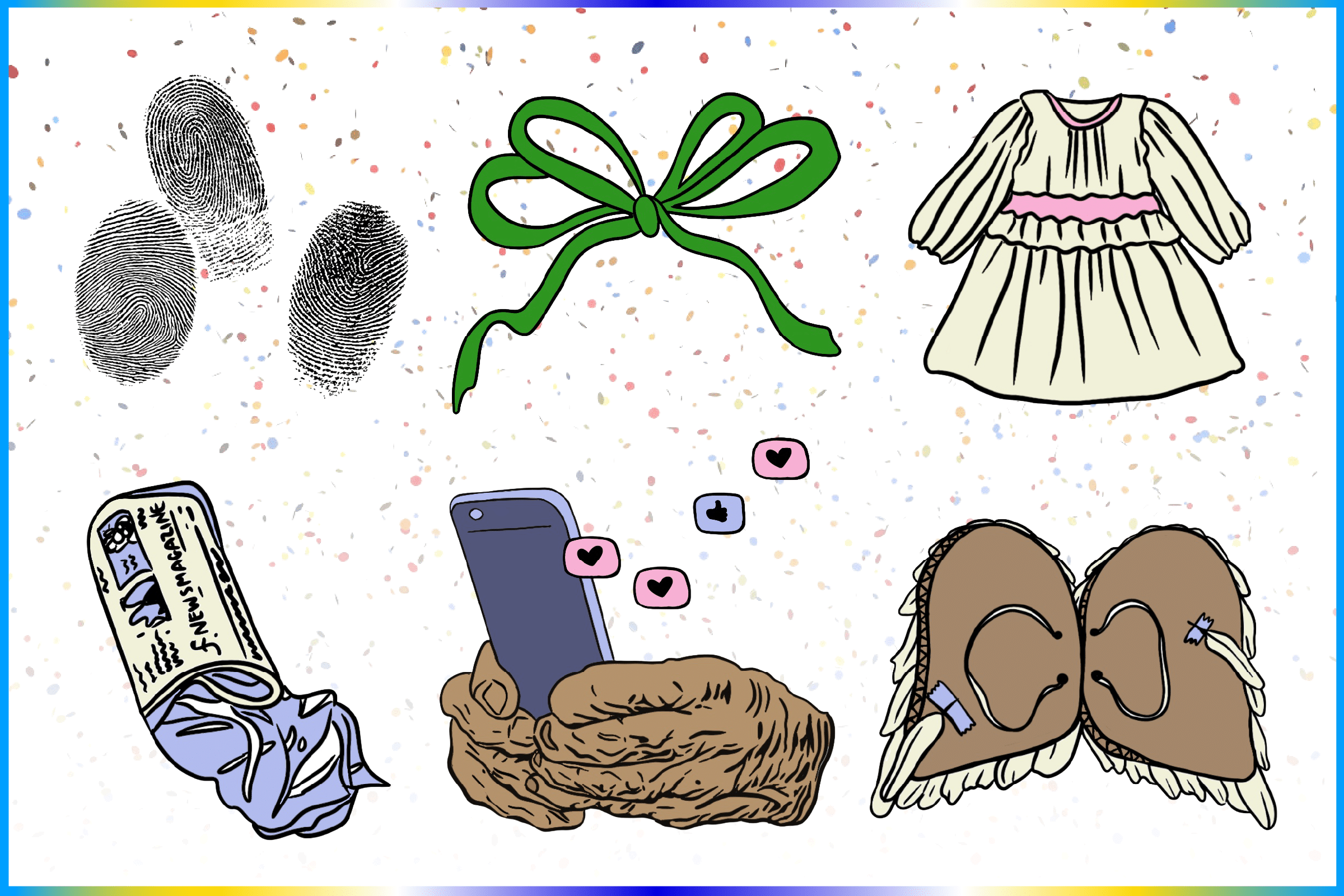
Written as diary entries from the point of view of an aging woman who is mourning her husband, this short story is dark, humorous, and gut-wrenchingly sad. The story begins with our narrator writing to an unnamed “you,” (later implied to be her deceased husband). The paper boy didn’t bring the newspaper today, so she had to go to the stands to buy it. She discovered that there is not just one but many different newspapers. From that moment, she becomes obsessed with reading every single newspaper she can possibly find every single day. The story is a moving reflection on grief, memory, and aging.
Berti is an Argentine writer and journalist. He’s published eight novels and two short story collections. Berti also translates English language literature into Spanish.
“Invitation” by Claudia Hernández
“Invitation” is the shortest story on this list, but that doesn’t make it any less impactful. “Invitation” revels in oddity. It’s the kind of story you might really love if you’re a big fan of “Severance” or “House of Leaves.” In only 12 paragraphs, Hernández takes you on a journey that explores the identities of adulthood, childhood, and the elderly. What happens when you are invited out of your house to play by your childhood self? What if that means you can never go back to your own home? Reading this story feels like how it felt to play wild, feral, non-linear games on the playground as a young girl.
Hernández is one of the most acclaimed Salvadoran writers. She has published five short story collections and two novels. Though not true of “Invitation,” much of her work explores the brutal impact of the Salvadoran Civil War.
“Thread Count” by Cynthia Gómez
The opening line of “Thread Count” is a more compelling argument to read it than anything I could write here: “The deaths began slowly. Or, rather, the dying itself was quick: bodies dropping onto polished marble, red soaking starched linen, the thudding noises summoning household staff.” This is an eat-the-rich story — or more accurately, it’s a let-the-rich-die story. Slowly over the course of the story, the CEOs of every one of the 500 largest corporations die in unexplainable ways. Even trying to get rid of all their money to circumvent their own death is futile. Once they die, the chain continues as their money (and impending fate) is passed down to their children. Gómez’s prose is quick-witted and blunt. Oh! And the ending line is just as intriguing as the opening one.
Gómez writes dark fantasy and horror stories from Oakland, California. This year, she debuted her first novel “Muñeca,” a surreal gothic horror story about a queer Latine working class witch.
“The Little Angel’s Exhumation” by Mariana Enríquez
If you couldn’t tell by the title of this one, Enríquez’s short story leans heavily into horror. However, “The Little Angel’s Exhumation” expertly threads the needle of creepy and tender. It is much less about terror than it is about familial trauma and the way we literally carry trauma with us every day. As a child, the protagonist’s grandmother tells her she has an aunt who died as a baby. When the protagonist grows up, she finds herself having to care for “Angelita,” her baby aunt who has returned from the dead in the form of an angel. Enríquez has a unique interpretation of an angel, and despite the ghostly premise of the story, the narrative is always emotionally true to life.
Enríquez is an Argentine journalist and writer part of the “new Argentine narrative” literary movement which focuses on genre-bending horror to confront political, economic, and social trauma in Argentina. She has written four novels, a non-fiction book, two novelettes, and two short story collections.
“Images of Women” by Elvira Navarro
Elvira Navarros’s “Images of Women” will hit especially hard for anyone who has to care for their aging parents or grandparents. The story is centered around protagonist Adriana’s father, and more specifically on the many women he has dated since Adriana’s mother passed. Dating becomes her father’s entire world, even as it drains his bank account and his health gets worse and worse. Adriana’s point of view keeps the story grounded and relatable while also being funny and depressing.
Navarro is a Spanish writer who has six main published books as well as being published in many collections. “Rabbit Island,” her short story collection, was nominated for the 2021 National Book Award for Foreign Literature.
“The Husband Stitch” by Carmen Maria Machado
I’m ending this list with my favorite story of them all. Machado is one of the most brilliant writers of our time. If you haven’t ever read her work, you absolutely must. “The Husband Stitch” is a short story from her collection “Her Body and Other Parties.” All of the stories in this collection are fabulously creepy and have so much to say about what it means to inhabit a body as a woman. “The Husband Stitch” plays off of the fable of the woman with the green ribbon around her neck. The story goes that once her husband unties the ribbon, her head falls off. Machado’s retelling is deliciously dark and thoughtful. Marriage in all its shadowy forms is at the center of this story. In the end, even after a lifetime together, our protagonist’s husband still wants more: “Do you want to untie the ribbon? I ask him. After these many years, is that what you want of me?”
Machado’s other book is a deeply moving and experimental memoir, “In the Dream House,” is about a long term abusive relationship was in with another woman. Machado was a National Book Award finalist in 2017 for “Her Body and Other Parties.”
As a bonus, if you’re interested in more of Machado’s work, let me also suggest her short story “Inventory,” which tells its story through a long list of sexual encounters.