

What comes to mind when you consider the word “access”? Ask me today, and I would have a diverse range of politically aware responses to offer. In the past, however, these were some common associations I made: expensive, inconvenient, complicated, optional, negotiable. Consider, for a moment, how many of these words are a function of ability. The irony isn’t lost on me. The reality of access doesn’t have to be expensive or complicated. And it absolutely should not be optional or negotiable. But, it certainly must be inconvenient. Inequity must be inconvenienced to doubly negate itself unto equity.
I can figuratively see why the notion of creating a truly accessible class can seem so complicated — because it is described as such. The language we use to describe our experience can often become self-fulfilling. No one wants to break down accessibility into concepts that are simple and accessible themselves; it’s seen as a “complex” and “nuanced” “issue.” Hoping it figures itself out is not only easier, but also allows us to continue situating ourselves within the rhetoric of political correctness.
How do we make an accessible class? As someone who is visually impaired and hopes to venture into teaching someday, I decided to break this down for myself. And I present my findings and key insights to you.
The Universal Design for Learning can provide a great framework to minimize barriers and maximize learning. It is built on three core principles:
• Multiple means of Engagement
• Representation through language and perception
• Action and Expression that is flexible and inclusive
Physical Environment
Consider the location of classes and how easily accessible they are on campus. Are there elevators, ramps, level flooring, accessible signage, etc.? A roadmap of how to find one’s way to the class could be extremely helpful for literally everyone (big shoutout to the 2M performance space).
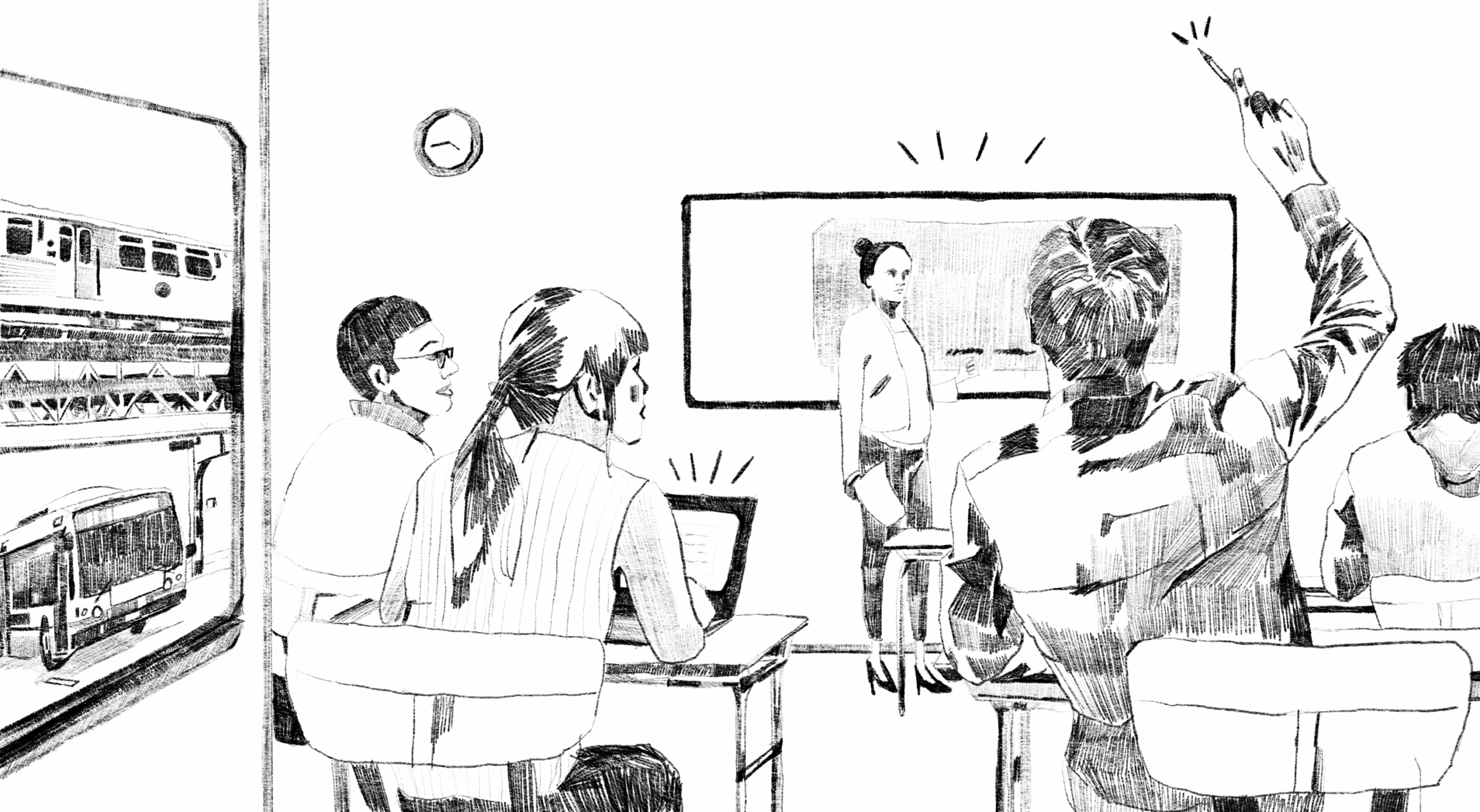
In case of field trips, ensure the places finalized for visits are physically and infrastructurally accessible. This includes access to public transport and the infrastructure of the intended destination itself, among others.
Accessible Content
For digital readings, there are a few key things professors can do to make them more accessible. If these are physical scans, professors must ensure the scans are readable by screen readers; if you can’t select the text of the scanned page with your mouse, then a screen reader cannot read it. Using software like Adobe Acrobat to scan pages is one possible solution. Digital copies should be uploaded to Canvas in a specific way, not simply under “Files.” This includes possible avenues such as using the Rich Content Editor, uploading via Canvas Studio, or ensuring that SensusAccess is enabled. Instructors need to optimize their use of their Canvas pages. Canvas has an in-built accessibility checker, which can help identify potential accessibility issues with the content uploaded.
While designing the reading list for a class, in case the students need to self-source the books, professors must ensure they select books/novels/readings that have Kindle versions, other soft copy versions, or audiobook versions available.
When selecting film and media, teachers should look for media that is captioned, has audio descriptions, and dubbed versions available in case it’s in a language other than English.
Operational Flexibility
Instructions should be provided in verbal, visual, and textual formats. There should be multiple modes of instruction and flexible styles of assessments. For student presentations, provide assistance with the use of projectors and/or other tech requirements, if needed.
For field trips, ensure the class travels together, especially if students with disabilities have anxiety about using public transport or figuring out accessible entry and exit ways. As a class, figure out the most accessible means of transport, and think through, in advance, how students either return to campus or find their ways home after the field visit.
Minute Adjustments
Little things go a long way. Take a moment to speak to students above and beyond passively receiving a letter of accommodation. Reach out to your students with accommodation letters at the beginning of the semester. Don’t make them come to you.
If you are working with a student employee with a disability, have an open conversation with them about how you can best help them help you.
It’s not only people with diagnosed, labeled disabilities that have specific needs. People with and without disabilities come with idiosyncrasies. Creating accessible, inclusive spaces benefits everyone.