


When, at the end of February, DePaul University announced that it would be permanently closing its art museum as a part of broader budget cuts, I felt quite upset. In the past year, I’d pass the museum daily on my morning commute, each time promising myself to stop by tomorrow. Now it would be irresponsible for me not to visit before its permanent closure on June 30th. As I was heading over, I couldn’t stop thinking about what happens when a museum dies. I was brought up with the idea that a museum is as much of a living organism as a person, animal, or plant. Now, I couldn’t help but wonder: does Alfred H. Barr, Jr., the first director of New York’s Museum of Modern Art, greet deceased museums at the gates of museum heaven? Or is there a judgment that occurs first? We might never know the real answer. I also pondered whether the curators knew that these two shows would become the last ones the DPAM would ever hold?
With these thoughts, I entered the bright lobby of a three-story building on Fullerton Avenue, just outside the namesake “L” station. Two student workers greeted me with a smile, although I think I saw some barely discernible sadness in their eyes.
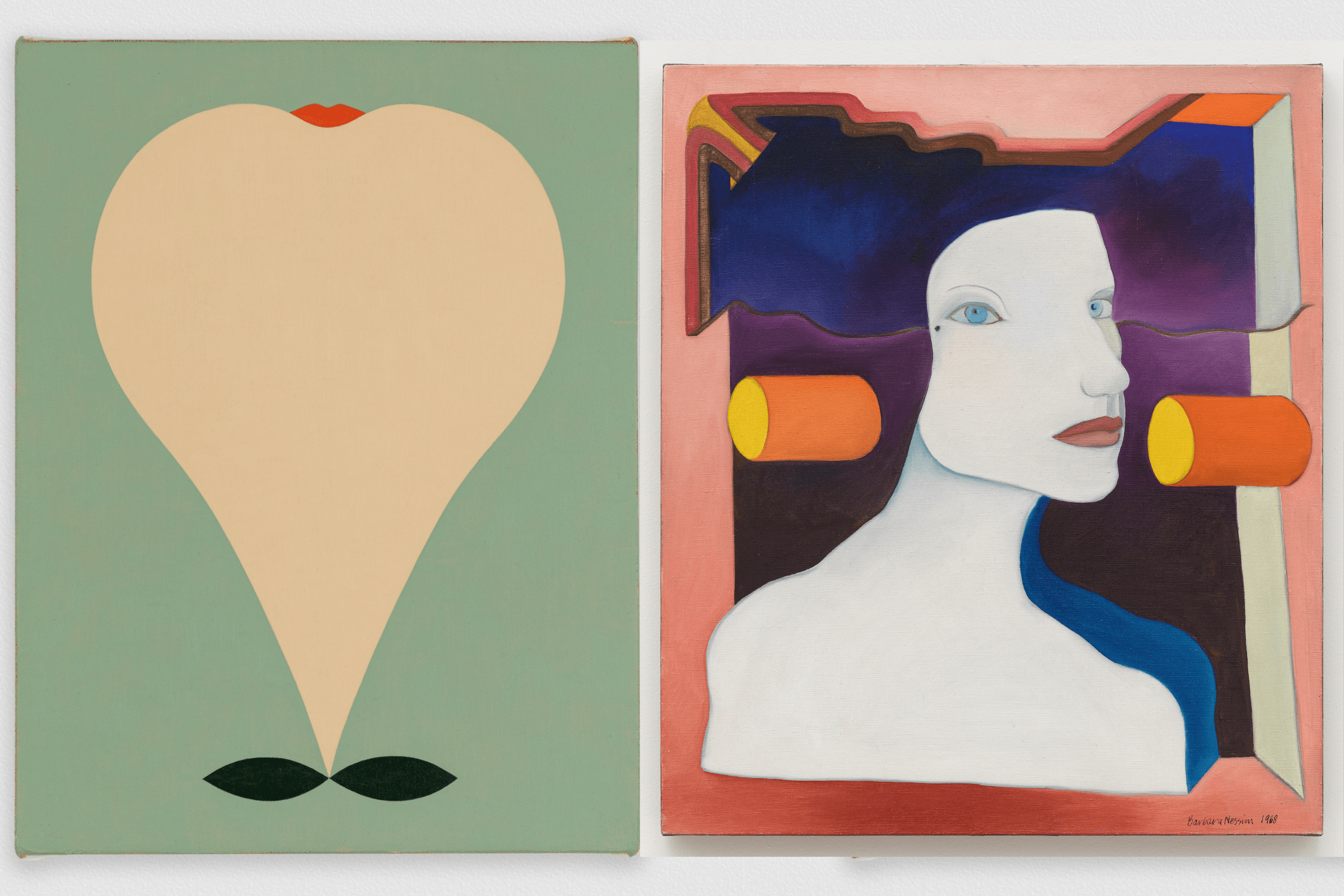
To begin, I want to state up front that I enjoyed both shows on display at the DPAM immensely. The first-floor gallery is occupied by Alice Tippit’s “Rose Obsolete.” A curatorial statement at the beginning states, “The exhibition’s title, “Rose Obsolete,” evokes both beauty and loss — a meditation on what endures and what fades from view.” I could not put the show in better words, even if I tried to. The colorful, somewhat minimalist works of Tippit, a Chicago-based artist, evoked a childlike curiosity and joy within me. Looking within the shapes she creates, one can truly get lost in time and space trying to find new objects and meanings with every second spent beside the canvases. Her style, which somewhat resembles the works of artists Timur Novikov and Ilia Kabakov, appears simple yet strangely captivating. Her muted color palettes are very appealing. By contrasting themselves within each painting, they appear much more vibrant than they are. What struck me the most is the humor with which she approaches her practice. I think I even laughed out loud a couple of times after noticing hidden silhouettes within the works. I don’t recall having seen an exhibition so well curated and leaving such a pleasant aftertaste in a while.
To my delight, the second show on the second floor did not disappoint. Barbara Nessim’s “My Compass is the Line” is somewhat retrospective of major points and projects in her ongoing career. Dr. Ionit Behar, the curator of this exhibition, writes: “Emerging in the 1960s as one of the few women to achieve visibility in the male-dominated fields of illustration and commercial art, Nessim developed a distinctive visual language that blurs the boundaries between fine art and design.” Again, written better than I could. It is the distinctive blur between art and commercial design that, in my eyes, sets Nessim apart from many of her contemporaries. Beginning her career as an illustrator for girl’s magazines, she quickly rose to fame, and by her own account, never compromised with herself to achieve such success. By putting women in the center of her art practice, she creates powerful imagery, balancing vulnerability with strength. Her unique voice and style shine even brighter surrounded by the walls of the institution whose days are numbered.
Both shows leave no room for doubt in the intentions of the curators. They both work well within the limited space, telling complete, compelling, and captivating stories of similar-yet-distinctively-unique artists. “Rose Obsolete” becomes a conceptual statement, one of many to come for Tippit, while “My Compass is the Line” tells a life story of a successful artist, illustrator, and designer, walking through her career highlights.
Seeing how intentional these two exhibitions are, I left the walls of the DPAM feeling even worse about its closure than when I entered. What other great shows did I miss because of my own neglect? Which shows will I never get to see because of the premature closure?
No one wants DPAM to close, some faculty and community members tried to prevent DPAM’s closure, but it seems unlikely that DePaul will back down. Amid news of layoffs and other cuts, DePaul also announced the construction of a 60 million athletic center, construction of which was approved in November of 2025. Unsurprisingly, money wins, and sports definitely generates more revenue than art.
The last days of both exhibitions are set for June 31, the day before the museum permanently closes its doors. I like to imagine that these shows will continue to hang in the galleries, unable to be taken down, waiting indefinitely for someone to find them and experience the joy that I did. DePaul Art Museum is definitely leaving on a high note, which many other closing institutions can only hope for.
Do all art museums go to heaven? Most likely not. But this one just might.