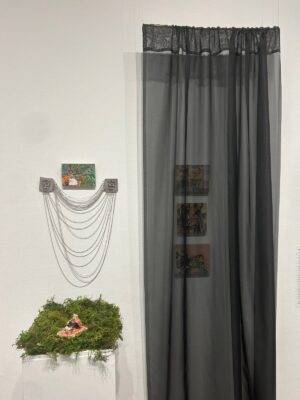


Caught in between the senior BFA and MFA shows was the glimmering first year student art showcase ARTBASH. ARTBASH is an annual event that covers the first through third floors of the School of the Art Institute of Chicago’s Sharp Building with student work. The showcase is not only meant to celebrate the conclusion of students’ first year at SAIC but also to introduce the artists to the official processes of submitting and installing work in a festival, gallery, or exhibition setting.
This year’s Bash was open March 28 through April 12. The opening reception on Friday, March 28 was buzzing with friends and family of students ready to see their new accomplishments. To further invigorate the space and allow for a range of art styles and mediums to be explored, ARTBASH’s opening featured student performances of varying length alternating between two rooms and a hallway space on the third floor. Viewers walked in and out of performance spaces to view work from a range of ARTBASH categories such as artists’ books, black box (video work), SITE (gallery installations), and other theme, space, or open call categories.
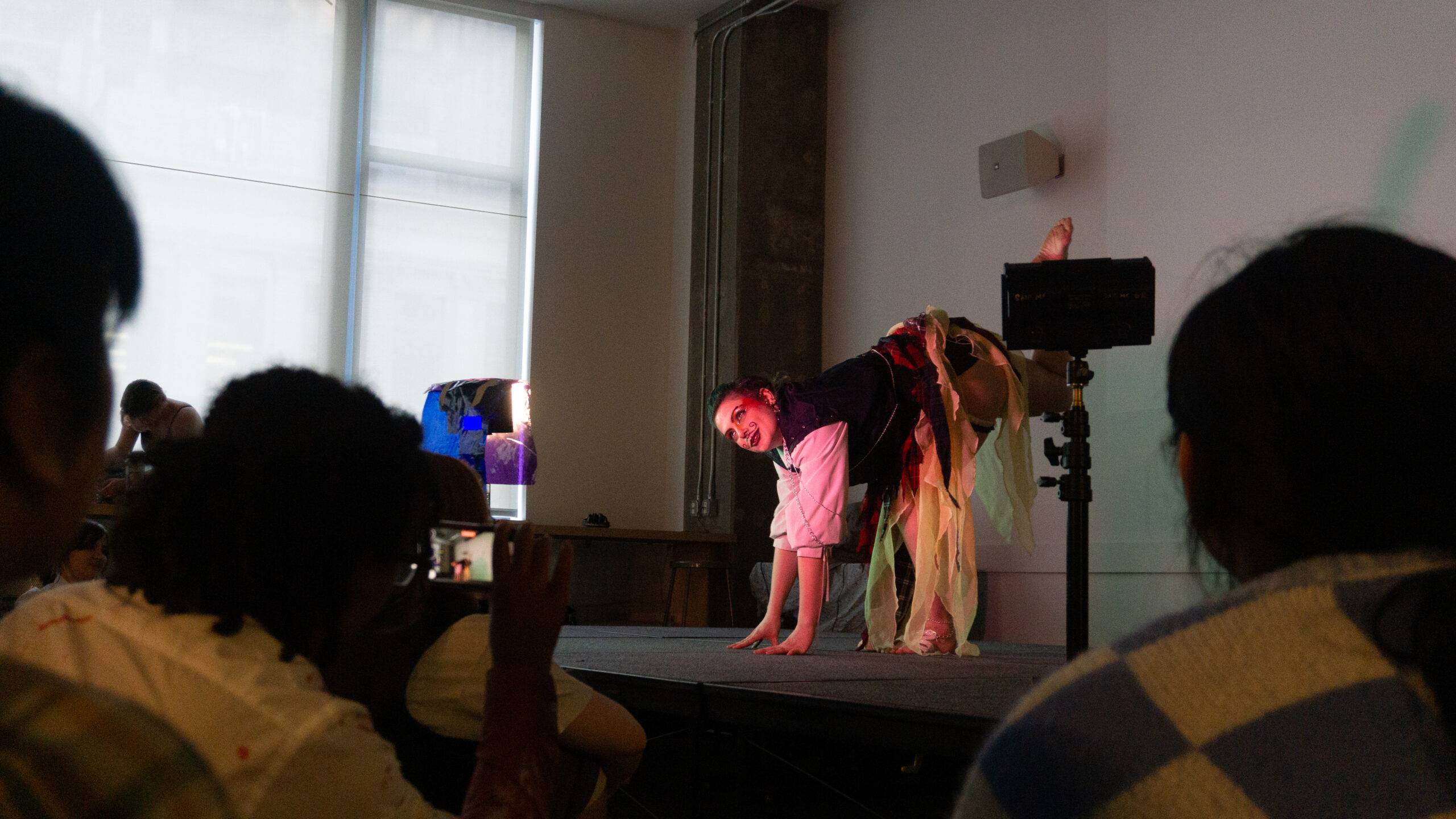
Performances are done every year at ARTBASH, and this year’s performances were diverse and long. The dedication to the artwork was amazing. Greyson Hill’s performance in “Midsummer’s Night Gossip” required as much acting prowess as it did physical ability, as Hill leaned into their character Puck and embodied the character from head to toe. Hill projected their voice, twirled in circles, threw themselves to the ground, and made eye contact and gestures towards the audience.
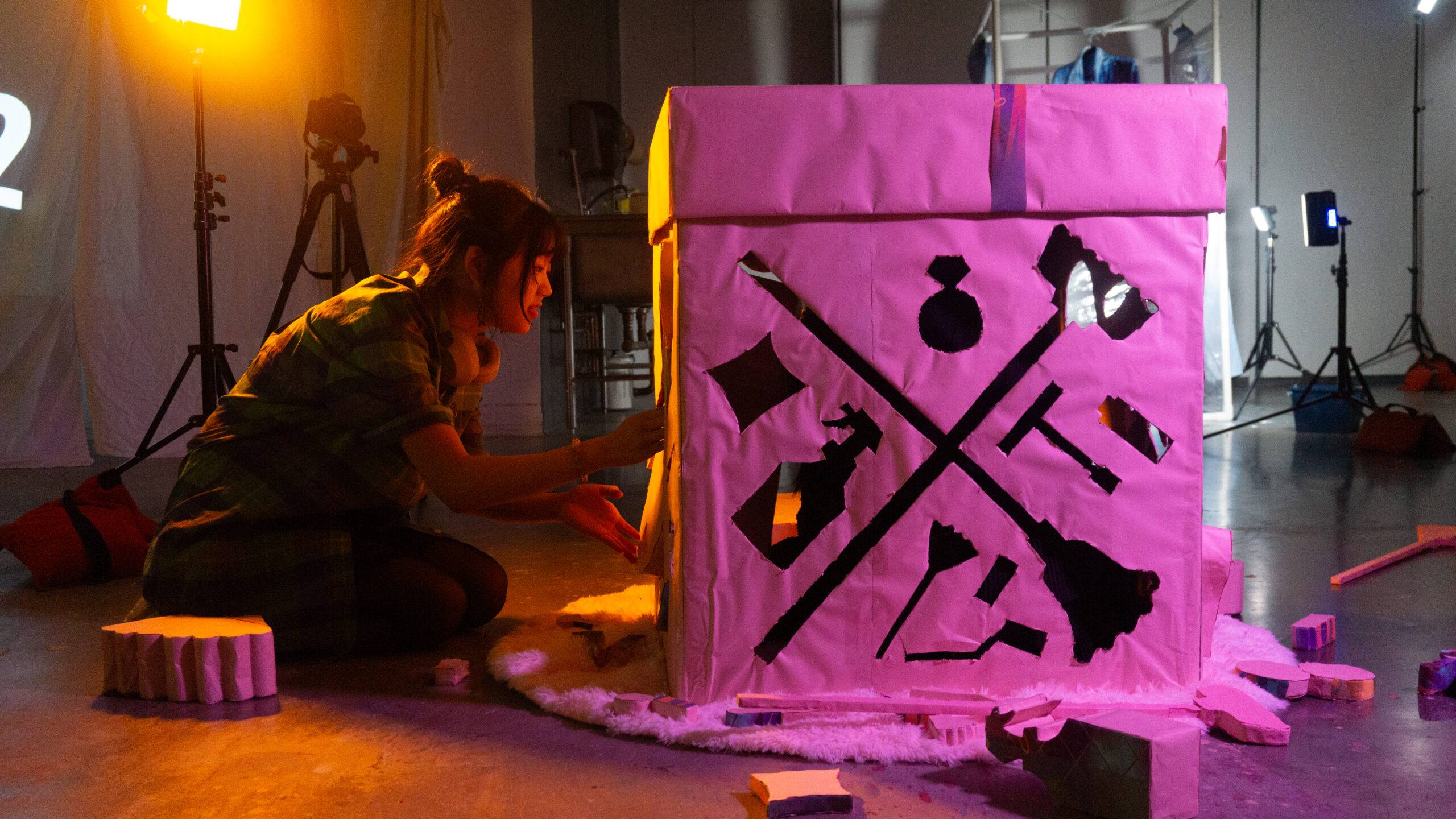
Huiqi Zhou’s “Be a Girl” performance was felt outside of the box, despite Zhou spending the evening in one. “Be a Girl” was interactive and pretty. It utilized a soundscape to not only set the scene but also to subtly instruct the audience on how they could participate. Interactions were made by picking up large cardboard shapes and inserting them into the correct cutouts of the performer’s box, similar to toddler’s shapes sorting games.
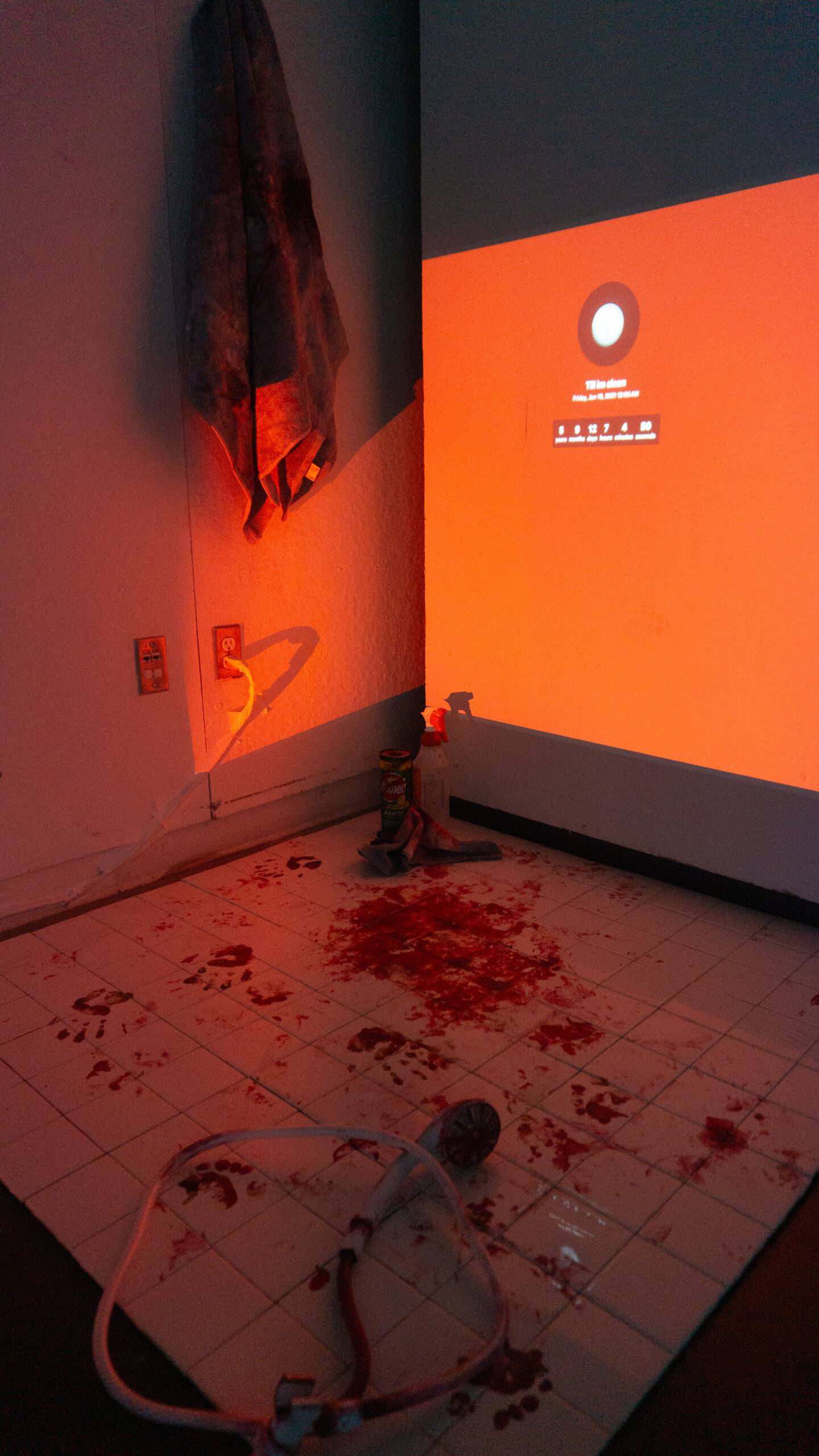
“To Survive a Shower” is utterly visceral. The bloody installation is time based with a counter projected on the wall reading time “Till im clean.” While not much interpretation is provided as to Lynx Jade’s messaging behind the scene, it was eye-catching and stood out in a room full of video and projection work.
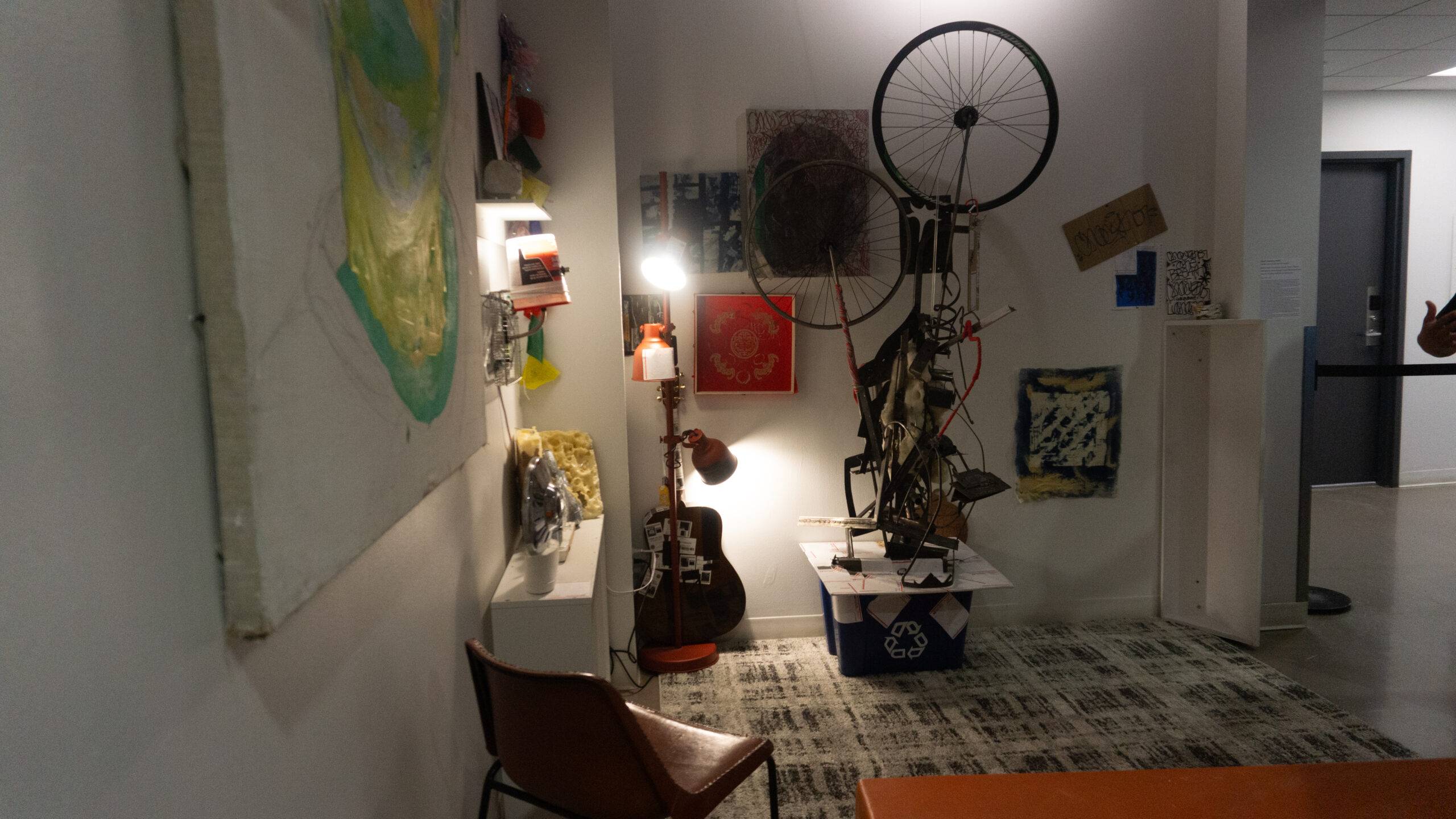
There is an awkward space in the third floor of the Sharp building. Frequently it is utilized by Core and Research first year classes to showcase their student’s work. But Noah Hevel’s “Be My Guest In My Nest Of Confetti” was a refreshing commandeering of the space. Using artwork and found objects, the corner was partially closed off to give the appearance of a small, cozy room decorated with creativity.
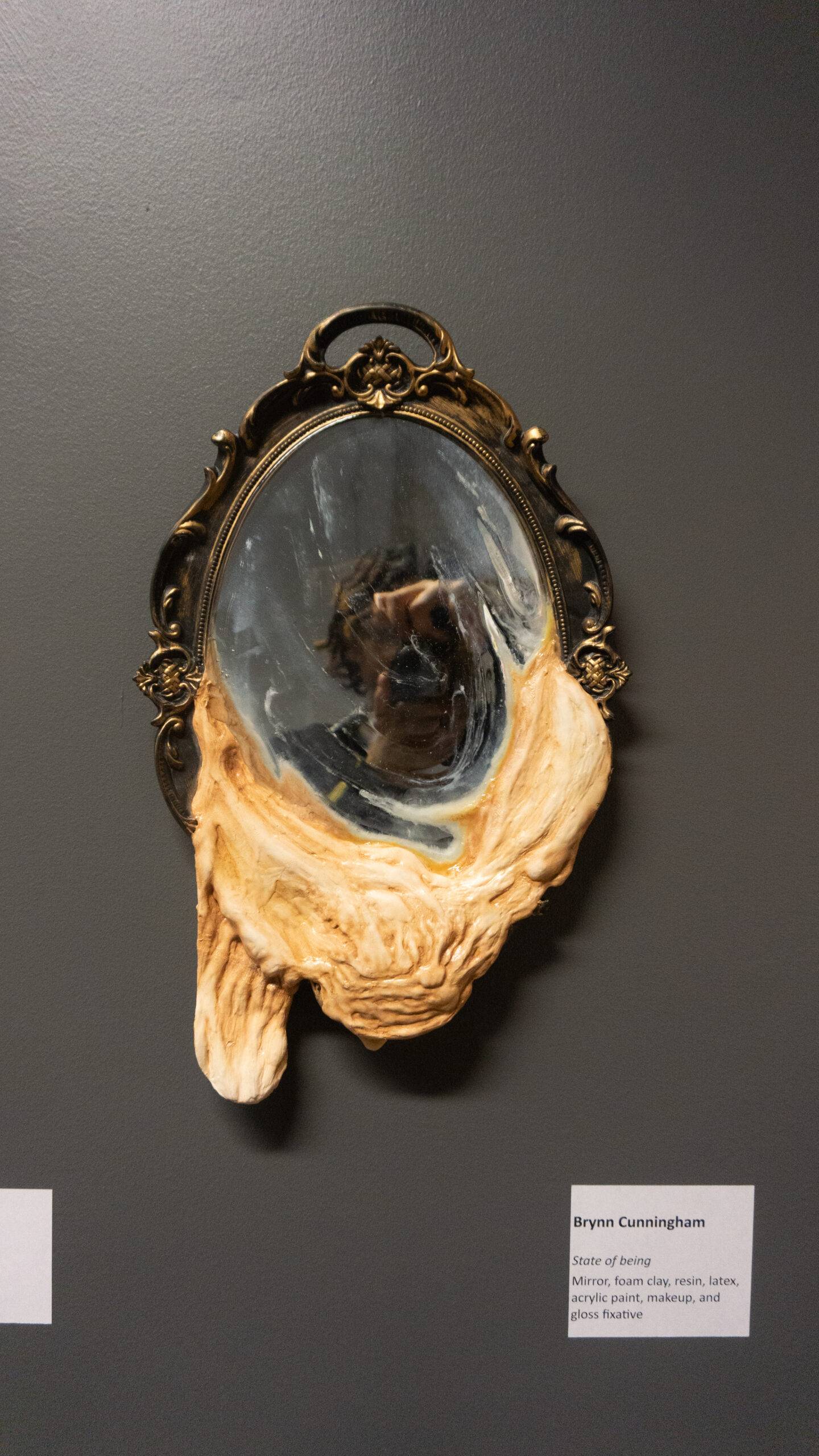
Working with found objects isn’t a new idea, and working with premade structures can be hit or miss. But Brynn Cunningham’s approach to this ready-made mirror in their piece “State of being” feels bodily, natural, and organic. Somehow, it subverts gore while still eliciting a strong reaction. The subtlety of the pulled clay and latex shaping a viewer’s face as they look in is a nice touch.
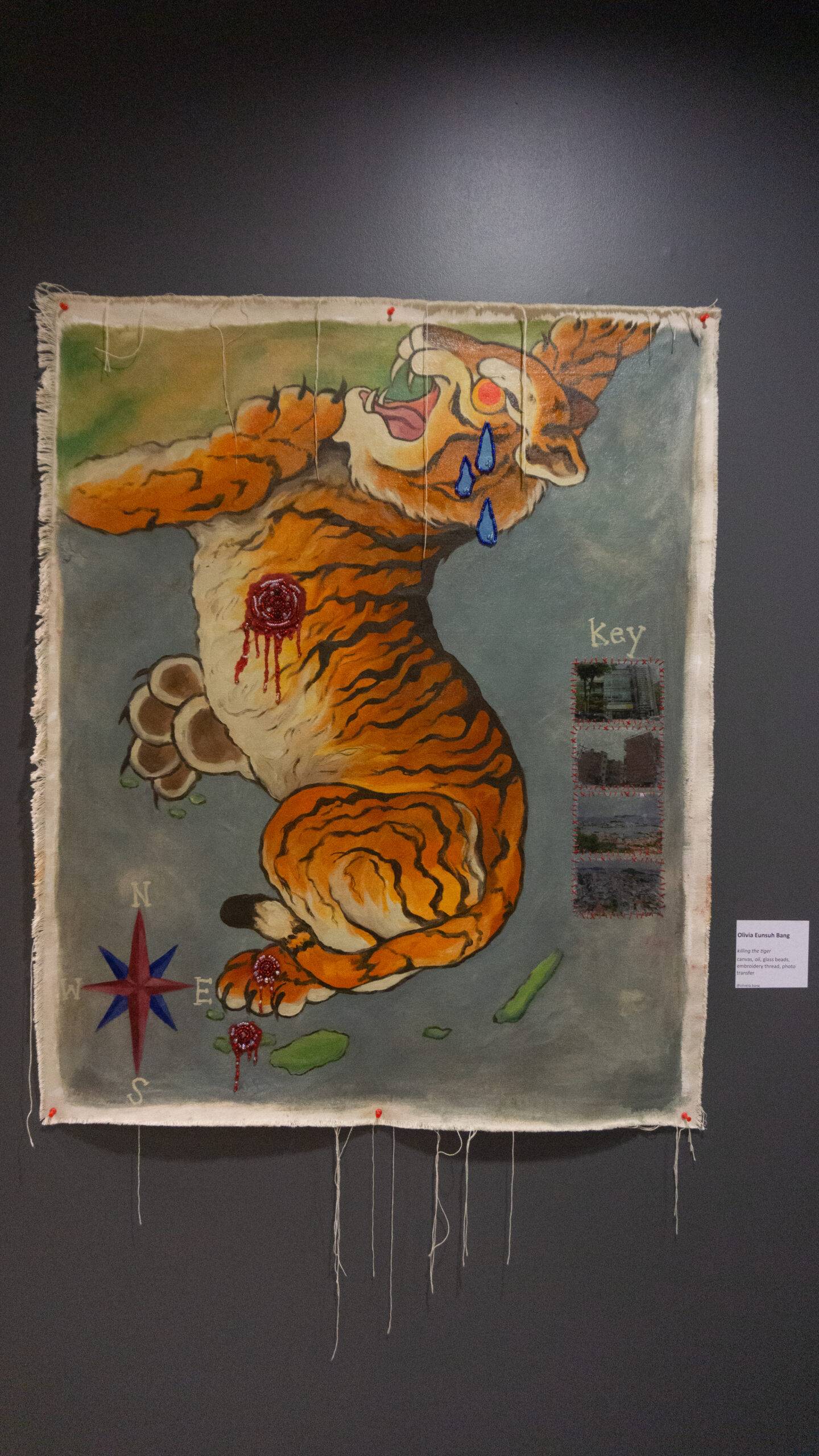
“killing the tiger” by Olivia Bang feels like a sincere approach to storytelling and a celebration of multimedia. The embroidery and use of beads are intricate, delicate, and intriguing. The images from the map to the tiger to varying cities draw the viewer’s eyes and mind around the work, reimagining place.
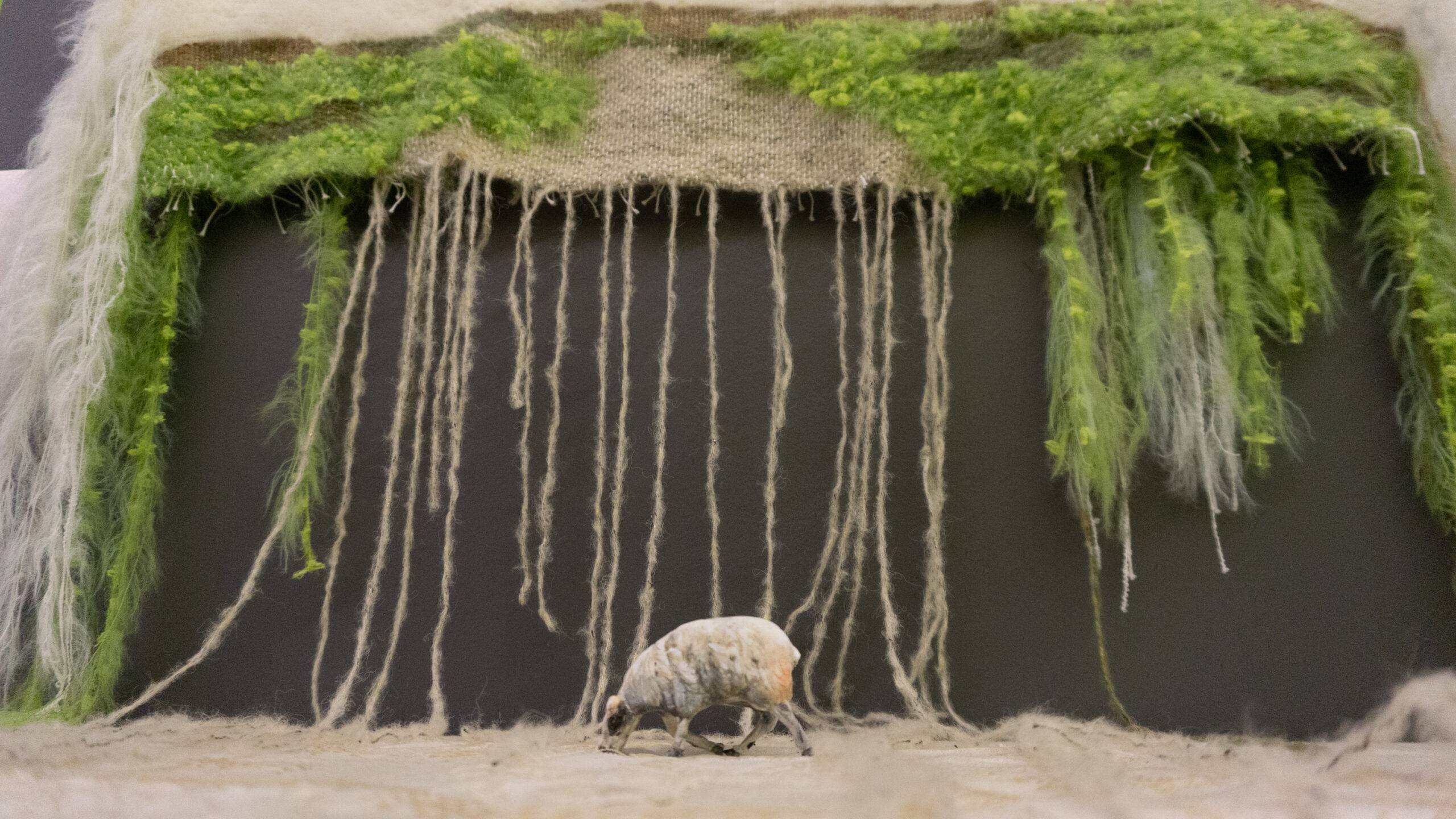
All the small things count too. Despite how the up close and tight photo may appear, Huixuan Chen’s “Trace” is a miniature scene with one miniature sheep. It’s simple but endearing and the fiber background creates a touching otherworldly landscape.
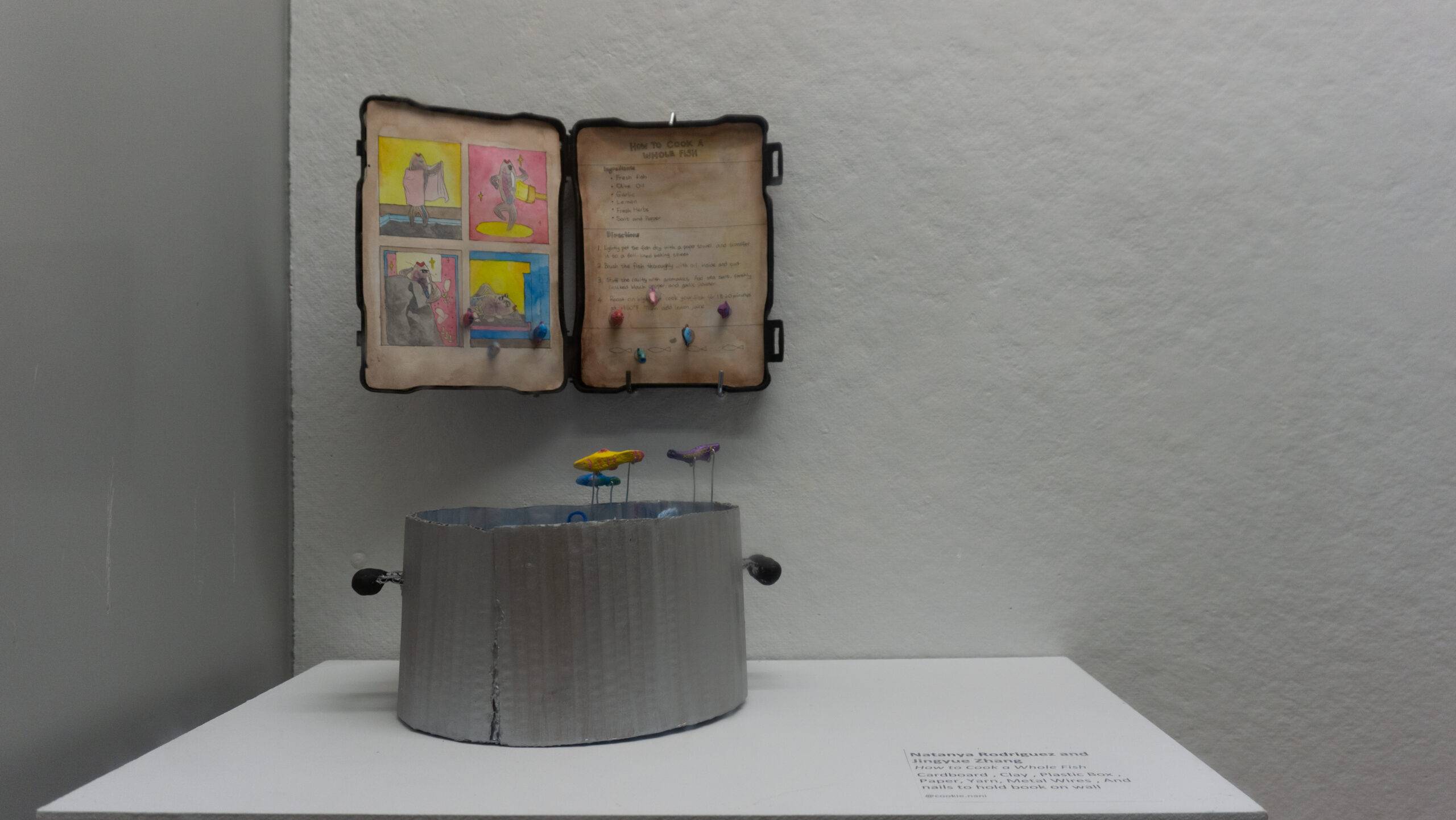
Similarly, Natanya Rodriguez and Jinhyue Zhang’s finely crafted small scale artist book and hand turned rotating fish pot is a sweet and funny take on “How to Cook a Whole Fish.”
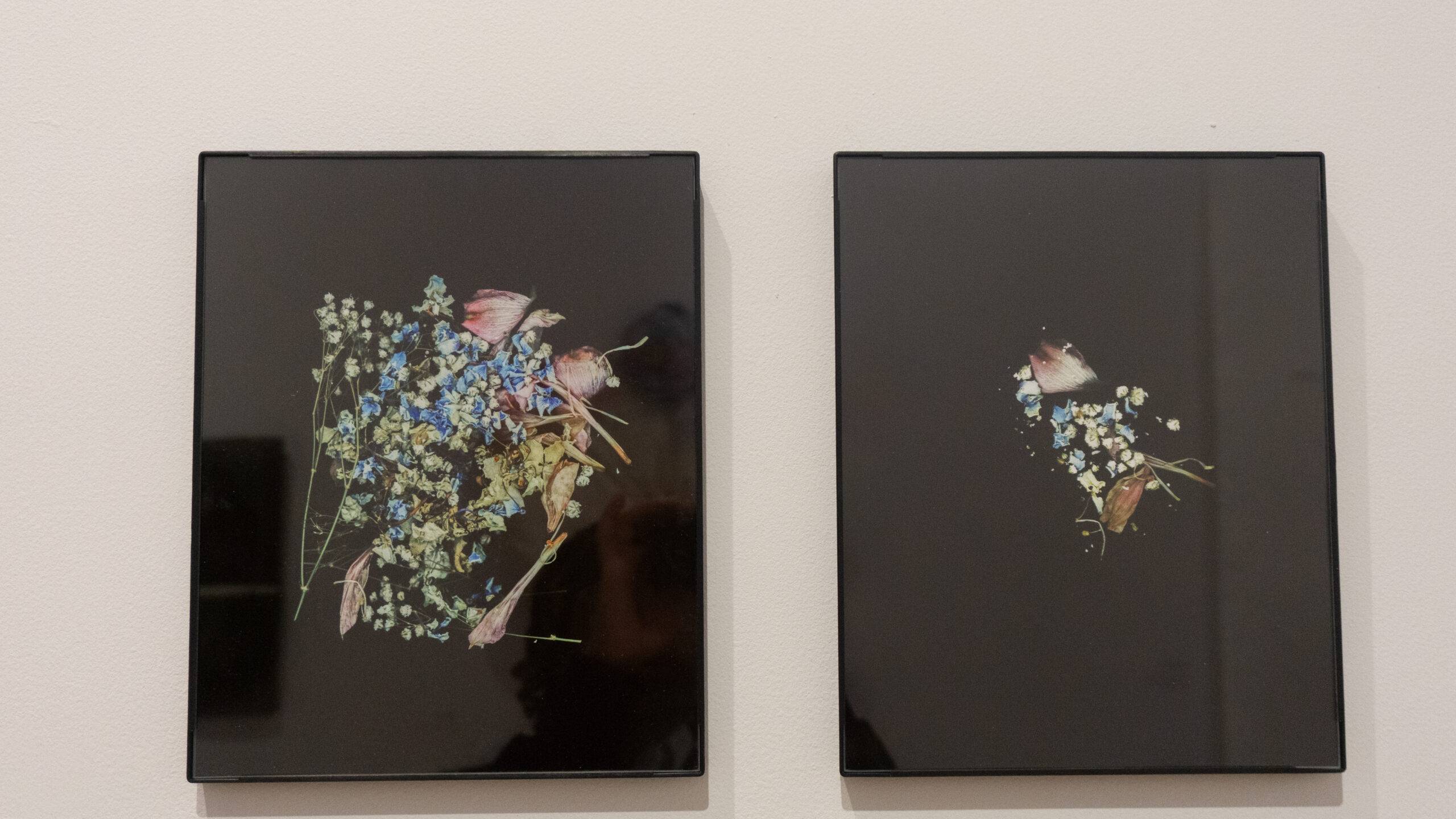
Kayah Tracz’s use of a flatbed scanner to create the images in their diptych “Dedicated to the One I Hate” is one that feels in the same lane as contemporary staged still life photography. Resembling artists like Miguel Vallinas and Robert Chase Heishman. The negative space naturally produced from the scan makes the dried flowers striking and rich in color. The composition of the flowers also appears intentional and balanced.
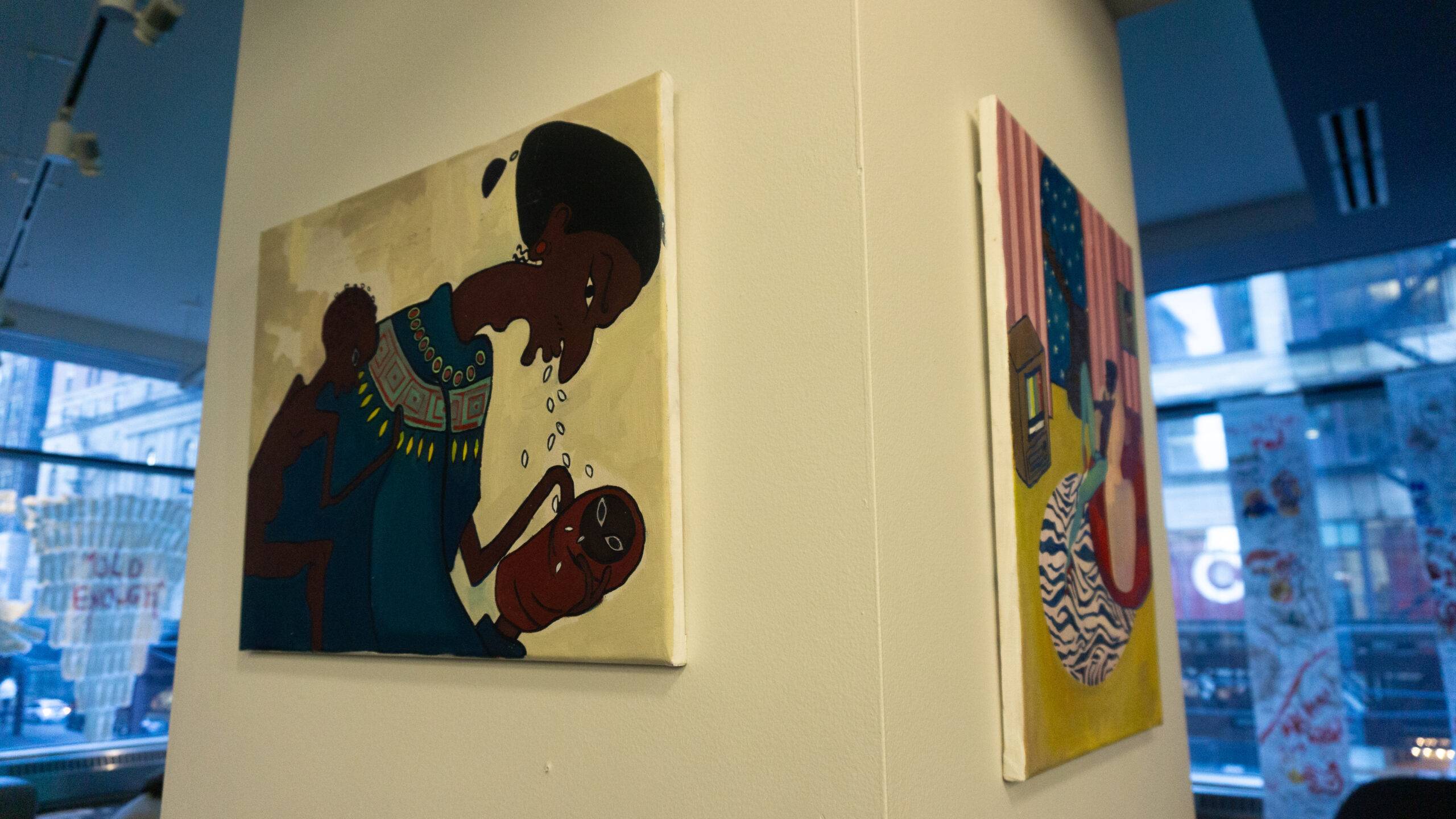
Malia Hudson-Williams’ oil painting “Rice Pudding” seems in conversation with historical African artwork and folklore. While I’m a big believer that you should always paint the edges of your canvas, Hudson-Williams’ painting is rich and saturated and calls to cultures less represented at SAIC. Rice pudding itself is a popular dish in many countries, including the Middle East and India.
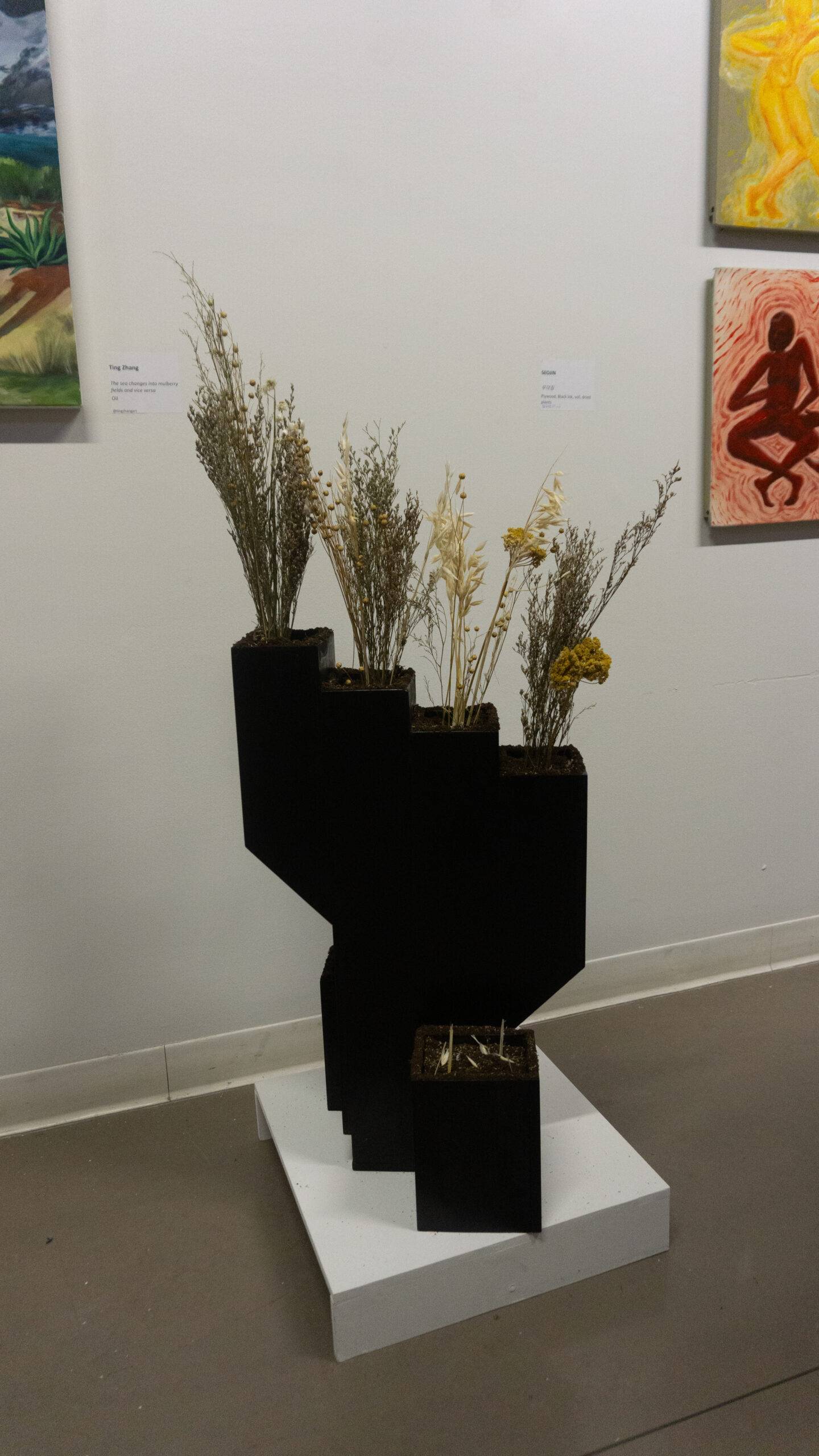
SEOJIN’s Korean title “무뎌짐” roughly translates to numb, dull, or to become dull. Yet I find nothing “dull” about their architectural flower pot. The design feels sleek and modern, and the dark depth of the planter brightens the look of the dried plants growing out of it.
You can learn more about ARTBASH 2025 on the SAIC Shows microsite and be on the lookout for its annual return in the Spring of 2026.