

The movie “Obsession” makes one thing crystal clear: do not trust your local indie soft boy.
“Obsession,” written and directed by Curry Baker, is a terrifying horror flick that gets under your skin better than any jump scare. Protagonist Baron “Bear” (played by Michael Johnston) has unrequited feelings for one of his longtime friends Nikki (played by Inde Navarrette), and despite trying his hardest, he can’t work up the courage to confess to her.
Instead, he makes a wish on a novelty toy. He wishes that “Nikki would love me more than anything in the fucking world” — which, as moviegoers can predict, will lead to only bad things. It becomes clear as the movie progresses that his wish supplanted Nikki’s body with something else, something that loves Bear more than anything in the fucking world.
Despite the film coming to theaters back in May, its success has kept it there, while its addition to streaming in July has kept up a lasting online conversation.
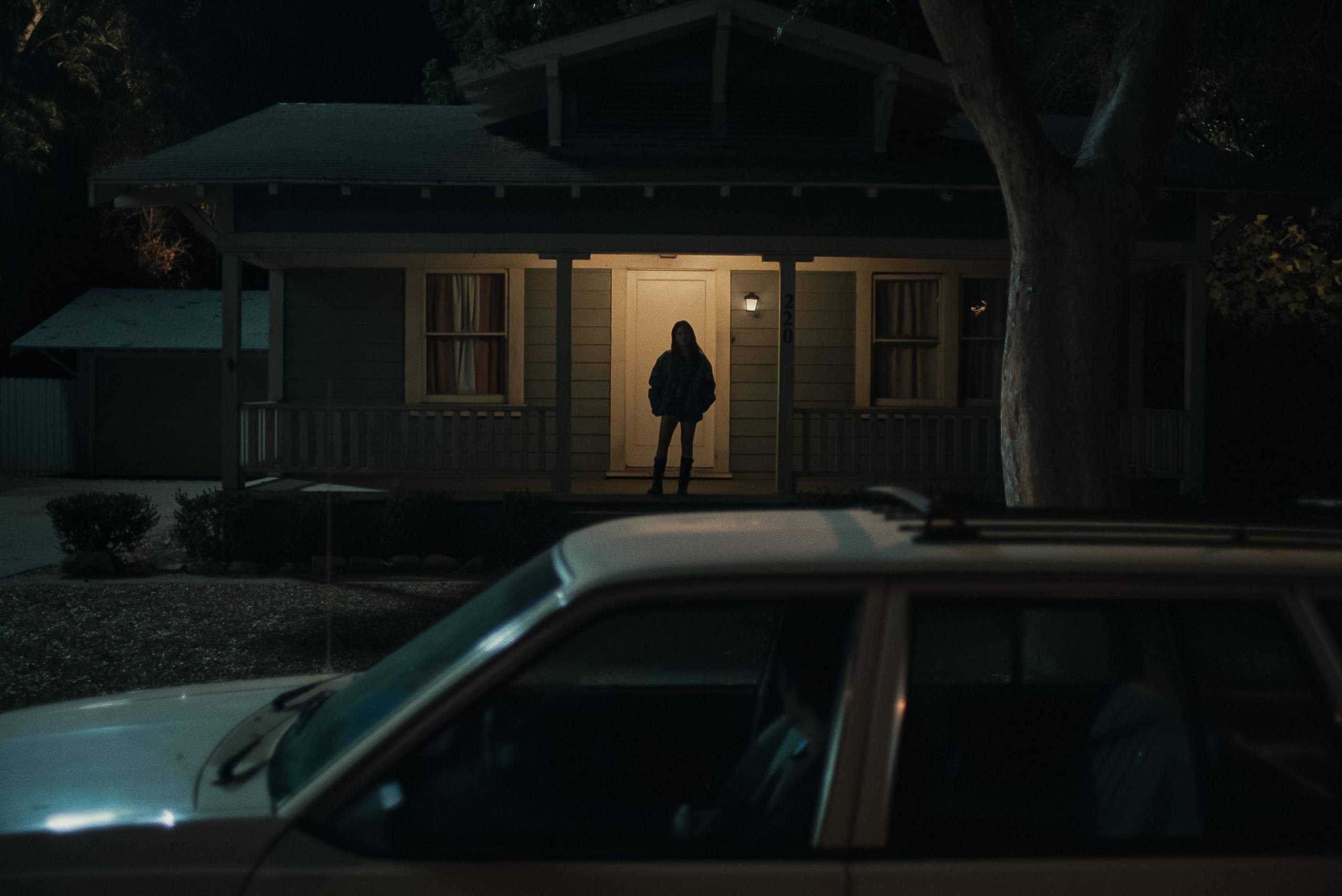
At first, Bear is happy with his wish, insisting that Nikki wanted this all along and that as long as the love is true, it doesn’t matter. The film constantly juggles between showing us a cute couple eating pancakes and Bear waking up to Nikki watching him sleep from the corner of their bedroom. The film, intentionally or not, resembles the structure of “Frankenstein” by Mary Shelley. Bear and Viktor are irresponsible makers of their own demise; not because their dreams came true, but because of their unwillingness to admit what these dreams cost someone else. Gradually, we see Bear’s undoing as he doubles down, takes the coward’s way out, and refuses to confront the error of his ways. In the end, all that’s left is him and the monster he created.
Navarrette, alongside horror legends like Anthony Hopkins in “The Silence of the Lambs” and Christian Bale in “American Psycho,” deserves praise sung for her performance. She balanced childlike infatuation and unsettling destructive demeanor, making switch between Nikki pre- and post-wish masterfully jarring.
Nikki is cool — when we first meet her, there’s a self confidence that explains Bear’s attraction. Then the wish is made and that foundation of confidence gives way to a bottomless dependency on Bear’s love — it makes your skin crawl. The hardest-to-watch scenes, in terms of fear factor, rarely relied on gore. Navarrette simply breaks social cues in such an unhinged fashion that I winced more than during any teen slasher death.
But Nikki, freak wish or otherwise, was never the monster. When I watched it in theaters, instead of jumping out of my seat shouting “The monster is right behind you!” I found myself thinking, “Bear, you gotta do something!” It is rare that a movie creates a compelling narrative out of a character’s inaction. Bear repeatedly has the opportunity to stop what he’s doing and get help, but turns it down again and again, convincing himself that this is what he wants.
But what he wants isn’t Nikki, it’s the idea of Nikki. What is so brilliant about the film is that flip. There is a genuine discomfort in the beginning when Bear clearly has unrequited feelings for Nikki. Having a crush is cute, but it’s not cute when you are making your friend uncomfortable. He’s pigeonholing her into the girl next door rather than her being her own person. Wish Nikki doesn’t really know what love is or how to be intimate. She makes Bear uncomfortable in a way that mirrors how Bear and other men make women feel regularly. Every conversation is weirdly one-sided in a way that reduces Bear, just like he reduced Nikki. “Obsession” really strikes a chord because it exacerbates a common fear women with male friends experience.
It is impossible to talk about “Obsession” without talking about its wild success. Made with $750,000, it ended up making $426 million worldwide. Yet Art Director Sally Choi made a statement about how she only made $300 a day and spent more than she earned on the film. “Obsession” created a discussion about what happens when a low-budget film becomes successful — where does that money go?.
In an interview with the Hollywood Reporter, Curry Barker talked about the statement and said, “This movie was made for so little money that it’s typical that the only people who [directly] benefit from its financial success are the people who took on some sort of risk.” He hopes “Obsession” brings more financial opportunities for the people who took a risk on it.
This disparity undercuts the film’s success, especially when compared to “Iron Lung,” another indie-horror movie that stands out this year. After finding great success, director Mark Fischbach gave a bonus to the cast and crew to respect the labor of working on a smaller production.
The compensation track record of “Obsession” continues to plummet. As of Aug. 31, a producer filed a lawsuit against two fellow producers for being cut out of the profits. Leonora Ann Darby, an executive producer on “Obsession,” made an agreement with her collaborators to split the profit three ways. Except once the film became successful, they pushed her out of the project, including not inviting her to the film’s premiere.
This is where my problems with “Obsession” start to appear. The thing that makes “Obsession” work is its subversion of women’s fear onto men. Not unlike Ridley Scott’s “Alien,” it’s taking something women fear in everyday life and pushing it onto men in a terrifyingly effective way. Disappointingly, it seems the film is directed by a man, and the monster he made out of a woman.