


“On Loss and Absence” is my absolute favorite kind of art exhibition. It has all the hallmarks of what makes a collection great — creative and textile-heavy media; themes of family, grief, and mourning; and creative, cross-cultural, cross-temporal curation, rather than a focus on a particular time or space.
The exhibition begins by asking the visitor to examine their own experiences with material culture and grief and remembrance, asking, “[h]ow do you preserve traditions, objects, or ideas that are important to you? How have objects helped you remember loved ones or sustain traditions?”
For much of our diverse human history, mourning rituals have been tactile, material, and often wearable. Benjamin Franklin wrote that nothing in life was certain but death and taxes; one might argue that so too are grief and textiles. From Victorian widows in England donning black to the rending of garments in Jewish culture, it makes sense that these two cornerstones of the human experience are so often intertwined.

“On Loss and Absence” is tucked away in the Art Institute of Chicago’s low-lit basement gallery dedicated to textile exhibitions. This is a necessary conservation choice to preserve the fragile and light-sensitive objects on display. To get to “On Loss And Absence,” you have to wander through the labyrinthine first and basement levels of the AIC to reach Gallery 57 on the farthest side of the museum from its grand front entrance.
Textiles are a tricky medium for museum collections to work with. According to the James Madison’s Montpelier museum in Vermont, sturdier textiles can only be displayed for six to nine months at a time before they must be taken off view to “rest.” More delicate textiles may only be able to withstand display for three to six months at a time. “On Loss And Absence,” to its credit, goes into great depth and detail on the conservation and restoration of many of the pieces displayed, so visitors can learn about the behind-the-scenes work involved in curating a textile-based exhibition.
(Unfortunately, it also doesn’t make for a very good atmosphere for photography.)
The work of the conservators takes center stage here, which is something I have rarely seen before. A section toward the middle of the exhibit displays textile fragments, with information about the care, repair, and maintenance of textile-based conservation and collection. The transparency of the conservation process is laid bare in various places throughout the exhibit, and the visitor gets to see exactly how this behind-the-scenes work brought many of the older pieces, especially, to life.
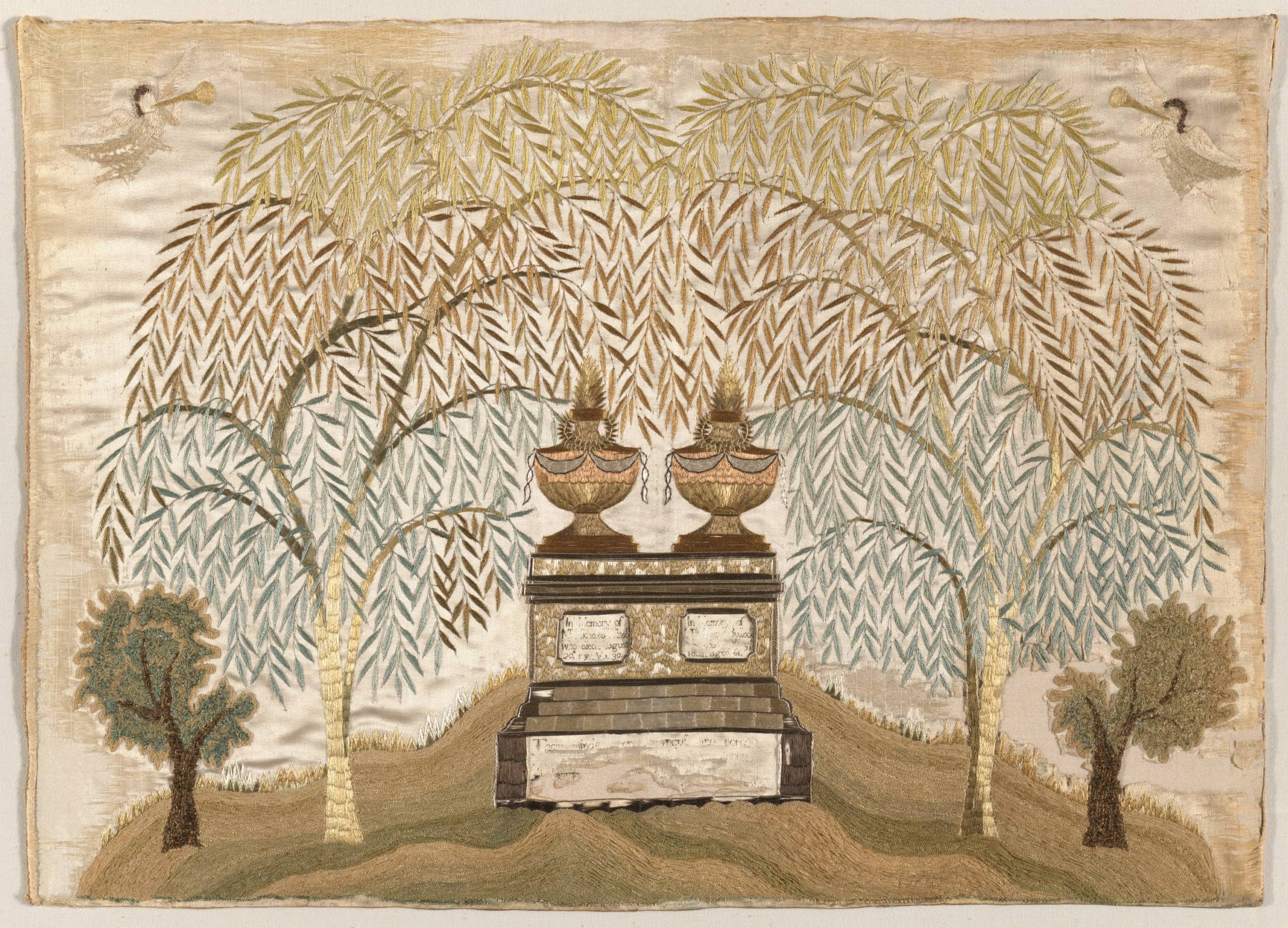
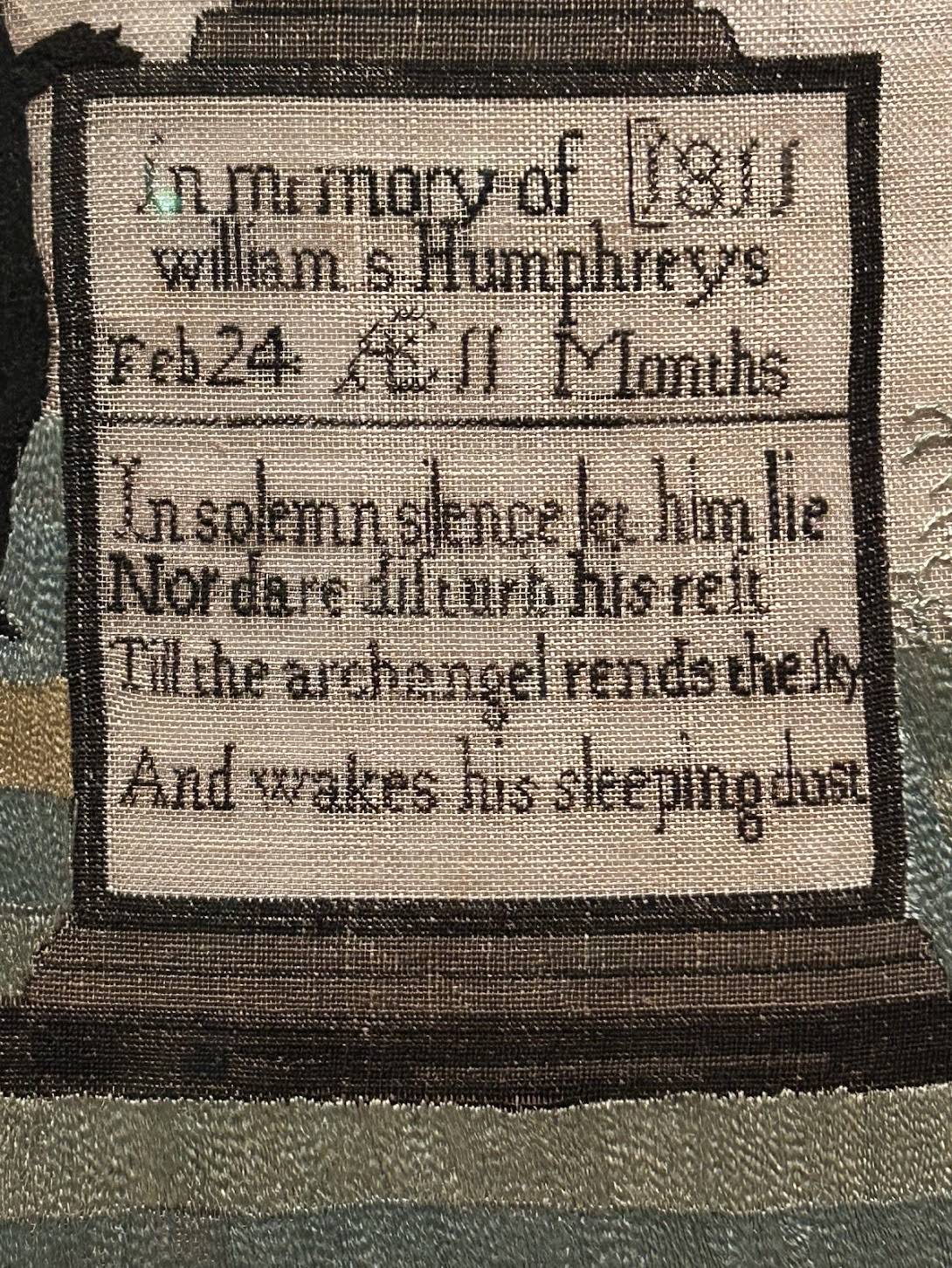
A mourning sampler made in circa 1810 New England (incidentally, with human hair) features a poem that was indecipherable until textile curator Lucinda Pelton used UV light to observe residue from deteriorated thread and piece together the poem “one letter at a time.” “On Loss and Absence” was actually curated by four artists associated with the School of the Art Institute of Chicago – Isaac Facio, Nneka Kai, L Vinebaum, and Anne Wilson.
“Our experiences engaging with textiles as makers,” the exhibit text reads, “inform every aspect of the exhibition but perhaps especially its focus on artists themselves as repositories of tactile cultural knowledge.” And indeed, textile artists are front and center as keepers of tradition and community throughout the space.
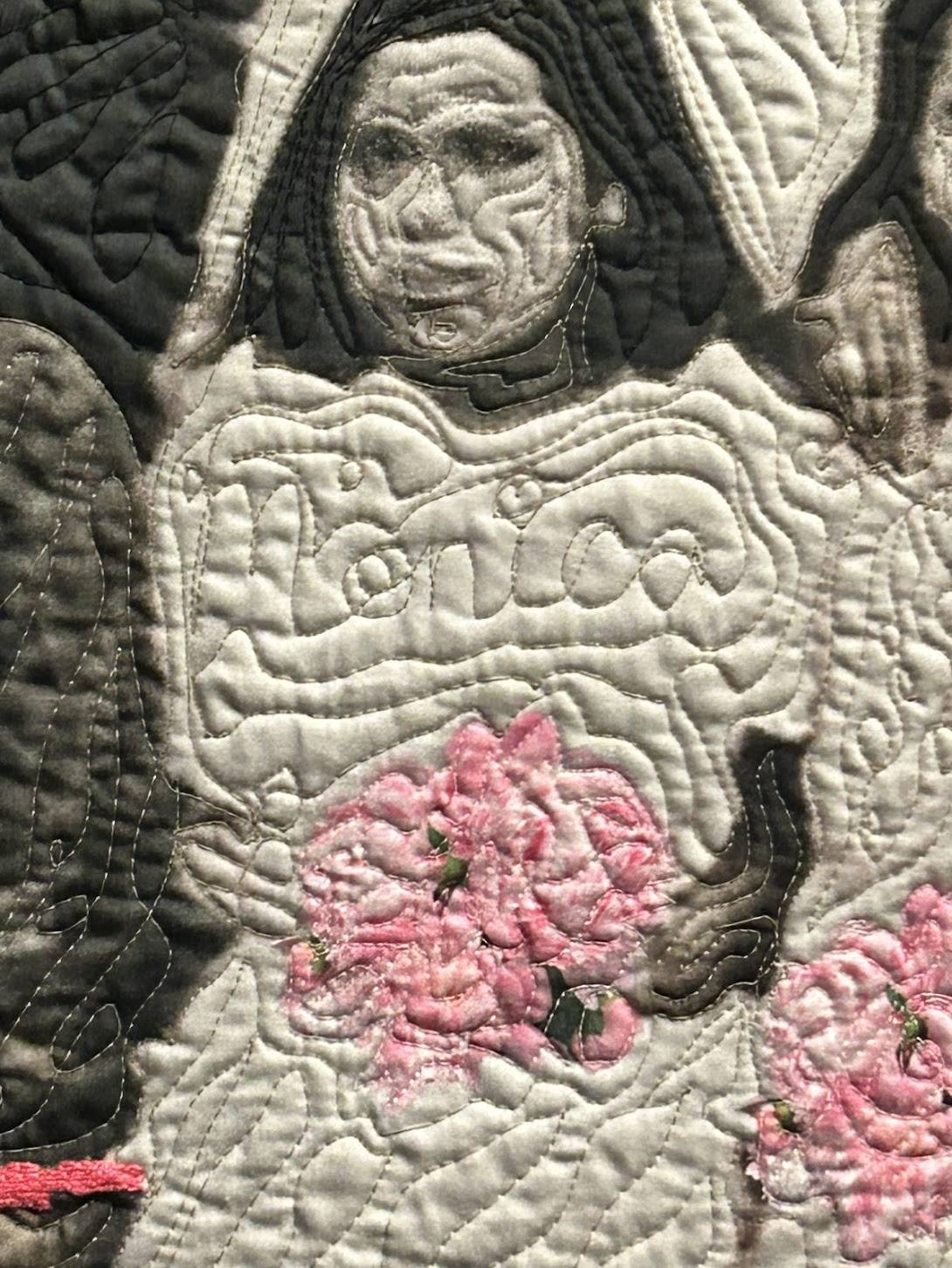
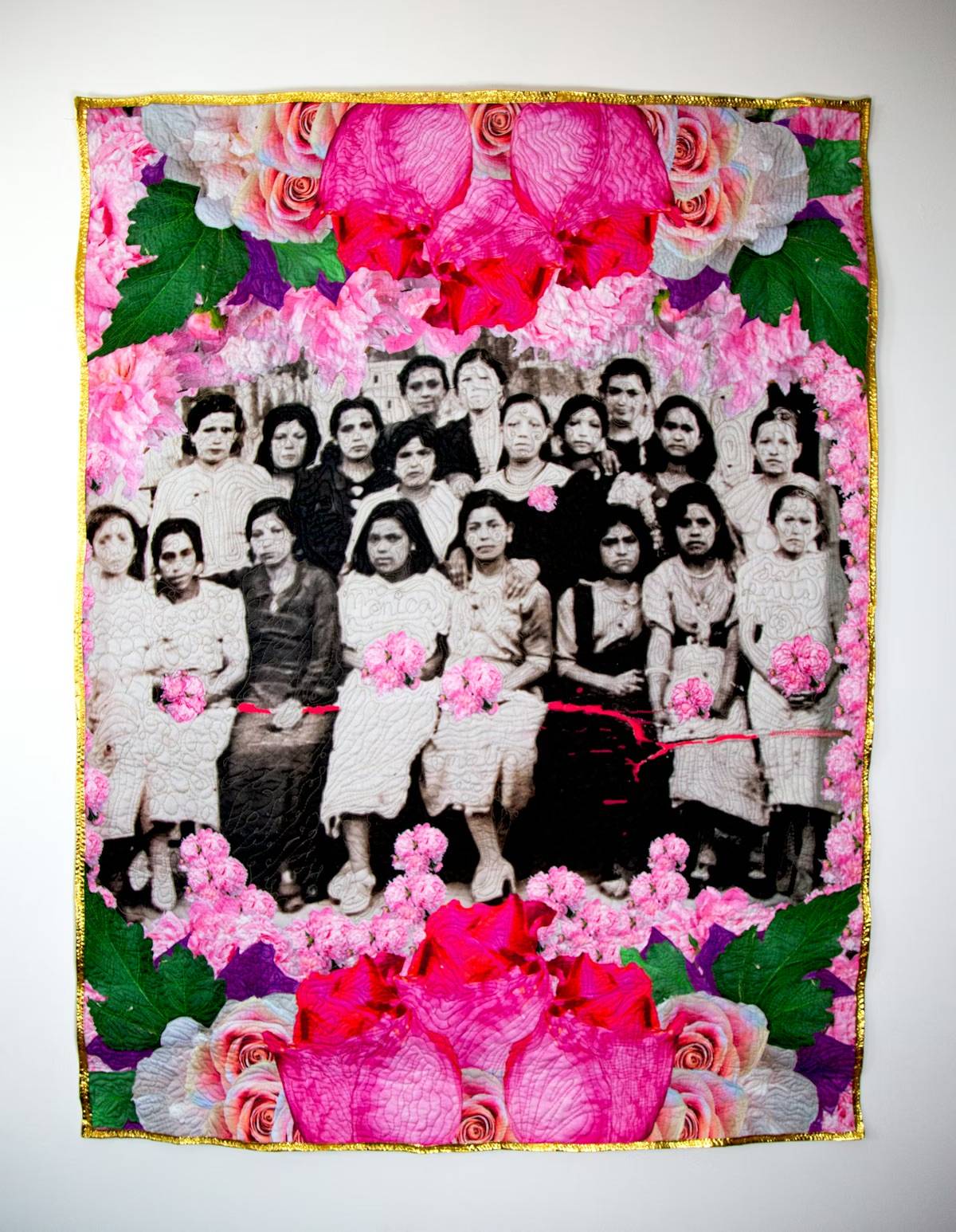
My absolute favorite piece in the exhibit was the “remembrance quilt” by Carina Yepez, a Mexican-American artist based here in Chicago. The piece, entitled “Mujeres (Women),” depicts a photograph of the artist’s grandmother and members of a women’s sewing circle in the 1930s, printed onto quilted cotton and synthetic fabric. In the exhibit text, Yepez writes that “[t]hese women came together to crochet, embroider, and sew for practical and artistic purposes… [t]hey gathered to create, preserve, and share a rich cultural heritage. I take comfort knowing that my abuela and her loved ones are reunited in my work, sewing together again.”
While the displayed pieces span geographic and temporal distances, many of the pieces that are on display are in direct conversation with each other. Older pieces like the mourning sampler and Victorian mourning jewelry that incorporate locks of hair from the deceased are juxtaposed with more contemporary works that explore the symbolic and cultural importance of Black hair as in Angela Hennessy’s “Mourning Weave,” or in a looser analogue, as in Nneka Kai’s “Braiding Chair I (my mother and I)” and “Lasting til Sunday.” The latter two pieces are an ode to the artist’s mother and the ritual of weekly hair-braiding that they engaged in during the author’s childhood. Kai’s pieces may not be direct examples of mourning textiles, but they certainly fit the theme of “survival.” Furthermore, the pieces’ themes of hair, ritual, childhood memory, and cultural connection tie perfectly into the themes expressed by the other pieces in the exhibit in such a way that its curation feels like a cohesive narrative.
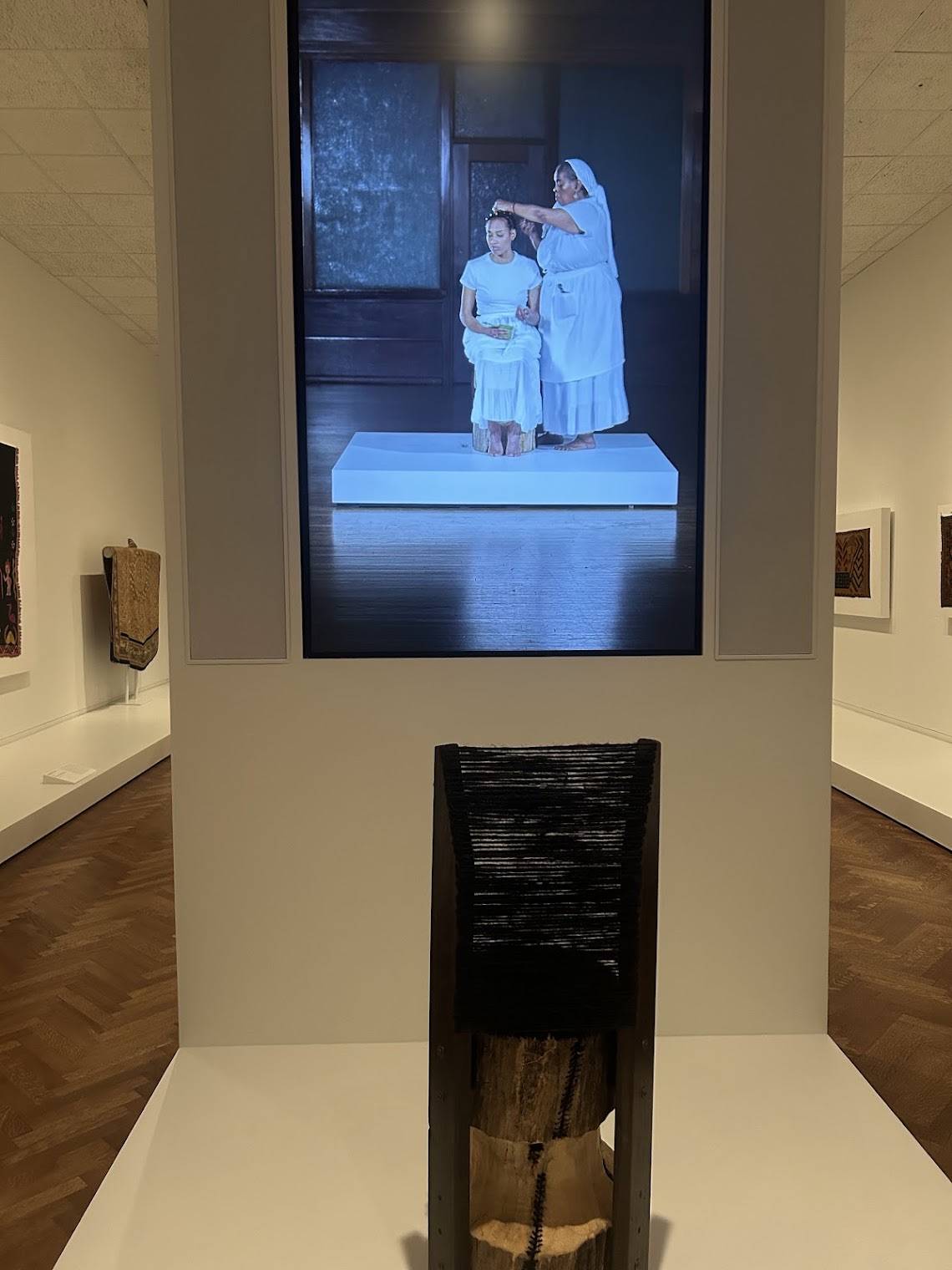
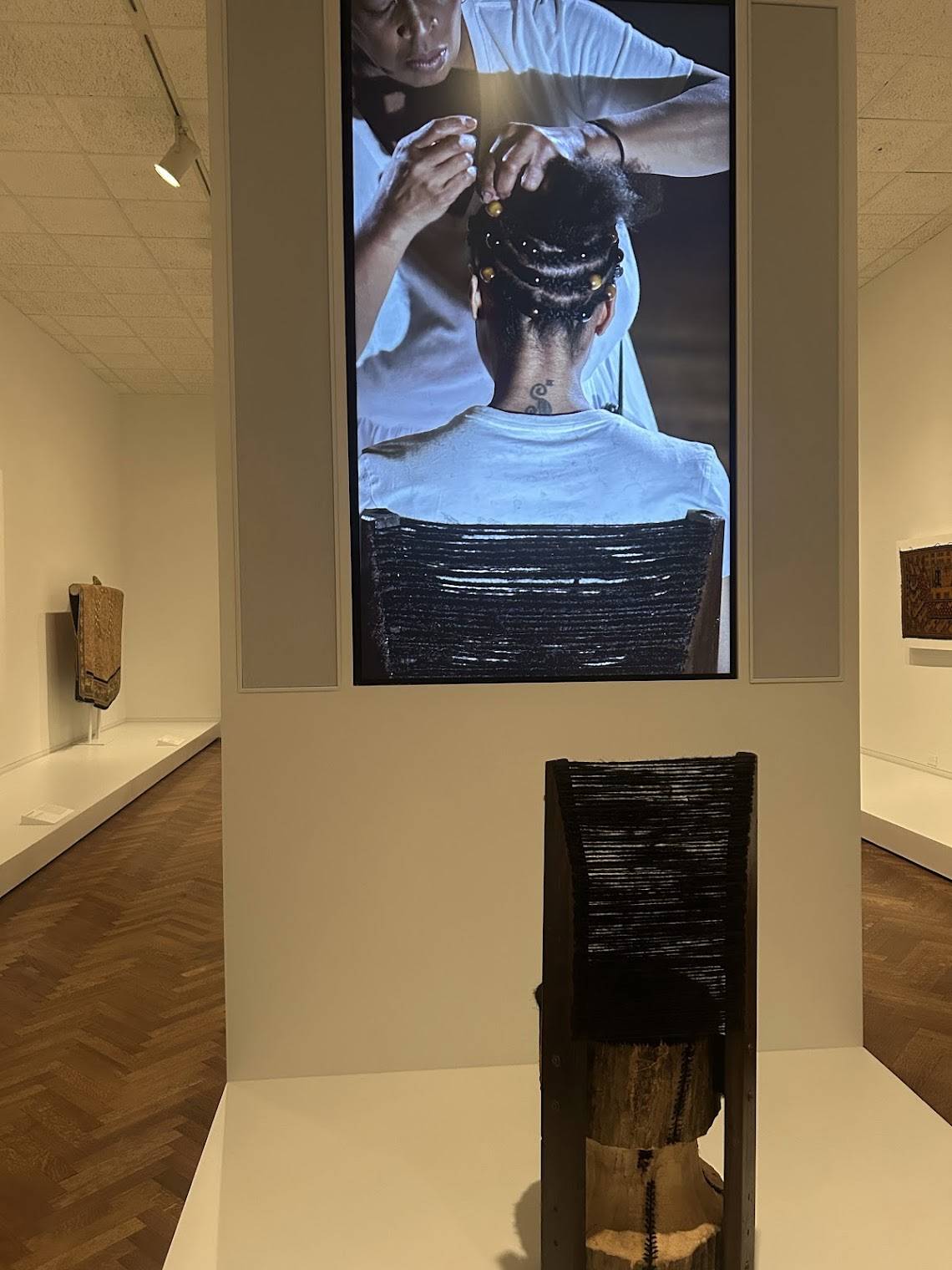
Other pieces in the exhibit fit the theme in a more straightforward manner, but were no less interesting to look at. Some highlights include a silk hanging scroll from 17th-to-18th-century Japan depicting the death of the Buddha and his entry into nirvana; embroidered funerary textiles from the Kuba culture of the Democratic Republic of the Congo; chest panels for Roman-era Egyptian mummies intended to “magically protect the dead”; and quilt blocks from the 19th century United States that include black mourning velvet. A funeral chant from the Coptic Orthodox Christian tradition of Egypt plays softly on speakers throughout the gallery.“With this soft music,” reads a label detailing this audio accompaniment, “we encourage you to pause and make space for emotional connection.”
“On Loss and Absence” will be on display at the AIC until March 15, 2026. It’s a really special collection of objects with a clear amount of care put into its curation and conservation, so be sure not to miss it before it’s gone.
This article is the first installment of a new series called “What’s on at the AIC?” I find that I go to the Art Institute much less than I’d like to, and I’m hoping that this series will encourage me, as well as you, the reader, to take advantage of our world-class museum and the exciting new temporary exhibitions that are shown there.





Wonderful article. Hope to make it to the show.