

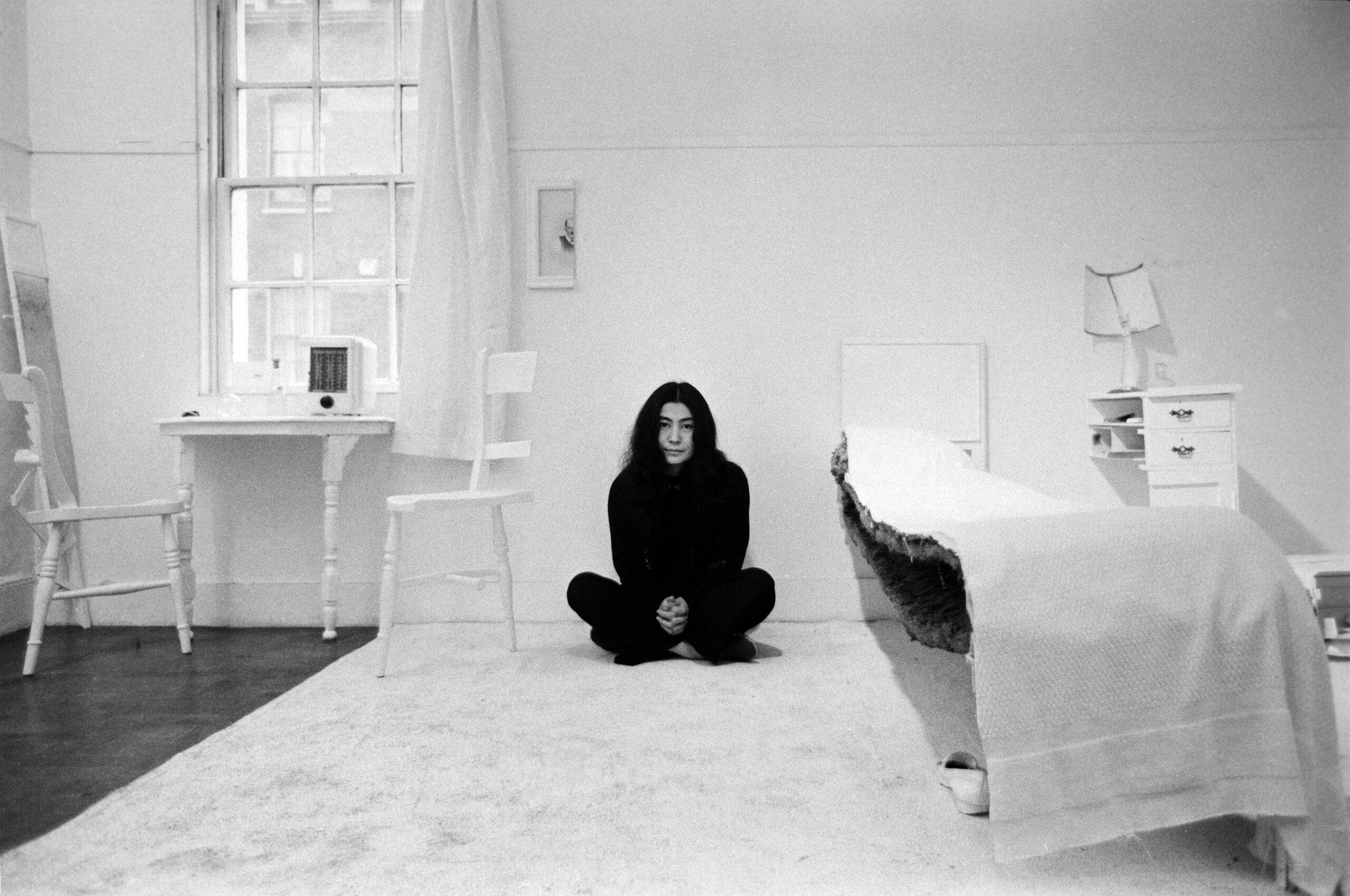
Many people think of Yoko Ono as inseparable from John Lennon, and that her relationship with him, romantically, politically, and artistically, was the peak of her career. After the Beatles’ split, the name “Yoko” became synonymous with a selfish woman responsible for rupturing a male friendship. The MCA’s retrospective of the astoundingly productive artist paints the portrait of a woman that could not be more different.
I visited “Yoko Ono: Music of the Mind” with my mother and stepfather and we split into different directions. I started by reading past visitors’ wishes tied to a pair of olive trees, expressing desires to pass an exam, for animals to talk, and to meet one’s soulmate at a museum. Ono collects these wishes and, without reading them, sends them to be buried under the “Imagine Peace Tower” (2007), a tower of light in memory of John Lennon, on the coast of Viðey, a small island neighboring Reykjavik in Iceland. My summers there often include an evening walk down to see this piece. Next time I go, I will know where my wish will lie.
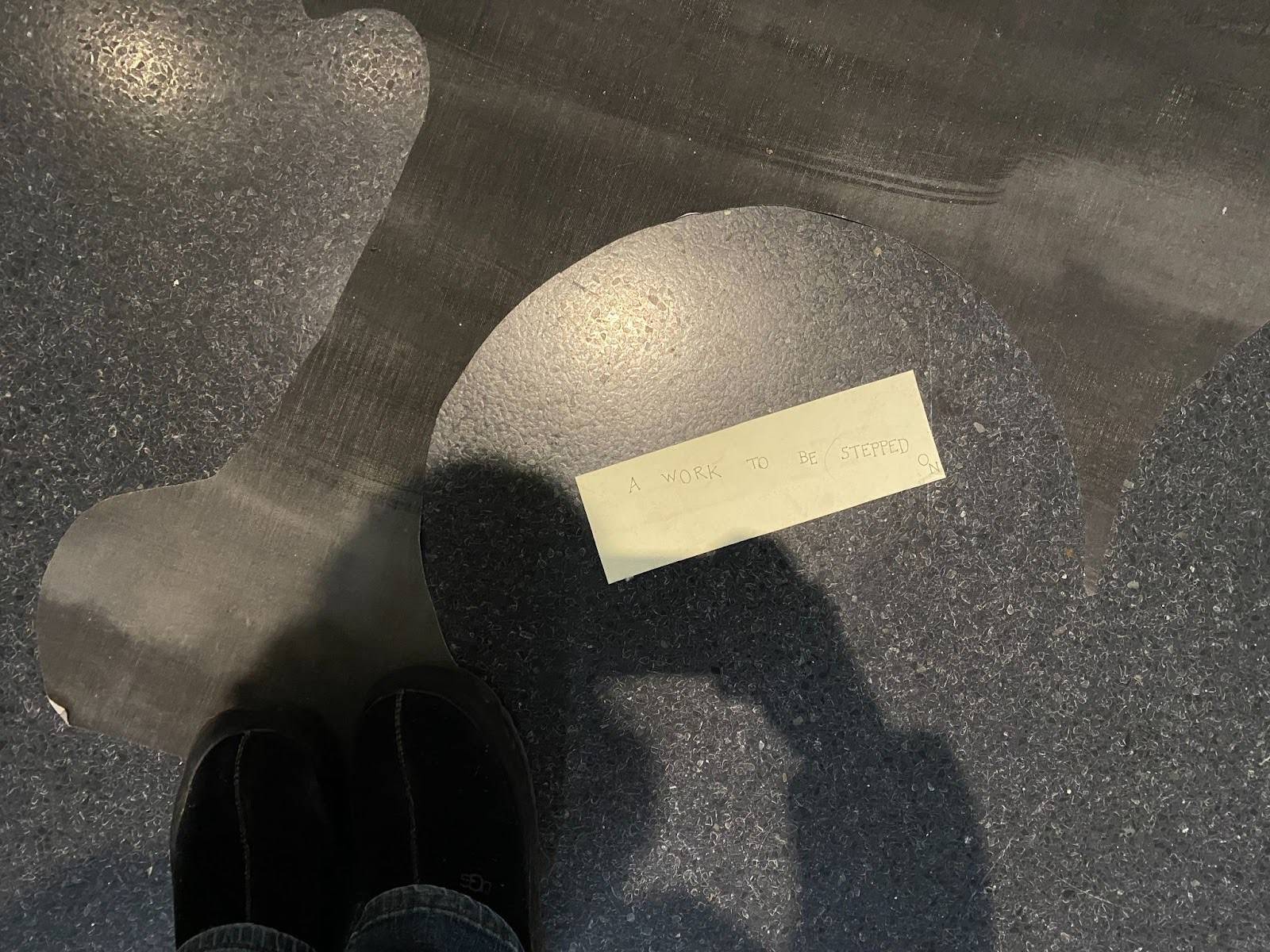
The first work in the gallery, “Painting to be Stepped On” (1960), felt like a test – I refused to put my dirty shoes on the small piece of canvas lying flat on the floor. Photographs taken by George Maciunas (1931-1978), founder of the Fluxus movement, an international community of avant-garde artists active since the 1960s, lined the walls. These showcased Yoko’s work from her first solo-exhibition (including the nearby floor-painting), which took place at AG Gallery in New York that year. These works were unfinished without Ono’s personal instruction to each visitor, her guidance already serving as a necessary ingredient.
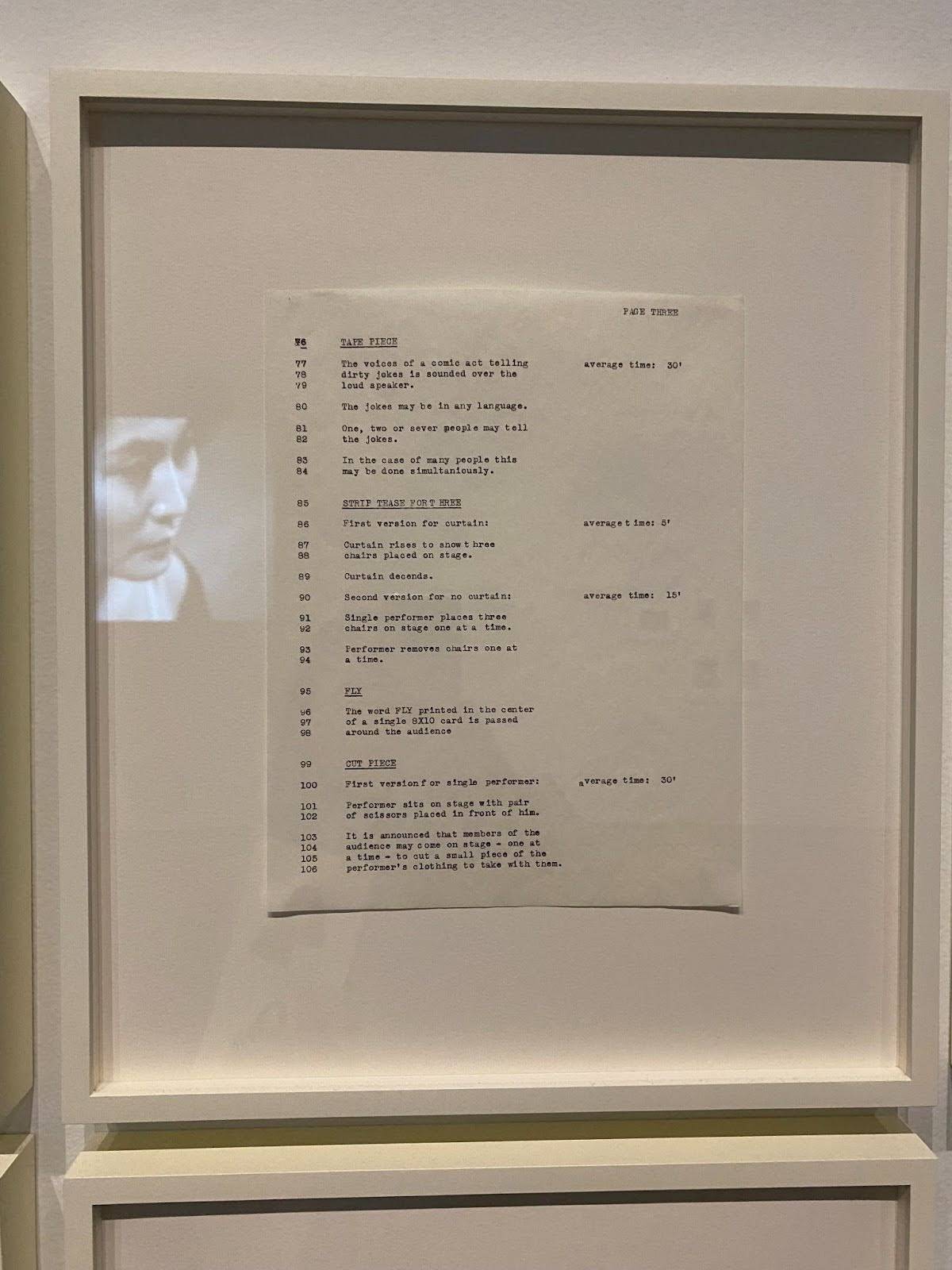
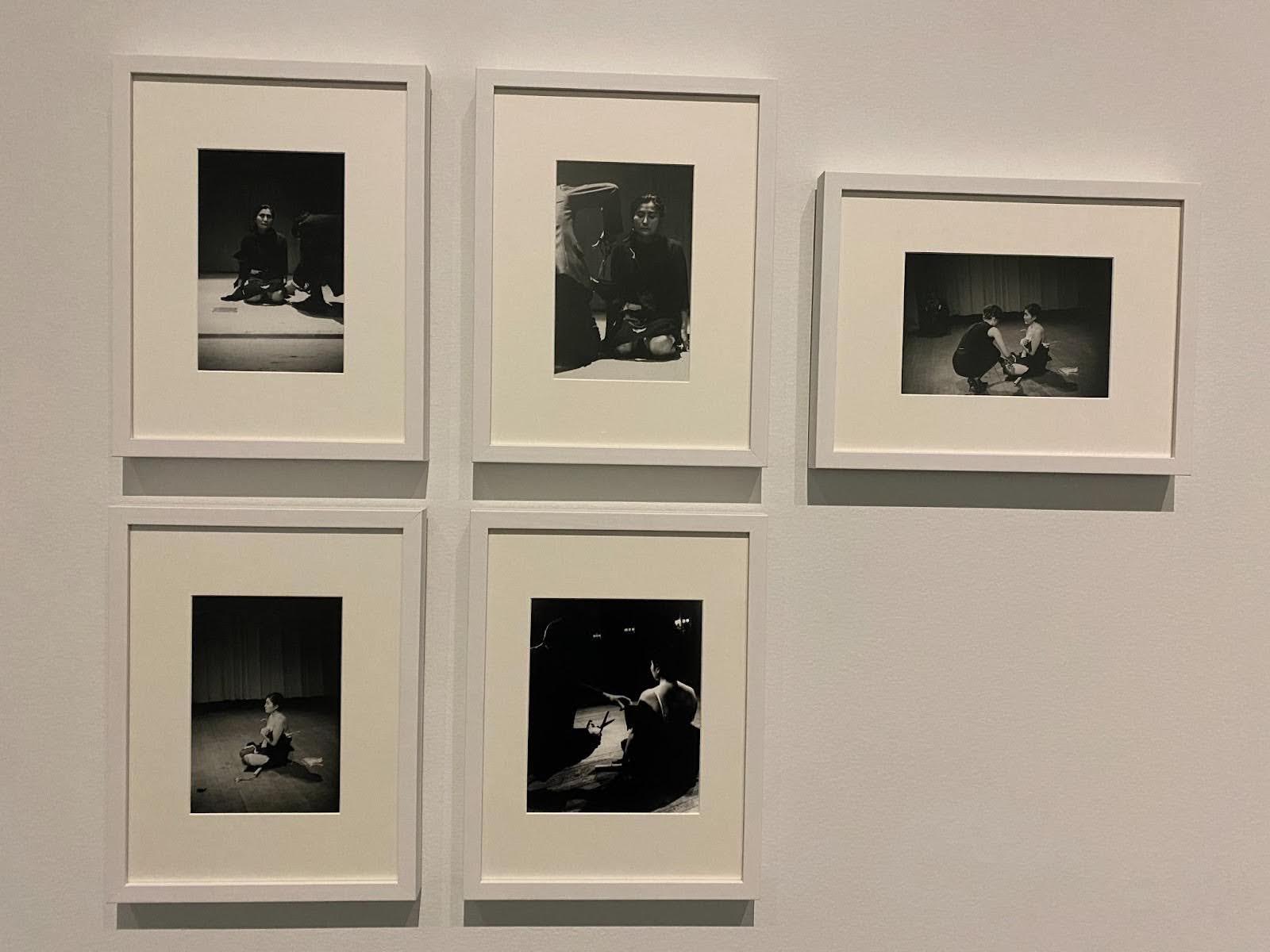
In the next gallery, a woman who was very excited to be able to perform her own “Bag Piece” (1964), asked my mother “Will you do it, too?” I got into a bag myself, and for a moment, we were three ageless and genderless black bags. A recording of Yoko Ono’s quintessential “Cut Piece” (1964) was projected just across from us. Formless and untouchable, we watched Ono become less so by the minute. Her instruction to audience members was “to cut a small piece of the performer’s clothing to take with them.” The piece would only end when the performer ended it. Her wish was to give to the audience, but I believe she was challenging their comfort and audacity. The video showed women shyly snipping off pieces of her sleeve, and later, a young man gleefully slicing an enormous portion of her shirt, and in one fell swoop, the straps of Ono’s bra. She sat incredibly still, but I felt her and my stomach knot.
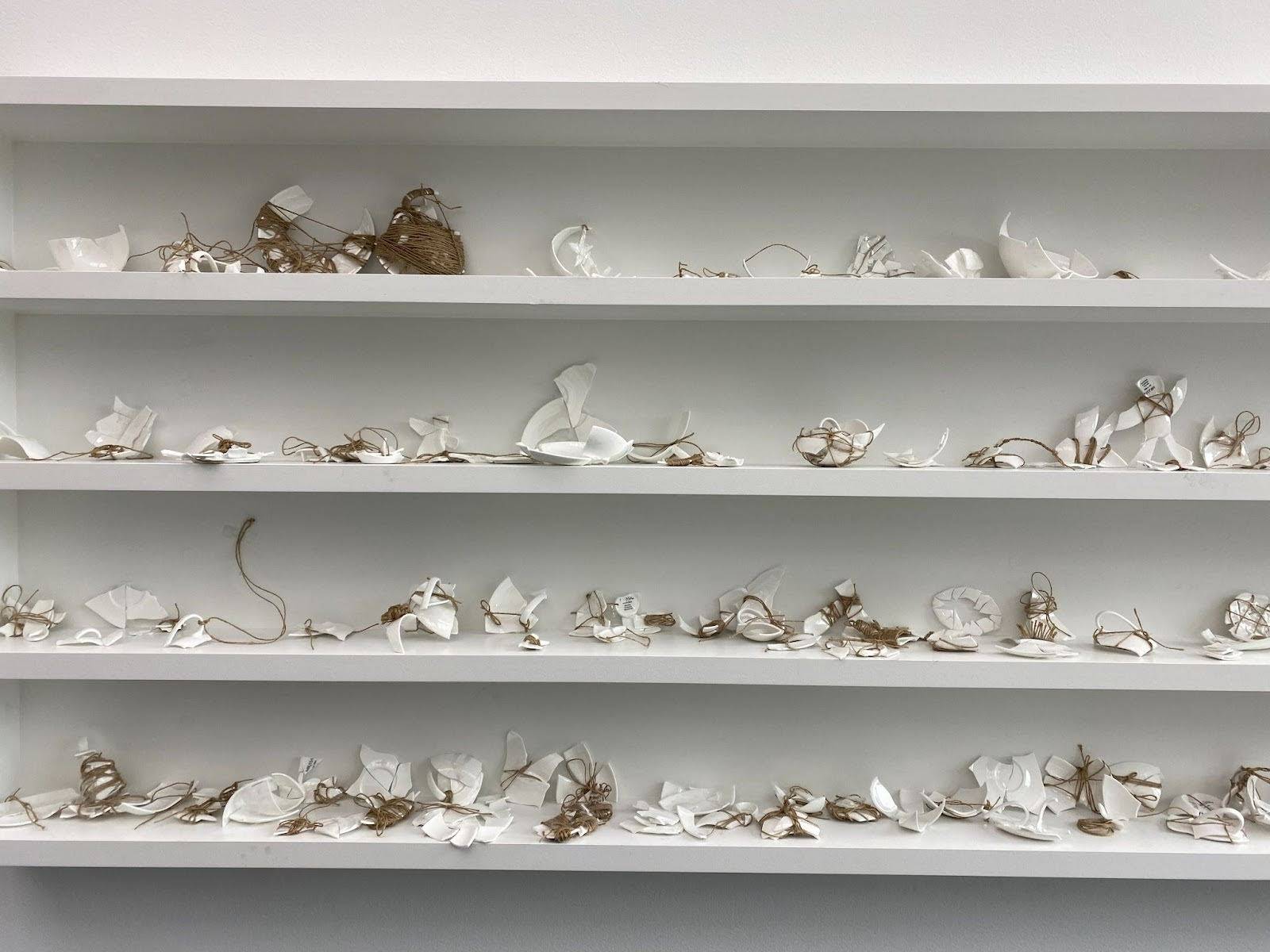
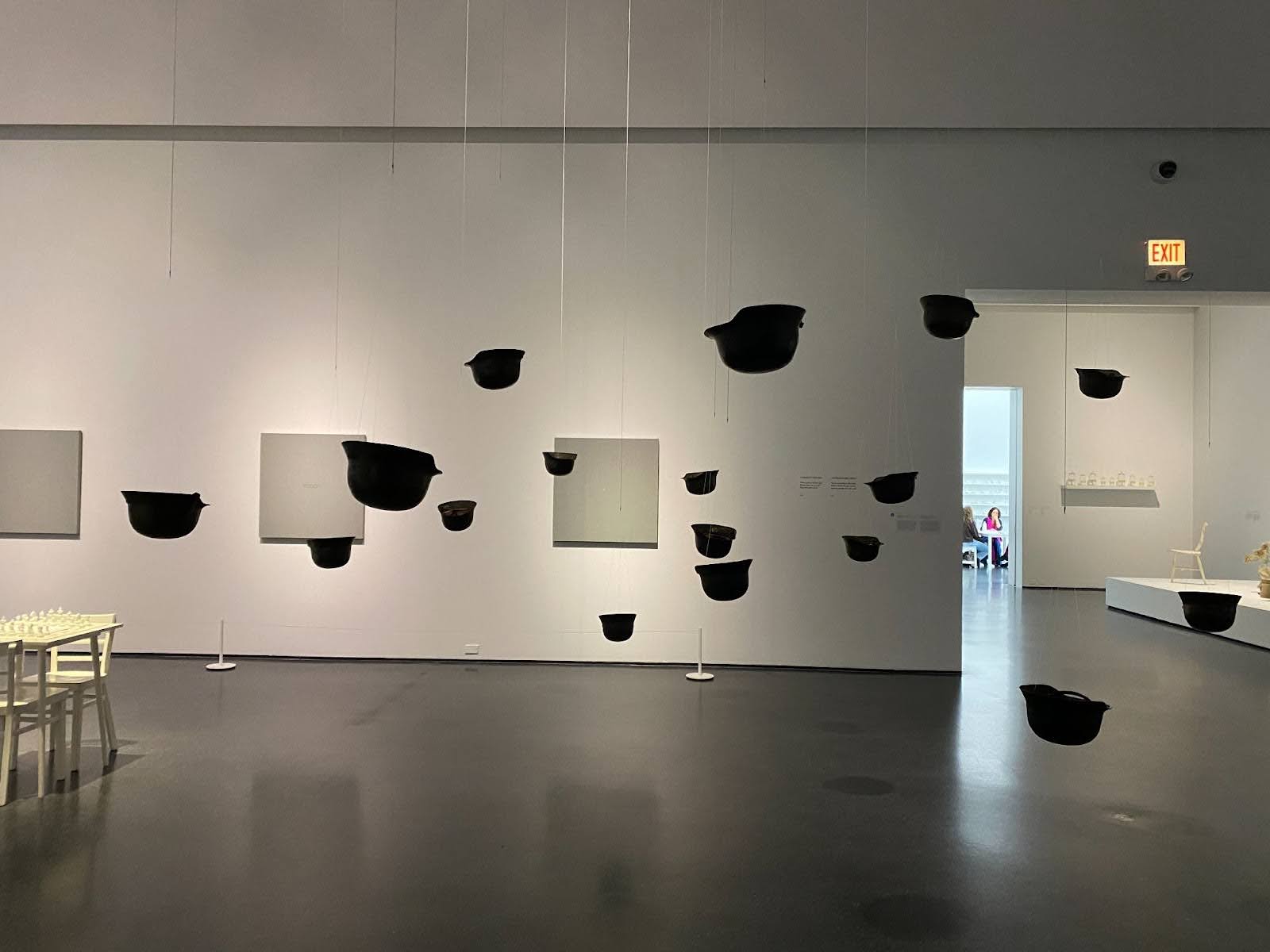
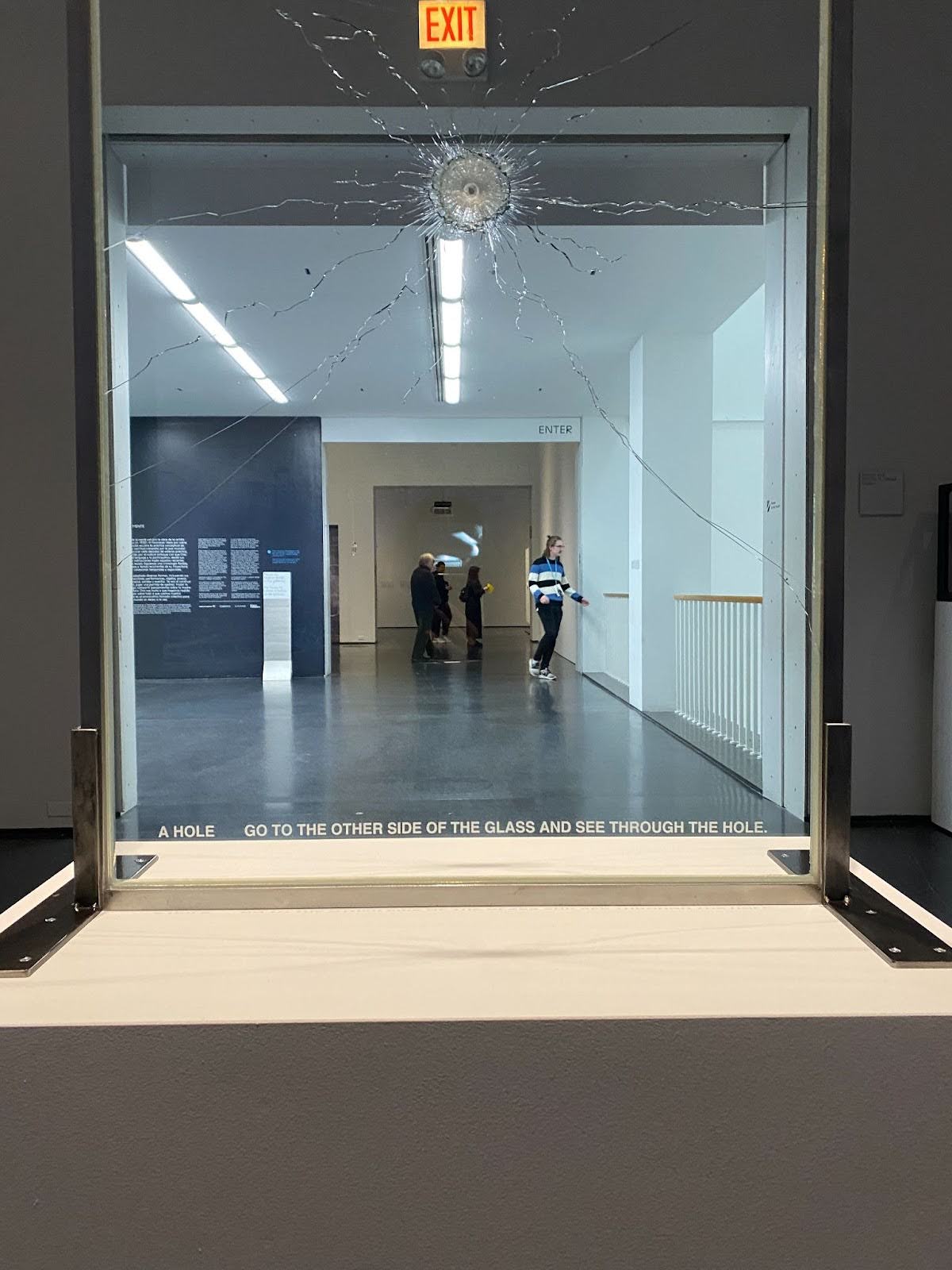
A week later, I returned to the exhibition alone, and though this allowed me the freedom to roam at my own pace, the show is not meant for one — I had no hand to shake through the hole in the canvas, and no one with whom to play monochromatic chess. Across from the olive trees, a man attentively mended a plate at a table near mine, where I sat making a mess of glue and tape. After proudly placing his piece on a shelf, he looked around at others’ works. “So, which one is yours?” he asked the security guard. She pointed to her piece, and he took a photo of her grinning next to it: a half-bowl with a glued-on twine smile.
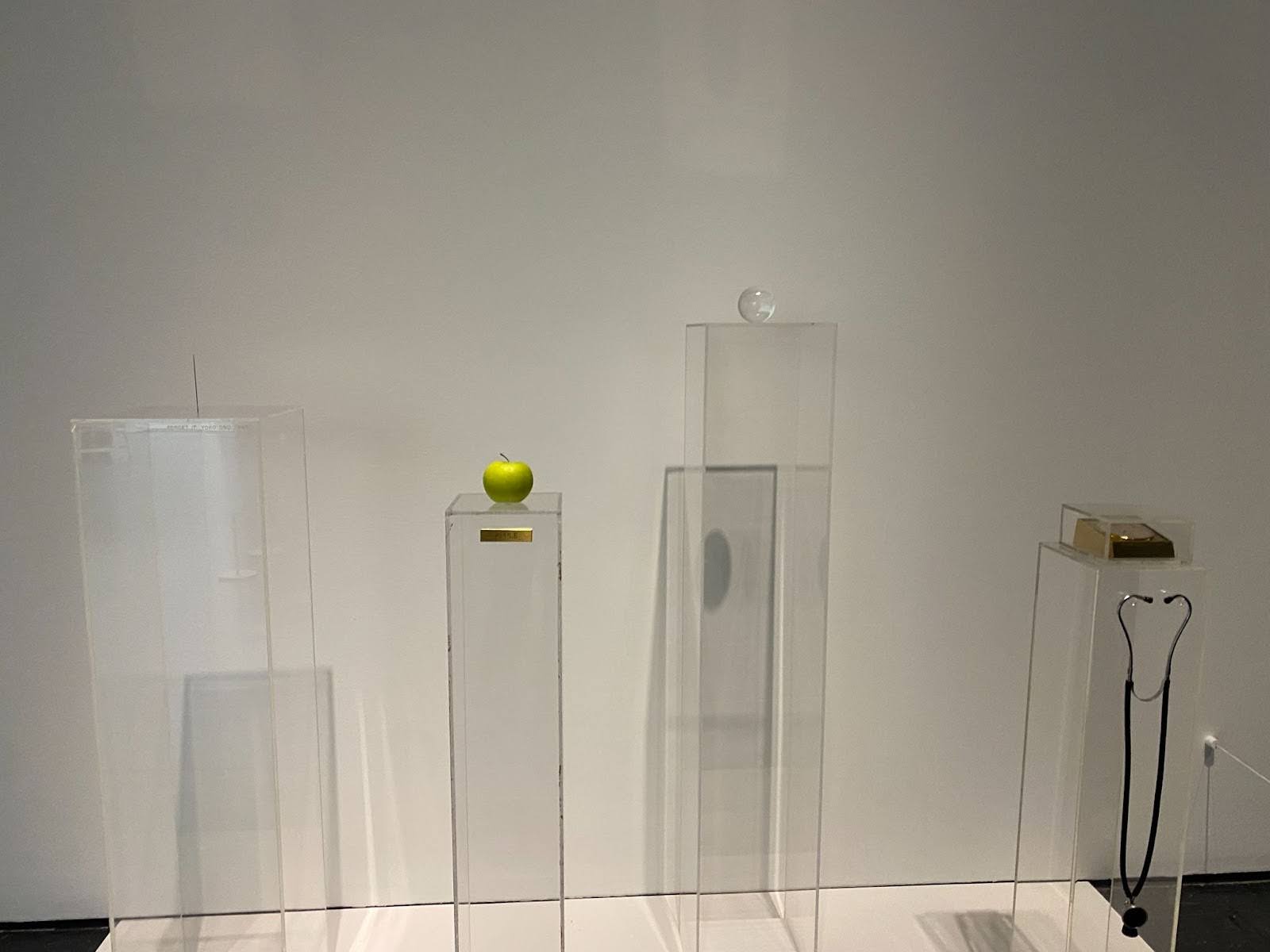
The exhibition is well balanced between interactive and non-interactive works. One can sit on a bean bag and listen to Ono’s musical projects, or keep walking through her experimentation with readymades. A green apple sat atop a glass pedestal, and its story was just as sweet. Shortly before John Lennon and Yoko Ono met, the former visited the gallery in which “Unfinished Paintings & Objects” was taking place in London in 1966, and bit into “Apple,” thinking it was just a fruit. They met shortly after; Ono said, “I met a guy who plays the same game I played.” And thus, their partnership and imagination began.
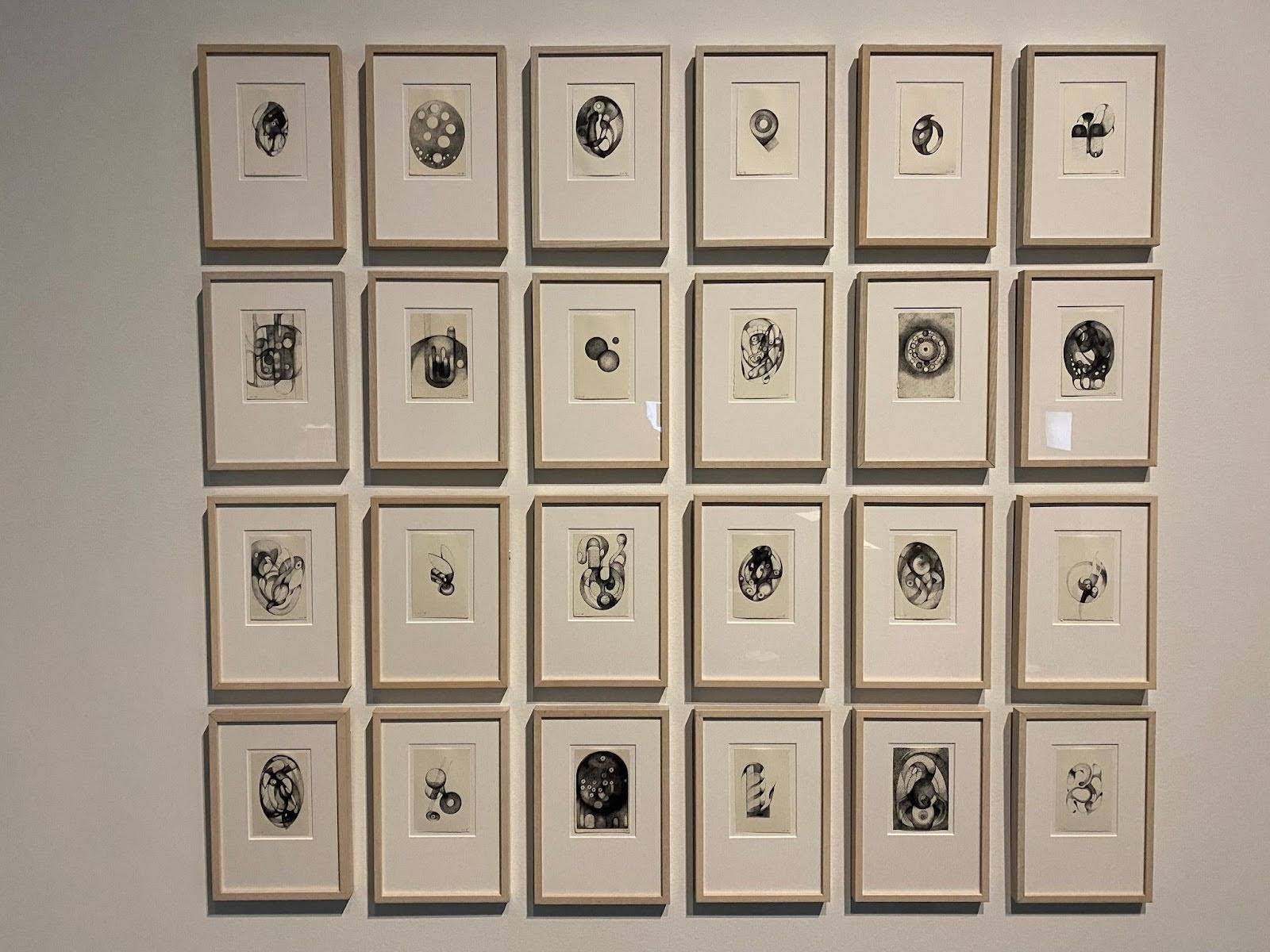
Visually, Ono’s work is black and white. This duality extends itself conceptually: she cuts furniture in half, breaks bowls only to mend them, conceals her body and then gives her clothing away, and makes you look on the other side of everything. She waltzes between these polar extremes, never setting foot in the gray, allergic to the half-hearted. Perhaps what struck me the most was one of the final pieces in the exhibition, “Franklin Summer,” an ongoing collection of drawings that Ono started in 1994. These tiny stipplings of ink on paper reveal a slow, solitary process, one that I hadn’t expected of her.
On Nov. 4, I attended “Six Scores for Yoko Ono,” a series of interpretations of scores written by Fluxus artists. These centered around a violin that isn’t played, and a tea ceremony without tea. The audience watched as the instrument, hanging from the atrium, suddenly dropped. The performer, former F Newsmagazine Arts editor, Gordon Fung, who interpreted George Maciunas’ “Solo for Violin (for Sylvano Bussotti)” (1962) was diligent in his violin-violence; biting it, cutting its strings, and scattering its parts. Collecting each piece with his entire body, he prayed, and thanked the instrument. The guard near me laughed and said “No, I’m not watching this shit.” Though this was not intended to be a participatory piece, I’d argue that the music emerged from the audience’s gasps, very loud chair-scooting, and laughter (the violin did not seem as delectable as the green apple).
After my solitary visit, I took my Ventra card out of my pocket and my little piece of sky fell to the ground. For an instant, I felt I was looking down at a little mirror, one reflecting a brighter world above.
If you haven’t yet had a chance to attend, “Music of the Mind” runs until Feb. 22, with scores from “Grapefruit” performed in the galleries on most Tuesday evenings and Saturday afternoons. On Feb. 18, to celebrate the artist’s birthday and the end of the retrospective, Northwestern University’s Contemporary Music Ensemble will perform scores in the Edlis Neeson Theater.