

“Right now it does feel like art needs to motivate social change, and if it has any legs at all, it needs to start looking alive.”
Aaron Renier is a cartoonist and illustrator from Green Bay, Wisconsin. Renier attended the Milwaukee Institute of Art and Design, where he earned his BFA.
Reiner taught at DePaul University before being asked by a friend if he was interested in teaching at the School of the Art Institute of Chicago. Renier described a love of teaching at SAIC because of the interest in art shared by students, saying, “I like teaching people who are already on board.”
Reiner is thankful especially to the stability working at SAIC has provided him, even during the pandemic and other difficult times.
Renier was introduced to comics through his childhood job as a paperboy. He was also interested in Cracked Magazine, which he read as a child. Renier described comics as being of his time. “Comics were in my time period; I was pre-internet,” he said.
Recently, Renier has been invested in the idea of art being used as a tool for social change. He believes that art has the capacity to communicate and empower the antifascist. “No one can believe in you for you, so art is a good way of making others believe in themselves.“
Renier, however, is wary of the art world at large, saying it’s too reliant on gimmicks. He also believes that, while the art world isn’t entirely fraudulent, it’s a place where a fraudulent mind could thrive.
“Most art is bad,” he said, but later added, “All art is valid.”
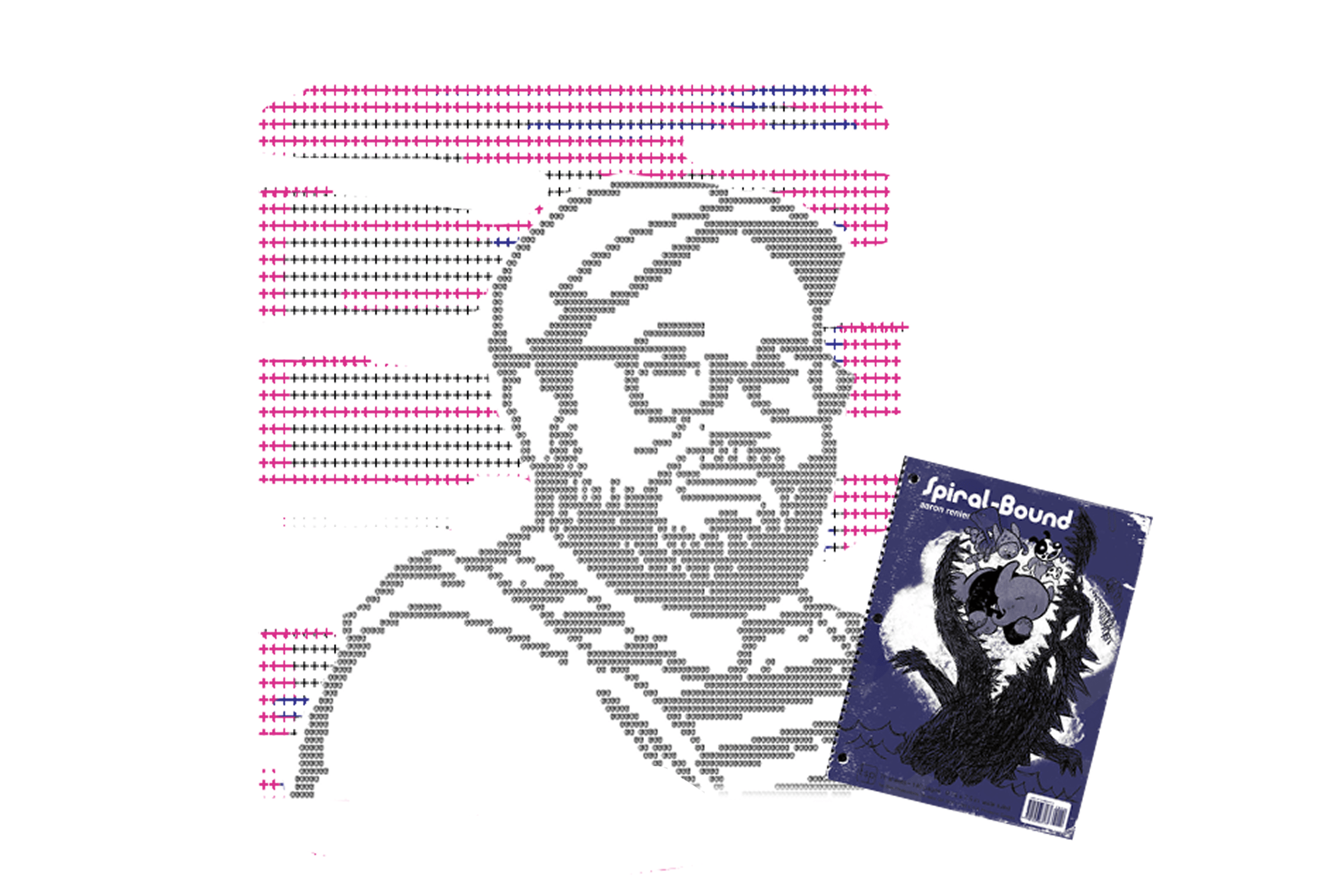
Reiner is best known for his 2006 Eisner Award-winning book “Spiral-Bound: Top Secret Summer,” which follows kooky animal characters discovering a pond monster in their town. He has two other graphic novels, a series about a geeky boy becoming a pirate on the high seas: “The Unsinkable Walker Bean” and “The Unsinkable Walker Bean and the Knights of the Waxing Moon.”
While Renier’s graphic novels are primarily geared toward children, his more recent short-form work has been targeted at older audiences. He suggested that, while his comics were for children in general, he often thinks about one specific child or one specific demographic of child when making his comics.
Renier is a loving participant in a wider comics community. One of his projects, “The Infinite Corpse,” is a continuous chain comic that, as of this publication, has 560 contributors. Renier said that the project started with an artist collective, Trubble Club in Chicago, making jam comics. He also participates in Brain Frame, a comics reading event in Chicago.