


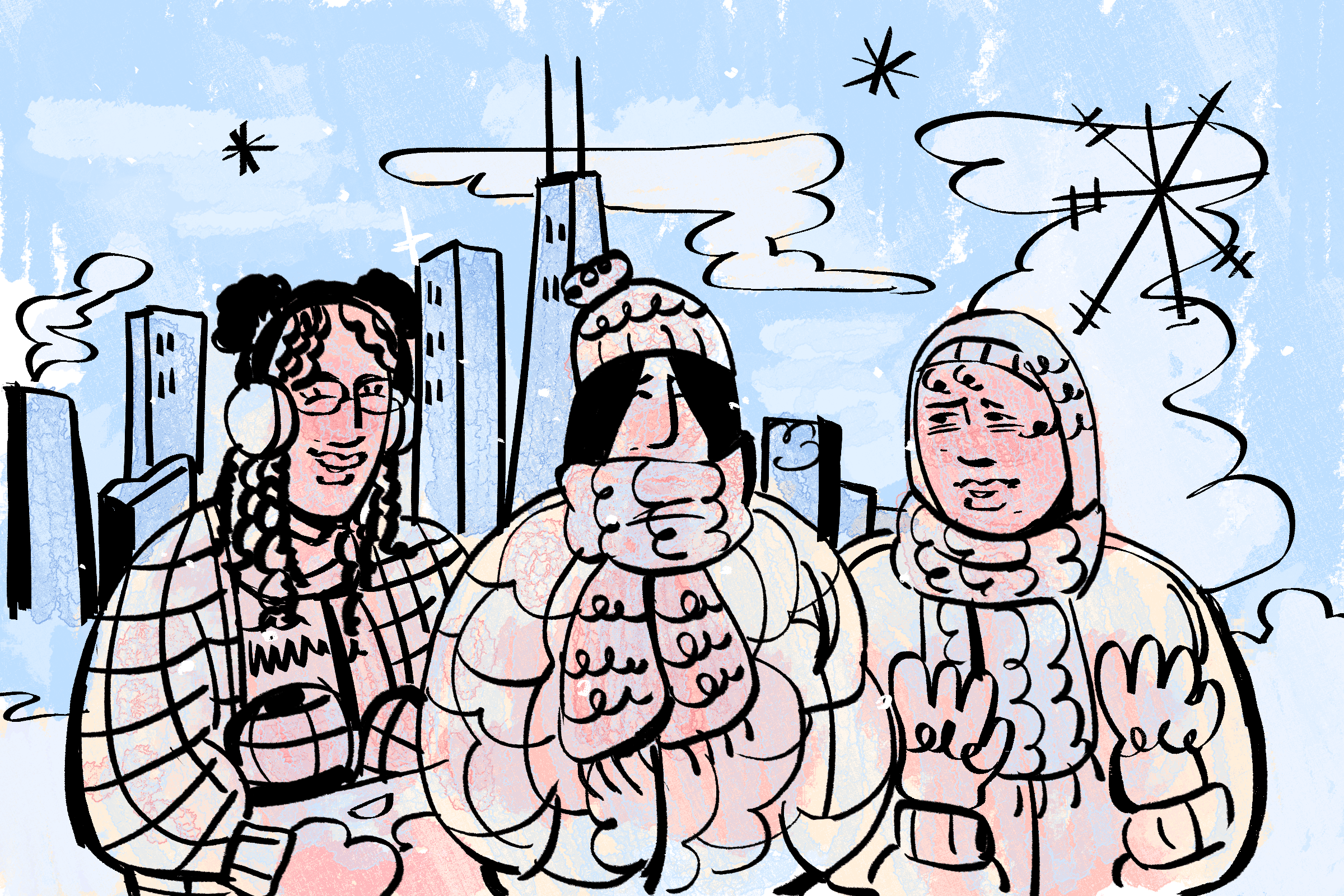
Earlier this year, Chicago consistently reached temperatures dangerously below the freezing point. The National Weather Service, on Jan. 20, issued an extreme cold warning throughout the city and state. Shielding ourselves from the cold and keeping our community warm are two things we can do during this time.
While the temperature is currently predicted to stay above 32 degrees fahrenheit, preparation for the chilly weather is still recommended. The City of Chicago suggests loose-fitting, warm, and lightweight garments that can be layered. Outerwear that has a hood and is water-repellant is also recommended.
Face, ears, fingers, and toes are especially vulnerable during the winter. It is important to cover these areas with hats, scarves, mittens, and thick socks. Wool is one of the most insulated materials and is recommended by the City of Chicago to wear during winter. Exposure to the cold, even for a few minutes, can lead to the development of hypothermia and frostbite.
Hypothermia is a life-threatening condition that occurs when there is a drop in body temperature below 95 degrees Fahrenheit. Symptoms are slurred speech, incoherence, memory loss, disorientation, uncontrollable shivering, stumbling, and exhaustion. Alcohol consumption can also increase the likelihood of this happening, since it decreases your internal core temperature and increases heat loss through the skin. If left medically untreated, hypothermia can lead to brain dysfunction and death. If your temperature is below 95 degrees, this is considered an emergency, and medical attention must immediately be sought out.
Frostbite is an extreme skin reaction to the cold. The affected skin can start growing pale or redness can be seen across the area. In sub-zero conditions, this condition can develop within 5-10 minutes on exposed skin. You will feel the skin become numb or a light burning sensation. The longer the exposure, the worse the damage. Blisters filled with fluid will appear and the skin will turn blotchy, then eventually start to die. The National Health Service says you should take off all jewelry from the affected area, put the affected area in warm (not hot) water, wrap yourself in a blanket, and have a drink of warm water. If the symptoms worsen and become painful, seek medical help immediately.
For future extreme winter weather warnings, there are ways to keep your living space, and subsequently you, warm. The City of Chicago recommends staying indoors as much as possible. Towels can be put under doors to keep the cold out and blankets can be put on windows during night time.
Your home may be susceptible to plumping issues in the cold as well. When it is below 20 degrees, run a steady stream of water from your faucets to ensure that the pipes don’t freeze. Opening the cabinet doors underneath the sink will allow the warm air to come into contact with the pipes. If they do end up freezing, call maintenance immediately and do not use an open flame to warm it.
A Chicago winter can be especially harmful towards some of the most vulnerable in our community. Houseless people, according to the Illinois Department of Public Health, are almost 40 times more likely to die from exposure to the cold than the general population.
Organizations like the Chicago Coalition for the Homeless and The Night Ministry have been working and focusing their efforts on providing houseless people resources and services. For those who wish to help the houseless people around them, the CCH and The Night Ministry have some advice.
Hand warmers, gift cards, cash, food, and extra gloves can be easily carried and given to houseless people. Blankets and tents can be stored in your car or house for when there is an opportunity to give them out. Winter hats, warm gloves, hoodies, underwear sets, socks, hand warmers and foot warmers can be bought directly for them too.
If you want to engage civically, you can call your local officials or look into local organizations to donate to. For direct involvement, there are many opportunities to volunteer with these programs. If a houseless person is struggling, in any way, and agrees, you can also call 311 for access to the Chicago City Services phone line. From there, they can ask for help with finding a shelter from a trained operator, according to the CCH.
You can also acknowledge their presence. Giving them a smile and treating them with respect is one of the simplest things you can do.
There are also a few warming centers in Chicago. The Chicago Park District has an online map showcasing all available locations in the Chicago area. The City of Chicago’s Department of Family and Support Services has 6 main Community Service Centers. These spaces are open from 9am-5pm on Mondays through to Fridays, with the exception of the Garfield Community Service Center. During the extreme cold warning, that service center stays open overnight and through to the next day.
Community service centers can provide access to social workers and case managers who can assess client’s needs. The centers also have clothing, referrals to local food pantries, public benefits eligibility assessments, substance abuse treatment referrals, and more resources.
Libraries and other social service facilities can act as warming centers, as oftentimes these CSC’s become overcrowded. The City of Chicago has an online map of all designated spaces that will provide a safe and warm environment for those seeking refuge from the cold.
CSC locations:
Englewood Community Service Center
1140 West 79th Street, Chicago, IL 60620
312-747-0200
Garfield Community Service Center
10 South Kedzie Avenue, Chicago, IL 60612
312-746-5400
Dr. Martin Luther King Community Service Center
4314 South Cottage Grove, Chicago, IL 60653
312-747-2300
North Area Community Service Center
845 West Wilson Avenue, Chicago, IL 60640
312-744-2580
South Chicago Community Service Center
8650 South Commercial Avenue, Chicago, IL 60617
312-747-0331
Trina Davila Community Service Center
4312 West North Avenue, Chicago, IL 60639
312-744-2014
The Chicago cold feels isolating at times. Keeping yourself protected, aiding those in your community, and seeking support can help the winter feel a little bit warmer.