

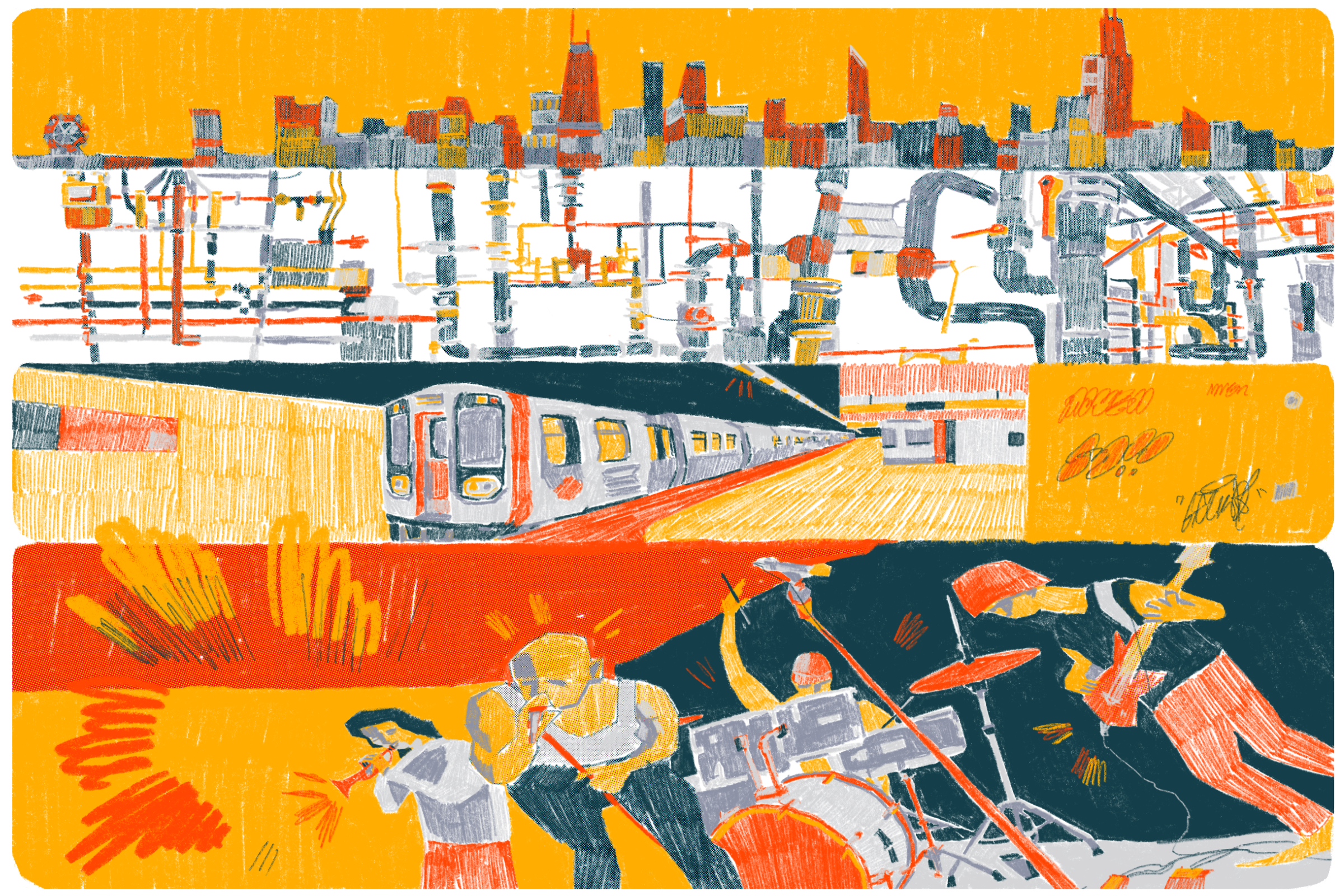
New York has its mythology of hip-hop, rock, and disco. Los Angeles glitters with studios and managers shaping images as much as songs. Nashville and New Orleans barely need introduction.
So where does Chicago stand?
The best way to understand this city’s music scene is simple: slow down, sit in the room, and watch the underground take shape. F Newsmagazine spoke with four artists building Chicago’s present, and quietly imagining its future.
ESHOVO
Family, lightness, and the 90s

Genre: Rap
Latest EP: “shit really be getting dark but being a light is way too important to pass up”
Search Eshovo’s new EP and the first thing you see is a smiling close-up. Then you press play, and somehow the smile lingers in the sound. It’s loungy and digital, slightly lo-fi, like light refracting through glass: soft edges, warm synths, ‘90s DNA without nostalgia fatigue.
Earlier projects like “#000000” (2015) and “In No Rush” (2019) carried heavier tones, records that felt necessary, like getting something dense out of the body. However, after rediscovering Stevie Wonder, something shifted. Instead of repeating heaviness, Eshovo began transforming it. Hope became his practice.
Now based in Chicago by way of Prince George’s County, Maryland, and Edo State, Nigeria, he doesn’t treat the city as territory to claim, but as space to move through. That sensibility comes through clearly on “Sublime Stuff,” a standout track where ambition and self-awareness glide by without urgency. The verses feel conversational, playful, and sharp, choosing brightness without denying reality.
Teaching at SAIC further sharpened that patience. “Personalization over perfection” feels like the guiding thesis he wants to teach and share with the world. Family, across classrooms, homes, and collaborations, remains central. Alongside Roy Palace, Tony Kill, and EKKS, together they build Et Cetera Labs: a space where support and ambition coexist, free of ego.
“shit really be getting dark but being a light is way too important to pass up” isn’t naïve, it’s clear. Beats breathe. Tracks drift. Optimism arrives without preaching. And when asked to sum it up, Eshovo keeps it simple: “I’m here to smile.”
ADELAIDE
Roommates, beatniks, and aging gently
Genre: Alternative
Latest album: “Holding”
Adelaide’s music gives the sense that time is stretching, not dragging, not rushing — stretching.
The voice has widened over the years. While earlier work lingered in the reminiscence of summer; “Holding” moves into winter window light, where everything is visible but nothing is shouting. It’s the feeling of turning toward quiet and discovering it isn’t empty, but full of meaning. The melodies unfold with a patient, spacious grace: guitar lines stretching like sunlight across a Sunday morning, Adelaide’s voice carrying you to the horizon, while gentle instruments float softly around them, shaping the air without ever demanding it.
Originally from Michigan, Adelaide has called Chicago home since college. When we spoke, they were recovering from a string of stressful days, with merch still unprinted, surgery scheduled, and a release show approaching. And yet, calm. The album took two years to make, and the pacing shows. Nothing is hurried. Nothing is forced.
The record is built through relationships. Sister Daphne Wilson and partner Garrett Bakke shaped its visual world, while longtime collaborators formed its musical core. A low-key, beatnik current runs through Chicago, where bands overlap, projects multiply, and musicians move freely between roles. The album was recorded with members of “Racing Mount Pleasant” (Tyler Thenstedt, Casey Cheatham, and Sam Uribe Botero), with Marcus Quintana on guitar and Connor Bohn on keys. Onstage, the lineup shifts: lead guitarist Peter, aka “Alga”, from “Sharp Pins” and drummer Vincent from “Rain Garden” join in, but roles remain fluid as everyone moves between projects. That constant exchange, people circulating, songs passing hands, gives the music its momentum, gently offsetting the calm that defines Adelaide’s own songs.
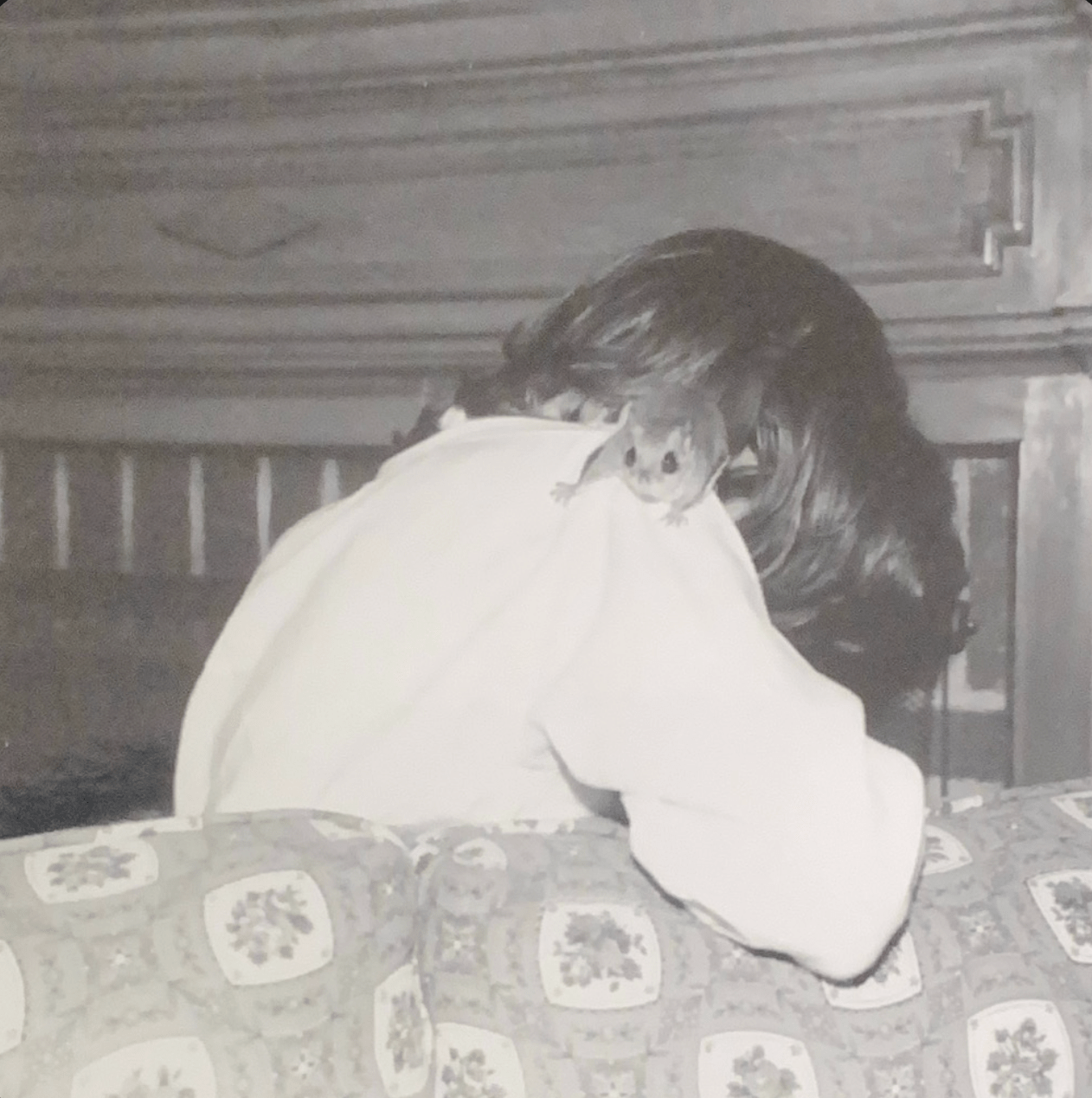
Though the energy behind production is youthful, the music carries the weight of age and care, echoing their elders. “Belltower,” the final song written, unfolds around the steady chime of their grandfather’s clock. “Mary-Jo,” the earliest track, written in 2021, honors their paternal grandmother, while their maternal grandmother appears on the iconic album cover, eyes closed, a squirrel perched on her shoulder like a mischievous, quiet companion. Photography threads through the work, with boxes of letters, collages, and memories spilling open like a Mary Poppins bag. Objects held. Time held. Memory with edges.
Adelaide chose to leave Spotify, marching alongside a wider circle of musicians in Chicago. It is scary, they admit, and a privilege to move slowly. But it fits the title. “Holding” is beautifully produced, carefully arranged, and emotionally grounded. Songwriting resists melodrama, the sound breathes, and every musician knows when to step forward and when to disappear. The work feels durable. And I believe in it.
AMALIA JULIANE
Multiculturalism, improvisation, and relearning how to play
Genre: Rock
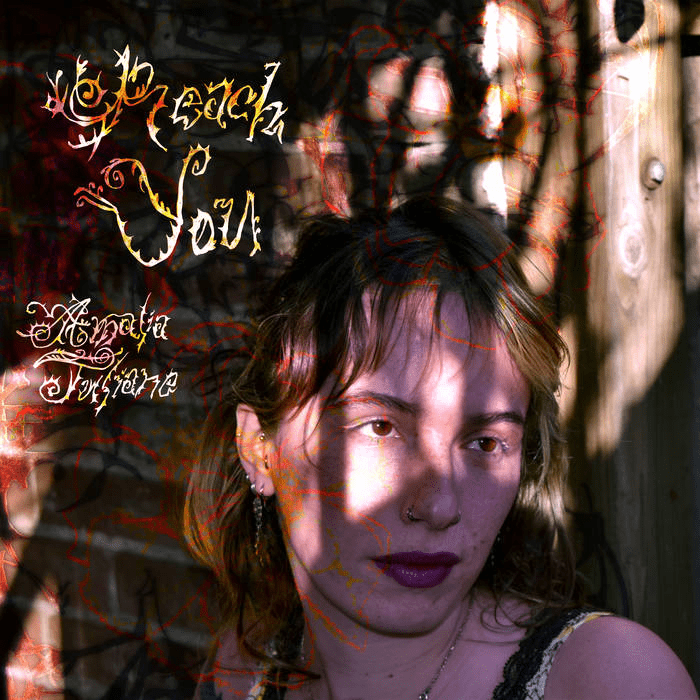
Latest Album: “Reach You”
Amalia Juliane is the sort of artist you listen to twice: once with your ears, once with your brain catching up afterward.
French-Brazilian, Brooklyn-to-Chicago, switching languages in her brain like instruments, her songs feel loose and alive, torn slightly at the edges in the most intentional way. Vocals slide, guitars react, rhythms pull against each other. It’s messy the way conversation is messy, because it’s honest.
Amalia Juliane recorded “Reach You” while sick. Something in that constraint cracked open. Instead of polishing imperfections out, she let them stay. The record sounds human in a way pop often avoids. On “Which One Is It,” indecision becomes a groove. On “At Peace With It,” heartbreak walks right up to humor, waves, and refuses to apologize. There’s vulnerability without self-pity, ego questioned but not erased.
Leaving Spotify has re-centered her onto Bandcamp, live shows, and direct listeners. Teaching full time keeps the muscles sharp. Improvisation still anchors everything, not jazz in genre, but jazz in approach. Her band understands that language. Dorée Gordon textures the corners. Jonah Eichner grounds the rhythm so the chaos can roam. Judah Sweig reflects ideas back, and Amalia steers. It feels like a neighborhood built inside a song.
Growing up multilingual made her relationship to voice complicated, sometimes abstract. However, now, abstraction is a strength, phrasing shaped by Portuguese softness, French cadence, and Chicago’s willingness to let things be eccentric. After a year in Chicago, she’s still seeking the right drummer, still building new work, and, most importantly, still very much in motion.
MADDIE KEMP
Night studio, day nursing, full-on R&B diva
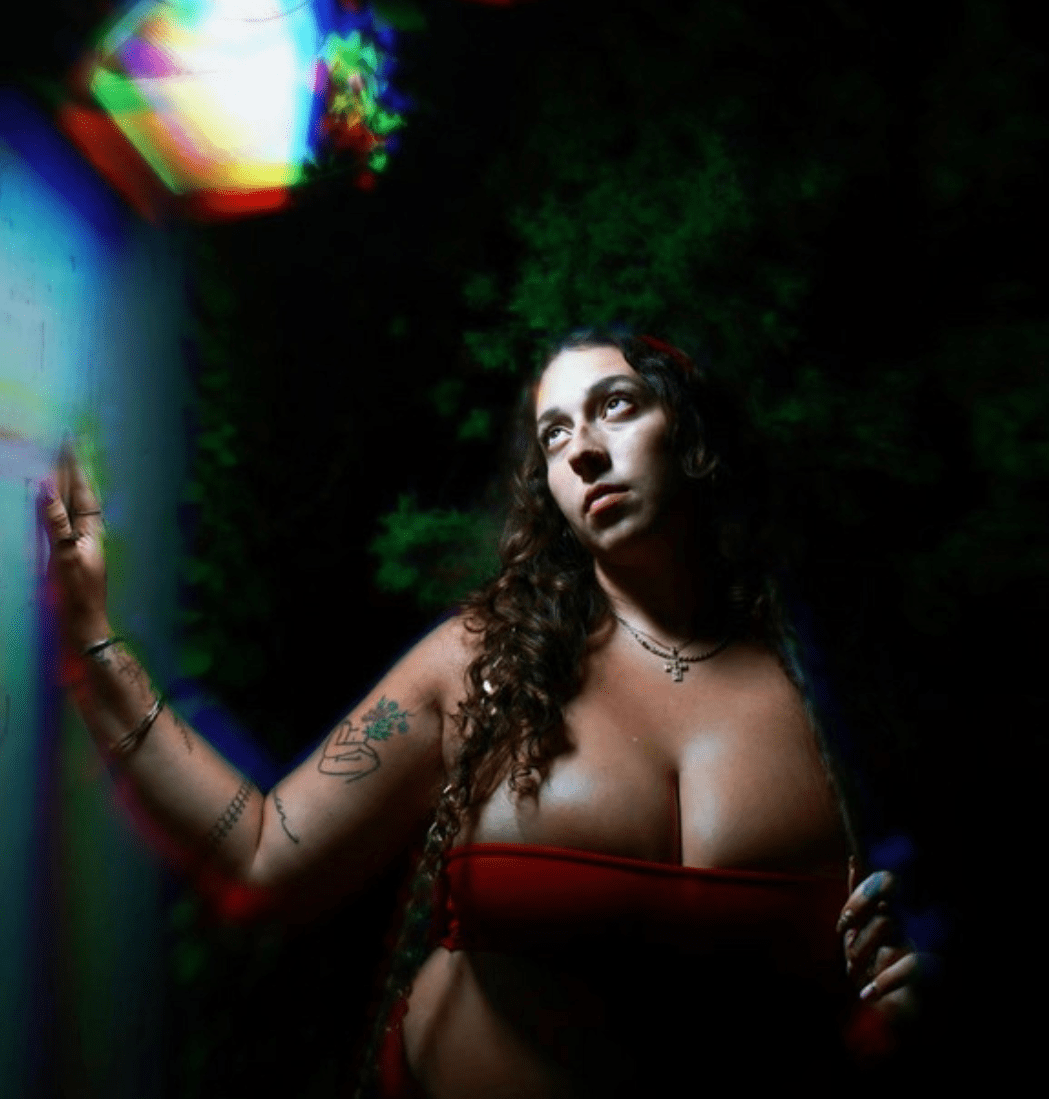
Genre: R&B
Newest release: “Listen to Me” ft. Aquil J
In college, someone overheard Maddie singing at volleyball practice. Minutes later, she was in a studio improvising a chorus, and everyone in the room realized there was something else happening.
That sense of effortless presence is still there. By day, she is a nurse. By night, she builds songs meant for big speakers and even bigger rooms. She speaks about R&B not as a genre, but as a home. Kehlani, SZA, Coco Jones, Sevyn Streeter, being huge inspirations for her, yes. But also herself.
Maddie writes with striking honesty. When asked, she can put words to feeling without hesitation, shaping clear, confident phrases on demand. Her songs come directly from lived experience, without disguise or dramatization.
Her process is intuitive and deliberate at once. When emotions feel heavy, she listens through beats from different producers until one resonates. She hums melodies and rhythms first, letting the body lead, then returns to thread lyrics into the structure already built. That’s why her songs feel layered. Production carries weight, but intention carries meaning. Even when the themes touch pain, the result lifts. Not toxically positive, but empowering, like advice from someone who has already walked through it.
Although originally from Michigan, Chicago has given her collaborators and producers. She is currently collaborating with hip hop musician A.K.A. The Truth, and working closely with the music producer Neko at Wond3r Studios. She wants two EPs and an album this year. She wants the stage and she is not shy about deserving it. This diva aims high, and she will definitely play live in the city this year.
Nursing reminds her daily that people need connection. Music is the other way she gives it. “Trust your vision. Find people who protect your energy. Stay kind to yourself,” she says. And then sings.
What Chicago is Doing Differently
After forty shows, one thing feels clear: Chicago isn’t chasing mythology. It’s building ecosystems.
Artists here support each other. They experiment without apologizing. They leave imperfections audible on purpose. There’s playfulness, underdog confidence, and patience: music allowed to grow instead of being forced to brand itself.
Chicago isn’t echoing history. It’s asking for honesty, and letting the future assemble itself from there.
And it’s only the beginning.