

As of Sept 9, US Immigrations and Customs Enforcement began “Operation Midway Blitz” to “target the criminal illegal aliens,” according to the Department of Homeland Security. Arrests and raids have become daily occurrences in Chicago. As people are pulled from their homes and schools and detained, citizens report to each other what they see and hear as a way to protect one another. This is known as ICE Watch. Informal and accessible resources, such as social media posts, posters, and trainings have led the charge on getting this information out. Neighborhoods all over Chicago are being targeted by ICE. In Cook County, there were 113,717 open deportation cases at the time of publication. There is a growing number of volunteers, including advocates and lawyers, patrolling at-risk neighborhoods to help warn and protect communities. Anyone can ICE watch; here’s how you can help.
How do I prepare?
- Get trained at the HANA Center, the Resurrection Project, or by searching for “ICE Watch training” in your area.
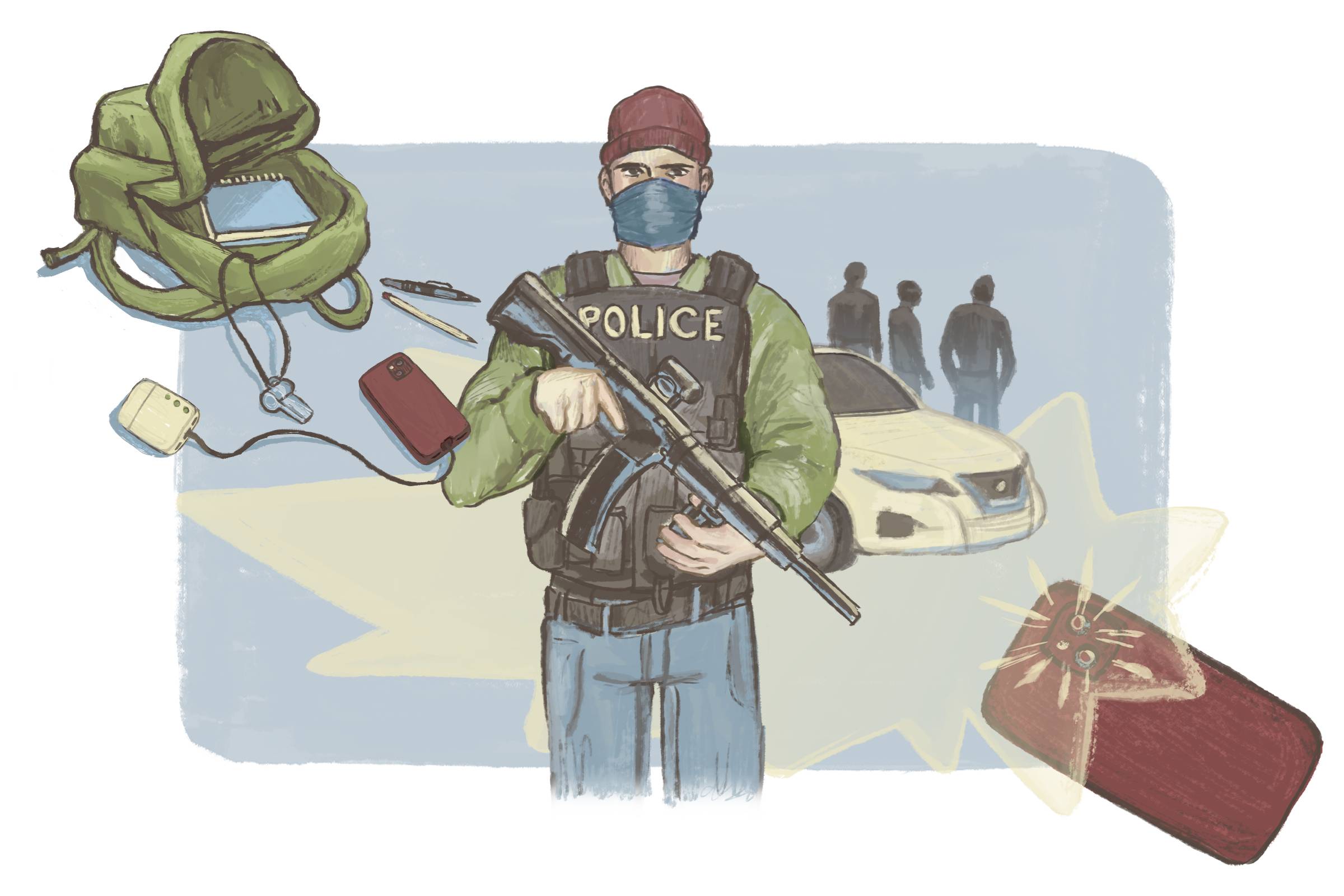
- Carry a phone, battery pack, and a notebook. Make sure you have a Know Your Rights card (downloadable at Illinois Coalition for Immigrant and Refugee Rights), and a whistle. There are two whistle codes. For ICE nearby, blow quickly in a broken rhythm (PRE-PRE-PRE!). For code red (someone being actively detained), blow three long blasts (PREEE-PREEE-PREEE!).
- Make an emergency plan. Tell an emergency contact when you are going out. Write down the numbers for your emergency contact, the National Lawyers Guild, and the Freedom Sanctuary Network.
How do I identify ICE?
- Clothing: ICE agents may be in uniform as members of federal agencies like Border Patrol and Homeland Security. Law enforcement agencies have been deputized throughout the country to participate in immigration enforcement. You may see vests that say Police ICE, Police HSI, Federal Agent, ERO, or they may have jackets that just say POLICE. Alternatively, some officers wear no identifying marks and may be in plain clothes. Look for agents in jeans, khakis, or cargo pants. Agents are often masked.
- Vehicles: ICE has been seen in all types of vehicles — often SUVs or vans, but also sedans such as Nissan Maximas. License plates may say Illinois, out-of-state, government, or pedestrian. Many vehicles have tinted windows. ICE usually rides with two or more people per vehicle, and arrives in multiple vehicles if they plan to arrest people.
- Numbers: You will likely see four to six agents for local operations targeting specific people in residential areas, and six to 10 agents for workplace raids. Major shows of force could include dozens of agents, but you are unlikely to see this in residential operations.
- If you see riot gear or SWAT vehicles, this is probably not ICE doing typical operations in a residential area. If you encounter ICE Special Response Teams, you may see Bear Cat armored vehicles, long guns, and tactical vests.
What do I do if I see ICE?
Record:
- Record the raid all the way through on your phone in landscape mode.
- Use audio and narrate what you’re seeing (use “SALUTE,” see below).
- Capture landmarks and street signs.
- Don’t focus on the person they’re detaining.
- Don’t start and stop recording.
- Practice ahead of time.
Note-take:
- Write down the names and birthdates of people being detained to help locate them for friends and family.
- Get a phone number of a loved one from a person being detained.
- Do not interfere or share personal information publicly.
SALUTE Reporting Structure
- Size: How many agents and vehicles are there? Take pictures of agents, vehicles, and license plates.
- Activity: What are the agents doing, specifically?
- Location: What is the exact address or intersection?
- Unit(s): What letters, details, or patches are visible on the agents’ uniforms/jackets/vests/vehicles? For example: HSI/Homeland Security Investigations/Police Gang Unit, ERO, POLICE, CBP/US Customs and Border Protection, CBP Field Operations, POLICE DHS.
- Time: What time did you witness this? This info should be shared quickly.
- Equipment: What did agents have with them? For example: weapons, flexicuffs, dogs, door breakers, LRAD sound cannon, vans, SUVs.
Where do I share SALUTE information?
- ICIRR hotline: 1-855-HELP-MY-FAMILY (1-855-435-7693)
What do I do if I see ICE at SAIC?
- Go to any security desk in campus buildings.
- Press the emergency button on phones in SAIC buildings that have an orange sticker with the word “EMERGENCY” on it next to the button.
- Call Campus Security at extension 9-1230 from an SAIC phone.
- Call Campus Security at 312-899-1230 from a non-SAIC phone.