

I’m writing to you from Minnesota, where the Minnesota Pollution Control Agency has advised that residents limit outdoor activities, keep windows closed, reduce vehicle trips and vehicle idling, and monitor local air quality updates.
Smoke from wildfires in Canada has been affecting air quality across the nation. For Minnesota, air quality alerts started May 11, and we were under constant alerts from May 30 to June 9. As of publication, the last alert ended June 12.
The ending of the alert doesn’t mean the smoke has dissipated — it means it’s moving. Minnesota is further north than Illinois, and technically, the U.S. state closest to Canada, so we were affected by the smoke first. If you’re located in Chicago, or otherwise in Illinois, the smoke has been drifting in a west-to-east pattern, following a cold front in MN.
The Illinois Environmental Protection Agency declared an Air Pollution Action Day for June 5. Action days are issued when the Air Quality Index is forecasted to be at or above the USG/orange category for two or more consecutive days for the Chicago Metropolitan area. This day included Cook county.
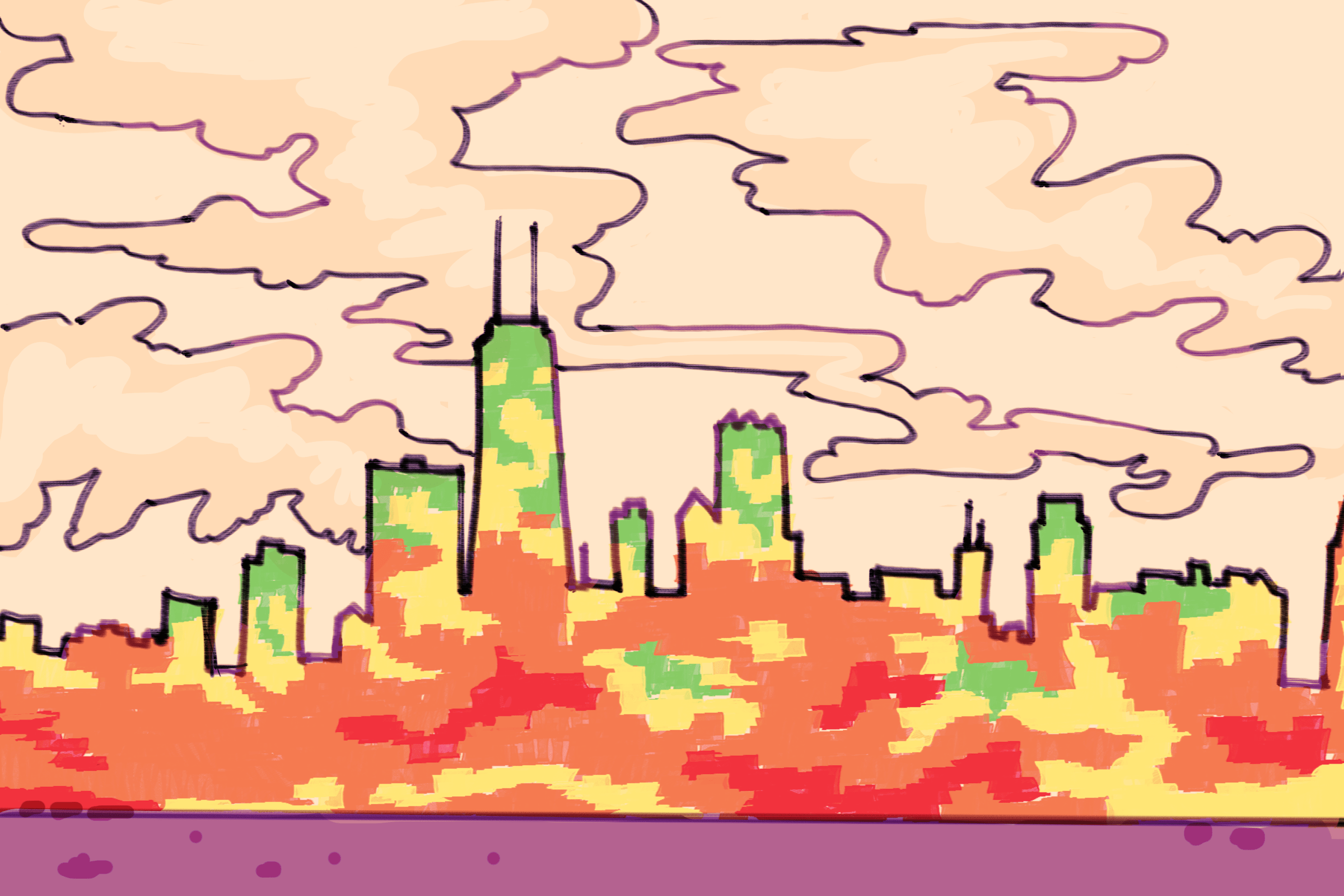
AirNow is the U.S.’ national air quality organization, powered by the national EPA. AirNow’s Interactive Air Quality Map provides air quality data for across the nation, not just Chicago. As of June 14, it shows Chicago mostly covered in yellow, indicating a “moderate” warning, with pockets of orange areas, indicating air that is “unhealthy for sensitive groups.”
The Air Quality Index is a measure of how safe our air is. In addition to AirNow’s nationwide data, Minnesotans can check their AQI with the Minnesota Pollution Control Agency’s Air Quality Index graph, a live diagram that shows users what their levels were at specific locations at specific times.
The MPCA quantifies AQI by measuring ozone and PM2.5 levels in locations across Minnesota. The graph shows that here in MN, ozone levels have been stable, but our PM2.5 (Particulate Matter 2.5 microns or less in diameter, breathing in of which can create adverse health effects) levels have been dipping into good and back up to moderate depending on the day.
AirNow predicts that air quality in Chicago will continue to be moderate. The MPCA predicts more air quality alerts will be issued later this summer as more wildfires rage in Canada, likely meaning more Action Days in Illinois as well.
To stay informed about future alerts, here are some Chicago-specific resources to keep yourself, your friends, and your family safe.
- Visit the Illinois Department of Health’s Wildfire page, which details the effects of Wildfire smoke and how to minimize them.
- To learn more about the source of the smoke, here’s a New York Times article about the fires that are causing mass evacuations and raging across Canada’s prairies.
- Check AirNow’s website frequently, or subscribe for alerts with EnviroFlash, an alert system powered by AirNow and the EPA.
- The American Lung Association has information and protocols to protect yourself from air pollution if you’re an individual living with asthma or COPD, a common chronic lung disease.
- In a news release on June 16, the Illinois Environmental Protection Agency recommends that, to reduce pollution every day, and especially on action days, residents should limit driving, conserve energy, use environmentally friendly household and cleaning products, avoid using gasoline-powered equipment, and warn friends and family to protect their health and encourage actions.